Last week we celebrated alongside the Class of 2020 as they attended their graduation ceremony. The ceremony was magical and its grandeur as grand as the manganous and iconic York Minster.
Many stories were shared, and memories created when smiling and proudly beaming graduates of York Business School in exclusive partnership with Robert Kennedy College, walked down the aisle attending their final graduation ceremonies. It is indeed a delightful sight, seeing all the graduates don their hats and gowns and graduate York MBA programme from York Minster.
Graduation Ceremonies – Class of 2020 – York St John University
On this glorious occasion Reeta Chakrabarti, Chancellor York St John University congratulated the Class of 2020 and applauded their hard work, determination and resilience especially coming out with flying colors during the pandemic.
Ever wondered why we tend to say “yes” to people when we really don’t want to? Blame it on human psychology or human beings being social animals. We find it extremely difficult to say no to anyone.
We adore attention and feel gratified when others admire us, trust and look up to us. But when this takes the form of constant requests and more work for yourself, you detest being the go-to person. People want to say yes because they are afraid, afraid to disappoint others. We feel personally responsible for letting others down if we decline their proposition or their request for help. During these troubled times, with businesses being in jeopardy, everyone is overwhelmed, constantly working, and juggling work and relationships. Everyone is over-extended, and it is not the best soil to grow ideas or make sound business decisions.
Are you saying a “good yes” or a “bad yes”?
What begins as an intent to help becomes a bad “yes” – simply because you do not have the productive capacity or knowledge to complete the task. Such a “yes” is bound for failure. When there is so much asking around in an organisation and collaborative overload, one should focus on moving to good yesses and good nos to avoid failures.
How to say No?
You have decided that you are going to turn down someone’s request to undertake a task. Now comes the even more difficult part: actually saying “no”! How do you effectively communicate your decision?
Begin with a positive statement by appreciating the opportunity extended your way, that you were considered worthy enough to do justice to the job. But present your “but” in a way that shows you have carefully considered the proposition and convey the “why” of your decision. Let them realise that you did not decide to say no lightly, that the “no” was not because you are lazy, un-zealous to learn, or simply being difficult.
Saying no can be an onerous process but trust me, it will prove to be more productive for yourself and the business. Base your decision on this checklist:
1. Do not let fear decide
If you fear that saying “no” will stress your work relationship, remember that saying “yes” when you cannot deliver the results will stress you and the relationship even more. If the working relationship turns sour just because you said “no”, then it was never meant to be. Let it go.
A decision taken under duress leads to stress on oneself and on work relationships
2. Evaluate the proposition
I know from personal experience when we are new to an organisation or a job, we are eager to learn because knowledge is power. Gain that power but keeping in view the quality you are gaining. Ask yourself what ‘value addition’ can you get from this task. Ask questions such as why, when, and what is needed for the task. Doing due diligence on someone’s request is respecting them and yourself.
3. Remember what you want to be known for
What may seem like an opportunity to learn for you could become an opportunity for others to learn a thing or two about you. When you say “no”, back it up with legitimate and fair reasons, tell them why the proposition is not worth your time or effort or simply that you do not have that kind of time to invest in this project. You already have enough on your plate. When the other person: your boss, your client, your colleague, hears your side of the story, they will understand your situation, and you will become known for your work ethics and values. You will be known for authenticity and for being a good decision-maker. Everyone will respect your decision when you say “no” the next time because they will know there is a genuine reason behind it, and it’s just not a lack of interest or laziness involved. They will even bring better propositions to you that you will find difficult to turn down. They will try to please you and not the other way round.
When you say “yes” to someone’s request, you commit to executing and delivering results.
4. Deliver results
The only consideration that should drive your professional decisions should be results. When you say “yes” to someone’s request, you commit to executing and delivering results. You do not want to be in a position where you realise later that either you cannot, are not allowed to, or should not do so. Do not bite more than you can chew. Do not be hard on yourself thinking that you are being difficult. Convey that you are making a good business decision.
5. Provide options
While it is not easy to say “no” to someone who had high hopes on your saying “yes” and was relying on you for completing the task, remember that people come to you because you are a problem-solver and are resourceful. If you cannot do the job yourself, give them other options on how to complete the job or provide solutions to resolve the issue. It will save your time and help build trust with team members that learnt something valuable when they approached you.
You can also choose to defer the project instead of completely shutting it down. Offer them a plan where you can join the team at a later stage and be more valuable once the project’s gone past its conception stage.
6. Don’t be afraid to say the ‘C’ word
The majority of the time, bosses try to use influence to get things done. Little do they realise that when they use power, they lose influence.
Photo credit: Canva.com
Every employer has a budget, and the more he can get done without expending his budget, the better (the lesser the merrier, in this case). This is one of the most frustrating and de-motivating situations when you are asked to deliver more results and but are not “C”ompensated for that extra work. You might say “yes” to the extra load now and then, just to be nice or on the pretext of learning something new, or simply because the boss asked you to do so, but this will eventually burn you out. Be firm to tell the work is simply beyond your pay scale and justifies an extra dollar or two.
It is a misconception that you must be a “Yes Man” or a “Yes Woman” to be successful and boost your career. Remember Jim Carrey’s movie – Yes Man? The film is a classic story where the protagonist is encouraged and made to promise to answer “Yes!” to every opportunity, request, or invitation that presents itself. After a series of interesting events in his life, he realises that the covenant was merely a starting point to open his mind to other possibilities, not to permanently take away his ability to say no if he needed to.
So, are you the go-to person at your workplace? Do you always end up saying yes? How do you strategically say no?
We live in a world of flux – a world where change is the only thing constant.
I remember when I was a kid, my father would tell me about his job and the management style at his office. He worked in a semi-government organization where hierarchy and command-and-control leadership dominated. A more technically qualified and experienced leader would lead a team or a department and evaluate each team members’ performance against a pre-set benchmark. Little or no importance was laid on developing the skill-sets of employees or encouraging innovation.
Fast forward 20 years, the leadership styles shifted dramatically. The existing (ancient, in my opinion…) management styles were not sustainable and organizations begged for a radical transformation; transformations that would inculcate new energy, ideas, motivation, commitment, and innovation.
Leaders are expected to step up and assume the role of a coach and a mentor
Types of coaching styles
Coaches come from a variety of backgrounds. Having a consultant coach from outside the organization could be helpful for developing specific skills or as a one-off motivational camp. A modern learning organization would invest in a coaching style appropriate to the needs of the company. Keeping in view the long-term goals, the leaders within the company are expected to step up and fulfil the need of the hour – the need to assume the role of a coach and a mentor.
The leader may adopt one of the many leadership styles, with some of the most popular being:
Democratic: This style as the name suggests, encourages the general principles of democracy and takes into consideration the opinions, ideas, and interests of the people involved.
Laissez-Faire: This style is the minimum leadership style when the team members operate at their maximum efficiency and vigor and do not require any supervision or direction. This is generally seen as inefficient, and depends largely on the ability of the teams to self-manage and self-regulate. Not recommended.
Directive: Quite contrary to the Laissez-Faire coaching style, directive leadership requires the leader to ‘tell’ people what is expected of them, assign necessary resources for successful completion of their job, and convey the expected results as well.
Holistic: No organization today operates in isolation. Businesses are global and companies all over the world are taking wholesome decisions for the greater good. This leadership style recognizes the connection between leader, follower, and organisation, and focuses on a people-in-environment and developmental approach.
Mentor or a Coach
People usually use the term coaching and mentorship interchangeably. This is not correct. Mentoring is offering advice based on knowledge, expertise, and experience. Coaching, on the other hand, is inquiry-based. A little push with insightful questioning can spark a person to see themselves and the world differently and solve their own challenges.
Mentoring is more formal and structured, where a mentor helps his mentee gain a broader and deeper perspective and understanding of the business (and life). A mentor, based on his own experiences, guides and channels mentees by illuminating the right path for them. It is, therefore, more directive in nature and could be related to a directive leadership style. Mentors offer exposure and connections to other functions and levels of the organization.
A coach supports, challenges, and encourages. A coach approach for leaders, on the other hand, uses very different techniques for developing people. The role involves asking and listening rather than knowing and telling. The coach empowers the employees, by making them fully capable of finding their own answers to their problems. Employees have more self-awareness and experience an increased performance.
Now, this is easier said than done. While leaders may recognize the need to embrace the idea of coaching and mentoring their employees and subordinates, the flair does not come naturally to every leader. However, using right set of tools and resources, anyone can become a seasoned coach.
Using right set of tools and resources, anyone can become a seasoned coach.
Our MBA in Coaching, Mentoring, & Leadership programme creates opportunities for you to develop through practice a range of coaching and mentoring skills and techniques and enables the development of a critical understanding of issues related to the design and implementation of coaching and mentoring schemes. The programme is delivered in such a way that you are encouraged to utilise your professional and work-based context as a resource in which to practice and develop your skills in coaching and mentoring. Feel like you could benefit from this? You are not alone! Apply now to join our more than 150 students currently taking the programme!
As promised in the blog about referencing and citation, this week, we bring you information and facts about academic integrity and how to avoid plagiarism.
As a master’s student, expect yourself to be surrounded by deadlines to submit assignments, academic papers, and dissertations for most of your academic life (follow our #DILO – A Day in the life of an RKC student series to know more). Academic integrity is a crucial aspect of academic studies, and strict protocols must be followed to abide by the rules of academic writing.
So, what is plagiarism?
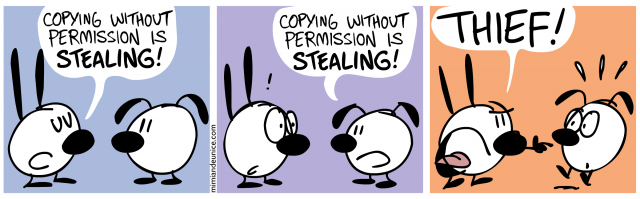
When one submits another person’s ideas, writings, words, images, or data as their own, it is termed plagiarism.
Plagiarism is among the four most common forms of academic dishonesty, the other three being cheating, academic misconduct, and fabrication. While looking for ideas and information is good research, not giving proper credit for the work cited becomes plagiarism. It is easy not to recognise potential plagiarism in one’s writing. Here are some examples:
Using information from the internet is commonly considered public information. However, it is still required to be cited.
When one paraphrases (i.e. puts someone else’s ideas in their own words) and does not provide credit to the original idea.
When one sources information from reading material provided by the professor, it still needs to be cited. This is considered poor academic practice though, as you need to demonstrate independent research, and go directly to the sources mentioned by the professors in their lectures, rather than cite the lectures themselves.
When one copies their own ideas, used in previously marked work, and submits the same material for a new paper. This is commonly known as self-plagiarism.
How to avoid plagiarism?
As complex as it may seem, plagiarism can be avoided by simply citing and referencing your work wherever necessary and giving due credit to the original ideas, theories, words, quotations, images, or graphs.
Studying for a masters, working full-time, juggling work-life-study balance itself seems daunting. Do not get lost in trying to find the correct way to present assignments and avoid plagiarism. There are various sources that you can use to ensure effective writing every time.
Access the electronic library through your University account – there is always a guide to academic writing, referencing, and tutorial support directly from librarians
Ask for help from the tutors and student support services, who can help you get unstuck and direct you towards the resources that can help
I hope this prepares you well for authoring your academic papers and assignments. If you are stuck or have any questions, our highly qualified, world-class faculty will guide you through using the correct methods and techniques to follow academic integrity.
We continue with our blog series bringing you answers to some of the questions we at Robert Kennedy College (RKC) frequently get from students looking to join one of our online programmes. We asked some of our past and current students to share their thoughts and opinions, to give their feedback on how they handled online learning challenges. Hopefully, this will, in turn, help you make an informed decision.
I believe learning is a life-long process. You never know when an opportunity to learn is thrown your way. Would you grab the opportunity, or would you think it’s too late to learn and study when you reach a certain age? But is age just a number?
Antonio, an RKC student from Mozambique, is a shining example of how age is just a number when it comes to studying for your Masters. Let’s hear his story!
Who you are, really?
Antonio M, from Mozambique. A senior citizen still willing to learn and upgrade my skills in new areas associated with my country development.
Which Uni are you studying at?
University of Salford
Which programme did you choose and why?
Online MSc in Procurement, Logistics and Supply Chain Management
How did you plan to study each module, and what was the reality? How many hours did/do you have to put in each day/or in a week?
Initially, I thought 2h a day would suffice, but I learned that I needed to spend at least an additional hour every day. Let me say, for someone with my slow thinking speed, you need an average 3h a day to be comfortable and do all the homework (forum discussions, contributions). Do this for 6 days a week, 1 day to rest if you can afford it.
PC: Unsplash.com
What part of the day did/do you find most suitable to study? (e.g., early mornings, lunch break, evenings, weekends?)
In my case, evenings due to silence and more available bandwidth for Internet data.
How did travelling impact your ability to study?
Being an online course, travelling did not impact too much. When travelling, the main issue was Wi-Fi availability.
How were you able to interact with peers and/or professors given the time differences?
Most of my peers were around the same or close time. Having a platform and forums eased the interaction. It was not immediate, but I would get the reaction soon enough. With those closer peer friends or people with closer affinity, we shared our mobile numbers, and if required, we would use the mobile phone and interact.
How much time did you devote to each assignment?
A lot of time. As soon as you get the assignment brief, start immediately and dedicate at least 3h a day for the assignment. Make sure you state an initial outline as soon as you understand the problem to be solved. Having the outline, Google Scholar all the required stuff, minimum of 15 peer-reviewed references per assignment (my opinion).
PC: Unsplash.com
What does a typical day as an Online Masters’ student look like for you?
6-7h sleeping, 6-8h working and 3-4h studying, 3h solving family issues, 2h socialising with other people. My community, Rotary, and family would require more of my time and reschedule this time outline.
Any advice you have for students to better plan their studies?
Please make sure you do participate in the weekly activities since usually they prepare you for your assignments. If you do it right, you may have a considerable part of your assignment done, at least in terms of the referencing. Going straight to the assignments is the wrong strategy. I did learn with some pain later that if I had done the week activities it would have made my life easier and would have saved time for my assignments. Otherwise, while busy with the assignment, you understand that you still need to do the work you avoided.
PC: Canva.com
If you have been dreaming of joining a master’s programme or have had this personal goal to gain a higher degree, now is the time! Take valuable advice from our current students, gain from their experience, add your unique study strategies, and make your own success stories! I would love to feature you one day on our college blog.
Chat LIVE on WhatsApp with one of our Education Advisors for more information on all the programmes we offer, the application process, and for information on discounts we might be offering at this time.
In my previous blog, I wrote a step-by-step guide on how to write an effective abstract for academic papers. Continuing further in the same direction, this week I would like to discuss referencing and citations. As I mentioned earlier, writing an abstract is not rocket science, and neither are referencing and citating.
Now, referencing is an important academic practice. But it becomes even more important when you are studying at University level. It is thus imperative to understand the correct way to reference and cite your sources in your master’s degree assignments, academic papers, or dissertation. This blog is your one-stop shop about what, how and where, style guides, and examples of referencing and citations.
PC: Canva.com
Let’s begin!
So, first things first, what is the difference between referencing and citations?
While undertaking your masters’ studies, you will constantly hear from your professors to reference your work and cite the sources of your research and ideas.
Referencing
As the name suggests, referencing refers to the source of work that you used in your paper. The readers should be able to find and read for themselves the original source of information that one has read or considered in their academic piece.
Citations
Citations, on the other hand, are brief mentions of the author or the external source used in writing the paper. A citation is, in other words, an abbreviated reference. While both inform the reader of the sources of information used, there is a fine difference between a reference and a citation. Here are some key differences between references and citations:
Scope
A reference is a complete record of the source that has been sought or cited in the paper.
A citation is disclosing the source within the main body and thus is also referred to as an ‘in-text’ citation. It provides just basic information such as the authors’ names, year of publication, and perhaps the page number if a sizeable quote is provided.
Placement
References are listed at the end of the document, on a page having its own title (“List of references”, “References”, “Works cited”).
Citations are presented within the body of the document where we speak of the ideas or results of the source we are citing..
Format
References provide the reader with information such as the authors’ names, the publication date, the title (of the book or article), page numbers, publisher and place of publishing, etc.
A citation provides less information, such as the last names of the authors and the publication year, such that it does not disrupt the reading flow.
Both references and citations give credit to the authors whose ideas have been discussed in your work, in addition to supporting or criticizing an argument. This is additionally critical to avoid plagiarism in academic writing (topic for another blog!).
PC: Canva.com
Different styles of referencing and citating
Different academic disciplines prefer specific referencing styles. In business programmes (such as the MBAs, MSc’s), you will often be asked to use Harvard or APA styles, whereas in Law programmes (LLM, LLB) you will most often be asked to use Oxford or OSCOLA. You should always check the programme handbooks and assignment briefs, and in doubt, with your instructor what referencing style they expect for the assignment or academic paper you are writing.
The references should be regrouped on a new page at the end of the paper. This list gives the complete information to identify and locate all sources used in the paper. There should be a corresponding entry in the list of references for all in-text citations that were used. References typically follow an alphabetical order of authors’ last names but under certain styles the order of appearance will rather be used.
Among the different styles used by different disciplines, here are the 6 most frequently used styles in writing academic papers, each with a very specific purpose they fulfil:
APA (6th or 7th Edition)
Harvard
Oxford (OSCOLA)
Chicago
Vancouver
MHRA
The style guides specify the kind of information and how it should be displayed for different types of sources (books, articles, websites, images, ebooks, etc.) – ensuring consistency across not only your work, but across the entire field of study that uses that style.
At first look, these may all seem complicated, and daunting, but there are tools that can help you manage your sources, references, and citations.
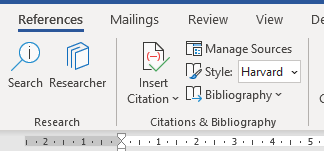
For example, Word has a tool called “Citations & Bibliography” which allows you to enter your sources in a database (“Manage Sources”), to insert in-text citations that are automatically updated if needed (“Insert citation”), and to generate your list of references (“Bibliography”) according to the specific style you need (“Style”).
External tools also exist, such as Zotero, Mendeley, EndNote, or CiteThemRight – which have pretty much the same functionalities – managing your references with one of these tools will save you a gigantic among of time and effort, so by all means, pick the one that works best for you and run with it.
Examples
I promised you some examples, so here goes:
Harvard / APA styles
In-text citation
Saunders, Lewis and Thornhill (2019), or Saunders et al. (2019), when the author’s names are part of the sentence, or (Saunders, Lewis and Thornhill, 2019) or (Saunders et al., 2019) when they are not.
Reference list entry
Saunders, M. N. K., Lewis, P. and Thornhill, A. (2019) Research methods for business students. Eighth Edition. New York: Pearson.
Oxford style (OSCOLA)
In-text citation
OSCOLA uses numeric references, with the full reference given in a correspondingly numbered footnote. So, in your text, you would simply put a superscript number by inserting a footnote1 and then the footnote would contain the reference as:
Mark NK Saunders, Philip Lewis and Adrian Thornhill, Research Methods for Business Students (Eighth Edition, Pearson 2019).
Reference list entry
Saunders MNK, Lewis P and Thornhill A, Research Methods for Business Students (Eighth Edition, Pearson 2019)
Note the difference between the footnote reference and reference list entry – in the footnote, you give the author names in “firstname, lastname” format, whereas in the reference list you give it in “lastname, f.” format.
If this looks complicated, it is! 😊 Which is why I reiterate my advice to use a reference management tool – whichever one works for you.
Hope this prepares you well for writing your academic paper or assignments. If you are stuck or have any questions, our highly qualified, world class faculty will guide you through using the correct methods and techniques for referencing and citations.
Motherhood is unique for every woman. It’s full of joy, love, challenges, despair, anguish, fun, responsibility, selflessness, and sacrifice. As it is rightfully said,
A Mother is an epitome of love, strength, and sacrifice.
A mother makes many sacrifices while raising her family and children. The instinctive selflessness and dedication of a mother make her go to extraordinary lengths to care, protect, and provide for her children. Yet, while tending to the needs of her family, a mother commonly puts her career and further education on the back burner. According to a survey conducted by LinkedIn and Censuswide, nearly half of the working mothers consider a career pivot and prefer not returning to work after maternity leave in the US. And 63% of working mothers who opt to take a career break do so to spend more time with their children.
Now, if being a career woman, juggling between the roles of a wife and a mother is hard already, then deciding to enhance your career with a master’s education will make life much more challenging. But does it mean a mother cannot pursue her dream of having a job and family together? Should she not be allowed to advance her career?
The answer lies in what my mother always tells me:
I can do anything; I am a mother!
That’s right. You can do anything! Being a mother does not mean that you have to sacrifice your career and education goals. On the contrary, achieving that perfect work-life-study balance is very much possible (check out our blog and a short video about work-life balance) and realise your long-awaited dream. All it requires is a mix of planning, dedication, and clear focus on your ultimate goal.
Here are five tips that can help you better in the transition to a master’s students’ life:
Find your motivation
There could be several reasons for continuing education, such as updating your skills, gaining advanced qualifications, adding new knowledge or specialities, career pivot, financial enhancement, or the personal challenge of finally getting that university degree! First, find your motivation, as this motivation will keep you fueled and focused all through your journey of master’s for the next 1 to 2 years. Should you deviate, or lose focus, your motivation will always get you back on track and remind you of your ultimate goal.
An RKC alumni, Meg Plooy, a mother, a wife, a friend and a (foster) mother of Pitbulls, found her motivation in two things: First, to be an inspiration for her young children and be able to show them that if you work hard, anything is possible. The second was to advance her career opportunities.
Another master’s alumni, Manal Al-Khaled, shares her motivation, “In 2013, my daughters were only 4 and 5 years old when my husband lost his job due to political unrest in the region (Middle East). There was never a right time to do my Master’s degree. There were always other financial priorities, and with two little kids and a full-time job, time was a luxury I didn’t have much under my control. So I kept postponing it for all the reasons in the world. Then it hit me – it’s now no matter what”.
Develop and maintain a support network
One of our students, who is also a mother, suggests reducing personal commitment, waking up early, and staying up till late at night. While this arrangement may not always be possible for everyone, it is necessary to have a cushion, a support system to help you cope with any stressful situation you might face, or in case of emergencies. Do not hesitate to ask for help from your husband, siblings, parents, employer, or even neighbour!
Don’t be shy and ask for help when needed
Make a plan and work on a schedule
90% PLAN + 10% EXECUTION = 100% SUCCESS
Before you even enrol for a master’s, the first focus should be on how you will manage work, home, and studies. Plan a schedule and follow it religiously. Formulate a 30-60-90 plan according to the number of modules you register yourself for in a given quarter. A 30–60–90-day plan details the targets you plan to accomplish in the first 30, 60, and 90 days of your studies. Set concrete goals and a vision for your abilities at each stage of the plan, that will act as a guiding rope and will constantly move you towards the goal.
Planning your study space at home or work, away from distractions, is also essential. Again, self-organisation is critical to be able to plan efficiently and to be able to execute it successfully.
Most of RKC’s working mothers planned their days and weeks to strike an optimum balance; they would usually be working during the day on weekdays and allocate study hours to night-time and weekends.
Meg again: “A good routine and sticking to a schedule [are a must]. The best time to complete my studies was after the kids were in bed, which gave me anywhere from 2 to 2.5 hours each night. In addition, I used Monday through Thursday as “school nights”, which ensured I was still getting downtime over the weekends. This helped me to stay focused and manage time effectively”.
Find a study buddy
Trust that you are not alone in this situation. Getting back to being a student and coping with an online learning environment can be pretty daunting. Having a study buddy will help to relieve your stress and keep tabs on the OnlineCampus class discussions and assignments. For online education students, if you can look for a study partner in the same time zone, it will be more convenient for your interaction.
Having a study partner can help relieve the study stress and help in class discussions and assignments
Believe in yourself!
As one of our students suggests, have the confidence to believe in yourself and not procrastinate. Obtaining a master’s degree is a life-changing experience for most, and you must believe in yourself that you can achieve this goal.
Naomi, an MA Leading Innovation and Change (now MBA LIC) graduate, gave herself this pep talk: “Yes, women face issues with their husbands, childcare, and the fact that society doesn’t expect too high an education from women. My friends think having a bachelor’s degree should be enough for me, especially because I own my own business. To the society around me: “what else are you looking for in life”? Also, challenges with workplace issues, especially when women are working for other employers. Lack of funds to sponsor oneself to school, tight work schedules, and traffic to get back home are all challenges. Eiiii!! Naomi, everything is possible. Don’t think of your tight schedule at your office, the needs of your staff, or the number of employees under you. Don’t even think your husband or your three children would be hindrances. Remember, Naomi, that with determination and hard work, you can make it”.
I agree the journey may not be a walk in the park, but taking one step at a time will bring you closer to your ultimate goal – attaining the Masters’ qualification. So many working mothers have successfully achieved their educational goals, and so can you.
Happy mother’s day to all of you out there, and if you have a story about being a working mother and a master’s student you would like to share, the floor is yours!
As a Master-level student you will be asked to write abstracts for your papers, or for your dissertation. Writing an abstract is not rocket science, but it is somewhat different from “regular” writing. I have summed up here advice from professors and librarians on how to write an effective abstract for academia. A step-by-step approach to writing abstracts is proposed, and this should enable you to write effective abstracts.
If you are still reading, my first paragraph is a good abstract. Yay!
Why are abstracts important?
In academic writing the use of “abstracts” is particularly important, for practical reasons. With the amount of reading one needs to do when studying/researching, being able to quickly tell what a given paper is about (before the paywall) gives abstracts a crucial value.
Writing is an integral part of our professional and personal lives. Every day we write texts, emails, letters, applications, comments on social media, blogs, etc. Professionally, we may be required to communicate via email, reports, blog posts and articles, or team chat (more so since the pandemic started).
There may be a few commonalities within each type of writing, but each writing type brings its own format, tone, formalities (formal or informal), and target audiences.
You are probably well versed with the personal and professional writing styles. Still, as a student, you will encounter an entirely different type of writing – academic writing. Academic writing is a more formal style of writing, used in universities and scholarly publications, typically involving literature reviews, case studies, and application of theory in “practice”. A subject for another blog post, so stay tuned.
For the typical master’s level student at Robert Kennedy College, academic writing is a new form of writing. From the module assignments to the dissertation at the end of the programme, the students are expected to excel in this writing style.
What are abstracts?
The abstract is typically a single 200 to 300 words paragraph, “selling” the rest of the paper/article they describe to the interested reader. The abstract is not, formally speaking, part of the paper it describes, which is why it normally appears before the table of contents and is not listed in it.
The abstract must provide information on why the paper should be read in the first place – so why the research is important. For assignments, where students are encouraged to practice abstract writing in view of the dissertation, the abstracts typically try to convince the markers that the brief was addressed in its entirety. If you can imagine Jack Nicholson, do it: “the brief, the whole brief, and nothing but the brief”.
The abstract must also provide information on what was done, and how. For a dissertation, the student will concisely describe the research methodology. For an assignment paper, the same (“I have critically reviewed literature on X, Y, and Z. I have then analysed a case study on A using B and C models/frameworks, etc.”).
The abstract must also give a glimpse into what was found. Not full details, but enough to entice an interested reader to click-through to the full article. For dissertations and assignments (where the reader does not have a choice, but must read the full paper anyway), you want to reassure them (they are typically marking your work) that you have not only addressed the brief, but also found some interesting things.
The final function of the abstract is to provide a take-home message. A concise and factual conclusion that the reader can use as justification for their reading the paper in full.
What abstracts are not
In our work with mature students like yourself, the most common confusions arise between abstracts and executive summaries, and between abstracts and introductions.
Abstracts are not executive summaries
Executive summaries are a business-environment construct, whose purpose is to give the reader (executives, hence the name) enough information to make an informed decision, without having to read the full report/paper. Unlike abstracts, executive summaries are much longer (one to two pages), are much more structured (with internal headings much like this post, allowing executives to orient themselves within the summary), and must provide clear action points/decisions to be made after the supporting arguments have been presented.
Abstracts are not introductions
Although there are similarities between the two constructs, abstracts are not introductions either.
An introduction goes deeper into the WHAT (what your topic is, or what you are addressing in the paper) and the WHY (why is this important? Background context) of your work.
It will also lay out your own stance or focus given the context and the topic, and provide a “map” to your paper, describing what each section of it discusses. The introduction is typically written in the future (“will discuss X in section 1, etc.”) whereas the abstract is typically written in the past tense, or present, but never future.
How to write an effective introduction – a topic for another blog post!
Conclusion
Now that we know what an abstract is, and what it is not, here are the five steps to writing a compelling abstract that I promised in the … abstract 😊
1. Define what your work is about: provide a precise statement of the problem
2. Give some background information: provide enough background information for your study or research that describes both the main topic and the problem.
3. What and how you did what you did: summarize the research method & designs you employed, stating the key techniques used.
4. Findings: describe your findings. This part attracts the most attention as the reader is intrigued to know about the results.
5. Conclusion: Provide a brief and precise conclusion. An overstated conclusion can mislead the readers, so do not overkill.
Not everyone is born with a flair for academic writing, but, like many things in life, this can be learnt and, with experience, can also be improved over time. All you require is some guidance and practice.
Our highly qualified, world-class faculty provide you with in-depth knowledge of the course while guiding you on how to best write your assignments and prepare for the dissertation. Talk to our education advisors and enrol today for the online master’s programme that is closest to your interests.
I cannot stress enough (pun intended) that stress is part of everyone’s life, in one way or another: it is the proportion that differs.
We all are different and handle stress in different ways.
I recently moved from one province to another. Trust me, it was more stressful than moving countries as I did almost four years back. I stopped to think, why? I was venturing out onto an unknown territory in both cases, I knew one or a few friends and family there, and it was a new challenge in my life. Then what was different, I wondered. Upon analysing the situation, I came to an interesting conclusion. There were a few things that were different in the first case: 1. I was more willing/open to change 2. I was mentally better prepared 3. I was young(er). (But does that matter? Check out our blog: Age is just a number) 4. I had greater acceptability for risks 5. The fear of the outcome was significantly less/or none at all.
By definition, stress is a feeling of physical, psychological, or emotional tension. It can originate from stress-causing factors or stressors; that makes you feel nervous, angry, or frustrated. The feeling of stress that continues even after the stressor (the event or the thought) is gone becomes anxiety. The body, as a result, requires immediate attention. And like I said before, it’s one’s response to stress, and it is stress management that makes a big difference to their well-being.
Types of stress
There are two types of stress:
Acute stress: acute stress refers to situational events relating to the present or near future. These can be small everyday situations like meeting a deadline, getting late to work or missing an appointment. Better time management can help you become more resilient towards acute stress.
Chronic stress: when you are exposed to high-pressure situations for prolonged intervals, it leads to chronic stress. This may lead to other symptoms of stress such as depression and anxiety.
The stressors can be of three types:
Routine stress such as work-related stress, studies, financial stress, etc.
Unexpected stress like change in location, job
Traumatic stress that results from an accident, social, economic, or environmental disaster, etc.
Financial stress is a kind of routine stress
And I think that some stresses just fall under all the above three categories. For instance, Covid-19 that started as traumatic stress, has seeped into our lives as routine stress.
We live in a very dynamic, ever-changing, highly competitive world with an information overload through various media including social-media. In the concrete jungle we live and work in, living in stress has become a new normal, and it’s down to ‘survival of the fittest. Because more than what stress you have, how you manage it is more important. Here are five ways how one can manage stress.
5 strategies to cope with stress
Time Management
Time management is key for successful and efficient life
I believe the key to a successful and efficient life is better time management. Most of our stresses that lead to more tensions can be warded off simply by managing your time more effectively. This is true in any part of our lives. If you are following our #DILO series – A day in the life of an RKC Student, you have noticed that all the RKC students and alumni trust that better time management is essential for work-life balance and successful completion of the master’s programme. Also, check out our blog on time management.
Yoga & Exercise
Set a routine that allows some exercise, a physical activity, going outdoors, or follow a sport. There are several forms of yoga such as hot yoga, power yoga, Iyengar yoga, Bikram yoga, and many more. Exercise and/or yoga relieve your mind and body from mental and muscular stress. It balances hormones and reduces stress.
Meditate
Quiet your mind from unnecessary thoughts
As I mentioned before, stress is caused by an event or thought – the stressor. It is, therefore, necessary to quiet your mind and free it from unnecessary thoughts. Meditation has proven to be an effective tool in managing stress and leading a stress-free life.
Eat healthily
Prepare a meal plan and avoid processed foods
Eating healthy should be a lifestyle you choose to live. In today’s world, everyone is rushed and mindlessly following the rat race from morning till night, meeting deadlines, jobs, handling personal responsibilities, relationships. There is no time to eat, let alone eat a healthy meal. Just a quick grab fast food has become a lifestyle for many. Eating a healthy balanced diet helps to develop a strong immune system that helps in dealing with stress. Prepare a meal plan for the week and buy the ingredients. While healthy eating planning can be daunting, it can be easily managed by prepping for a week or few days in advance. Prepare home cooked meals with fresh vegetables and fruits and avoid the processed foods. You may also want to cut down on sugar and artificially flavoured drinks and watch out fo the portion sizes.
Talk and share
Vent off some steam every now and then
If you feel stress symptoms, don’t be wary about sharing your feelings with friends, family, or colleagues. Often we realise that we are not the only ones dealing with stress, Vent off some steam now and then and that helps too.
While it may seem like stress management can be stressful, the above five ways prove to be simple yet effective means to cope with stress. It is essential to take care of your well-being.
Stressed about which masters programme you should pursue, how online education works, or what the application process is? Don’t worry, we got you. Talk to our advisors today on WhatsApp to get answers to these questions.
Through the #DILO series of blog posts, we have been bringing you insights into our master’s students’ lives, sharing their thoughts and opinions, ups and downs, and key learning points during their online studies. The whole idea behind this series is to make you aware of the realities of online studies and help you in decision making.
Here are a few insights and some words of wisdom that one of our online master’s students had to share from her own experience.
Who you are, really?
Nicola Hall, a full-time employed junior manager, with a small family, including a primary school child.
Which Uni are you studying at?
University of Salford
University of Salford
Which programme did you choose and why?
I chose Procurement, Logistics and Supply Chain Management because of the growth in demand for skills in the field.
How did you plan to study each module, and what was the reality? How many hours did/do you have to put in each day/or in a week?
I had planned to devote five to six hours each evening for four days a week to the module, and 8 to 10 hours on the weekends spread conveniently. The reality was that I sometimes barely got 2 hours of work done after getting home from work. I had to get my time covered in patches during the night after resting for 3 or 4 hours. I got no work done most Sundays, so I ended up doing a great deal on Friday and Saturday nights. Coming closer to when my assignment was due, I had to take a few days of study leave away from work and give it 10 to 12 hours a day.
The best time to study is night time or early mornings before going to work
What part of the day did/do you find most suitable to study? (e.g. early mornings, lunch break, evenings, weekends?)
My best study time is at nights; the next option is early morning before getting ready for work. Friday nights were very good for me as well, as I didn’t have to get up for work on Saturdays.
How did travelling impact your ability to study?
The only travelling I did was my daily commute, which was 2 hours of driving time. After RKC launched their mobile app, I used my travel time to listen to lectures and go over to catch up on anything I may have missed.
How were you able to interact with peers and/or professors given the time differences?
Be mindful of the time difference while interacting with colleagues and professors
Being mindful of the time difference, I would send my email/queries in the evening and check my email early the next morning for a response. I had a few colleagues with whom I worked closely given our cultural background, and I kept a mental note of the time in their region if I needed to call or instant message. It worked out pretty well once the time difference got stuck in my mind.
How much time did you devote for each assignment?
I tried to start working on my assignment from the second week. And throughout each day, I may get ideas that contribute to the assignment, and I’ll make a note on my phone.
What does a typical day as an Online Masters’ student look like for you?
I get up at about 3 am and get some theory covered by 5:30 am. Then I will get an hour’s rest and begin getting ready for work. While I’m making breakfast, I may have Microsoft Edge read an article in PDF to me. Once at work, I don’t usually have any downtime; I’ll use my lunch break to really have a break and not rush my meal. But when work ends, I’ll spend the rush hour at my desk doing some schoolwork instead of sitting in traffic. After getting home and attending to any home affairs and kids homework, I would settle into my own studies at about 10 pm. I will go online, read through the forums, research for any weekly assignments given, then make my own contribution. I go to bed at about 1 am and go at it again the next day. On the weekend I’ll make sure to get time with the family and go to my schoolwork when they are asleep.
Any advice you have for students to better plan their studies.
It would be ideal to go on study leave to pursue your masters, but if that isn’t possible, the Robert Kennedy College online master’s degree program is such a flexible program. There is usually a break in-between modules, and this time should be utilized to get up to speed on theory ahead of classes beginning and assignments being posted. Always seek to defer a module if you feel pressured but do use the free weeks in between to focus on covering as much theory as possible.
If you have been dreaming of joining a master’s programme or have had this personal goal to gain a higher degree, now is the time! Take the valuable advice from our current students, gain from their experience, add your own unique study strategies, and make your own success stories! I would love to feature you one day on our college blog.
Chat LIVE on WhatsApp with one of our Education Advisors for more information on all the programmes we offer, application process, and for information on discounts we might be offering at this time.