The Productivity Paradox: Why Working Harder Isn’t Making Businesses More Productive

Businesses have never had more tools designed to make work faster.

AI can draft reports, software can automate routine tasks, and analytics can process information at a scale that was impossible only a few years ago. Yet productivity remains a challenge. According to the OECD, labour productivity across OECD economies grew by 1.2% in 2024, an improvement on the previous year. But the longer-term picture is less encouraging: productivity growth has slowed substantially compared with the early 2000s. 

So if businesses have better technology than ever, why isn’t productivity rising faster? Perhaps the problem isn’t that people aren’t working hard enough. Perhaps we haven’t always designed work well enough.
Technology Doesn’t Automatically Create Productivity

It is easy to assume that new technology will automatically make an organisation more efficient. But buying a new tool and changing the way an organisation works are two different things. A company might introduce AI, automation or sophisticated analytics while keeping the same processes, approval structures and meetings it had before.

The result?

A more digital organisation—but not necessarily a more productive one. Research into generative AI illustrates the potential and the challenge. An OECD review of experimental studies found productivity improvements of roughly 5% to more than 25% in tasks such as customer support, software development and consulting, depending on the task and how AI was used.  The lesson isn’t that every business should simply adopt AI. It is that technology creates the greatest value when organisations rethink how work is done around it. If AI can produce a report in minutes but employees still spend hours checking, formatting and approving it, the organisation has acquired a faster tool without necessarily changing the underlying process. The bigger question for leaders is:

If technology changes what people can do, should it also change how the organisation works?

The Hidden Cost of Being Busy

Productivity can also be undermined by something that looks like work: constant activity. Meetings. Emails. Messages. Status updates. Approvals. Notifications. All of these have a legitimate purpose. But collectively, they can consume the time people need for focused work and decision-making. Microsoft’s 2025 Work Trend Index found that employees were interrupted by a meeting, email or chat approximately 275 times a day, or once every two minutes during core working hours. The figure comes from Microsoft’s own workplace data, so it should not be treated as a universal productivity measure. But it illustrates a familiar problem:

Being constantly connected does not necessarily mean being productive. An employee can spend an entire day responding to work without making meaningful progress on the work itself. This creates what could be called a coordination tax—time spent organising, communicating and checking work rather than creating value.

The leadership question therefore shouldn’t simply be: “How can our people work faster?” It should be: “What is getting in the way of valuable work?”

What Toyota Can Teach Today’s Businesses

One of the world’s best-known productivity systems was not built around artificial intelligence. It was built around a much simpler principle: eliminate waste and continuously improve the way work is done. The Toyota Production System focuses on eliminating waste and finding more efficient ways of working. Its philosophy of kaizen, or continuous improvement, encourages people throughout the organisation to identify problems and improve processes. The lesson extends well beyond manufacturing.
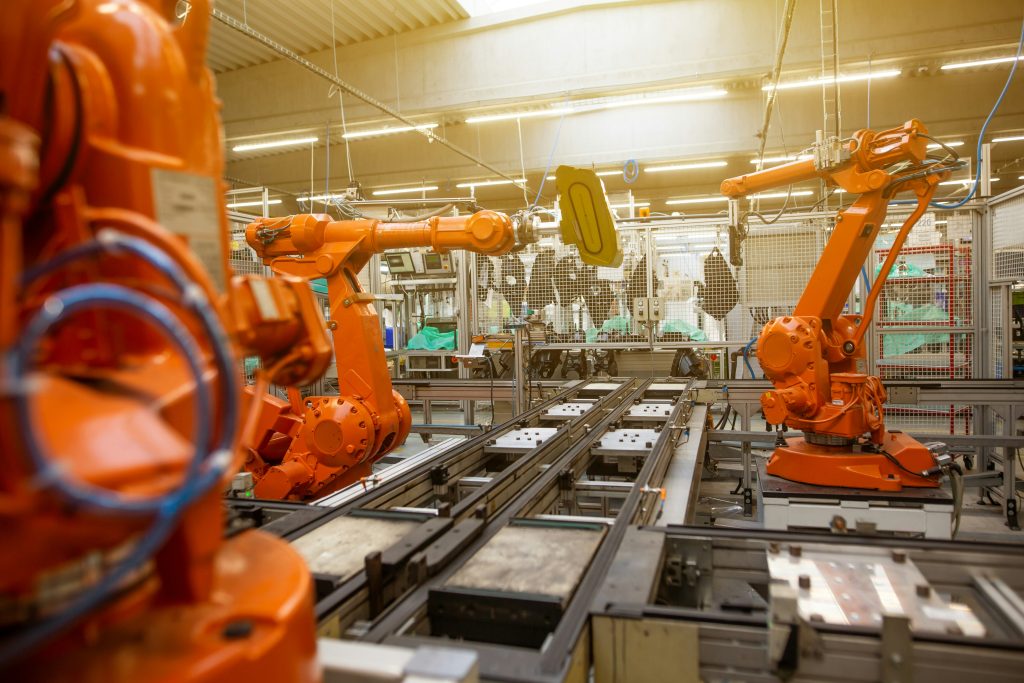
Imagine two companies introducing the same automation technology. The first automates an existing process.

The second asks: Why does this process exist? Which steps actually create value? Where are delays occurring? Which approvals are unnecessary? What could be removed altogether? What should employees do differently once the technology is introduced?The second organisation is more likely to create lasting productivity gains.

Toyota’s lesson is not “work faster.” It is “remove the waste from the system.” That principle is increasingly relevant to knowledge work.

The Real Productivity Challenge

For modern organisations, productivity sits at the intersection of people, processes, technology and leadership. The most productive organisations will not necessarily be those that adopt the most technology. They will be those that know how to integrate technology into a better way of working. That means leaders need to look beyond individual tools and examine the system around them.

1. Measure outcomes, not activity – A full calendar is not evidence of productivity. Neither is a crowded inbox. Leaders should focus on the outcomes that actually create value.

2. Redesign before automating – Before automating a process, ask whether the process is necessary in the first place. Technology should remove friction, not institutionalise it.

3. Protect focused work – Collaboration matters, but organisations also need time for thinking, analysis, creativity and problem-solving. Reducing unnecessary interruptions can be a productivity strategy in itself.

4. Build capabilities around technology – Technology creates value when people know how to use it effectively—and when managers understand how roles and processes should evolve.

5. Make productivity a leadership issue – Productivity is not solely an HR problem, an IT problem or an operations problem. It is a strategic question: How effectively does our organisation turn its people, technology and resources into value?

The productivity challenge facing businesses is not simply about getting employees to do more. It is about creating organisations where people, technology, processes and strategy work together more effectively.

As AI and automation become increasingly accessible, leaders need to understand more than the technology itself. They need to be able to assess its strategic value, redesign processes, make informed decisions, develop people and lead organisational change.

For professionals looking to strengthen this broader perspective, an MBA can provide a framework for understanding how strategy, leadership, finance, operations and technology come together in real organisations. At RKC, our MBA programmes are designed to help professionals develop that wider business perspective—connecting management knowledge with the practical challenges organisations face in a changing business environment. Because the future of productivity is unlikely to be about simply asking people to work harder.

It will be about developing leaders who know how to make organisations work better.

Explore RKC’s MBA programmes to develop the strategic and leadership capabilities needed to navigate today’s evolving business environment.
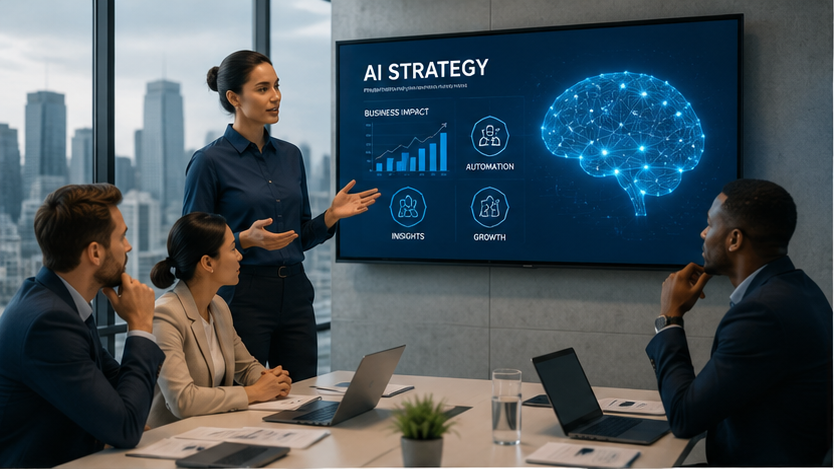
AI Literacy: The New Skill Business Leaders Need

The rapid pace of change in today’s business world means that professional development is an ongoing process, not just limited to the start of a career. With new technologies, changing business models, and shifting organisational priorities, professionals must continuously update their skills and adapt to evolving ways of working.

For many employers, a willingness to learn has become as important as existing experience. Professionals who continually develop new skills demonstrate adaptability, curiosity, and confidence in responding to change—traits that organisations increasingly value in both current and future leaders.

Online education has increased access to lifelong learning like never before. Instead of putting their career on hold, professionals can expand their knowledge while working, enabling them to implement new concepts directly in their organisations. This fosters a direct link between academic insights and practical business issues.

Whether aiming for career advancement, switching to a new industry, or boosting confidence in leading digital transformation, professionals can pursue advanced education to stay competitive in an increasingly technology-driven world.

Innovation and Technology Go Hand in Hand

Innovation is commonly linked to creating new products or using cutting-edge technologies. However, it also equally involves enhancing processes, addressing business challenges, and spotting opportunities that generate lasting value.

Artificial intelligence (AI) is increasingly integrated into this process, but successful innovation relies on more than adopting new technology. Organisations require professionals who can assess opportunities, align them with organisational goals, and implement solutions that promote sustainable growth.

This is where the blend of business expertise and technological insight proves particularly useful.

Professionals pursuing the MSc in Managing Innovation and Information Technology examine how innovation and IT can enhance organisational performance. Meanwhile, those enrolled in the MSc Managing AI in Business focus on understanding artificial intelligence’s role in modern business settings.

For those looking to specialise further, programmes such as the MSc Artificial Intelligence, MSc Business Analytics and Artificial Intelligence, MSc Data Analytics, MSc Cybersecurity with Artificial Intelligence, and MSc Computer Science with International Business offer opportunities to gain knowledge that helps organisations adapt to ongoing digital transformation.

These programmes collectively highlight a key truth: the future of business increasingly depends on professionals who understand both organisational goals and the technologies shaping them.

Learning That Fits Around Your Career

A major challenge for working professionals is finding time to pursue further education while managing their careers and personal responsibilities.

Flexible online learning provides an efficient way for students to study from anywhere in the world while maintaining their professional duties. This flexibility allows learners to progress at their preferred pace without missing out on important work experience.

Learning alongside professionals from diverse industries and countries offers valuable perspectives on how organisations adapt to technological change across different business contexts. These global insights enhance the educational experience and help students understand how innovation, artificial intelligence, and information technology affect organisations worldwide.

Online education offers international students the opportunity to earn recognised postgraduate degrees without relocating, making advanced study more accessible to professionals at various stages of their careers.

Choosing the Right Programme for Your Goals

Artificial intelligence affects organisations in diverse ways, indicating that a universal educational route isn’t feasible for everyone.

Some professionals seek to understand how AI can support business leadership and decision-making. Others aim to develop skills in business analytics, data analytics, or computer science. Some explore opportunities in cybersecurity, while others aim to deepen their knowledge of information technology or innovation management.

Choosing a programme aligned with your career goals helps you gain relevant knowledge you can apply immediately. As organisations change, professionals who understand business, technology, and innovation will be better equipped to help their organisations succeed and pursue new career paths.

Preparing for the Future Starts Today

Artificial intelligence is reshaping how organisations function, yet the future still depends on skilled individuals who can confidently lead, make well-informed decisions, and adapt efficiently to change.

AI literacy is now a crucial skill, as it helps professionals see how technology aligns with business goals, rather than treating it as merely a technical field. Leaders who blend business insight with expertise in artificial intelligence, innovation, information technology, and data-driven decision-making will be better equipped to succeed in an increasingly digital marketplace.

Postgraduate study provides professionals with the opportunity to develop deep knowledge of rapidly evolving technologies. Whether you’re interested in artificial intelligence, business analytics, data analytics, cybersecurity, computer science, innovation, or information technology, gaining expertise in these fields can equip you for the shifting needs of organisations worldwide.

The future of business won’t be driven solely by technology. Instead, it will be shaped by professionals who know how to use technology wisely, guide innovation ethically, and deliver real value to their organisations. Building AI literacy now is more than understanding new technologies—it’s about becoming the kind of business leader organisations will increasingly require.

If you are ready to take your career to the next level, explore our comprehensive list of programmes at Robert Kennedy College. Our courses are designed to equip you with the skills and knowledge needed for professional growth. Start your journey today by applying through our easy, commitment-free registration process. To receive personalised guidance, you can chat live with our team of Education Advisers via WhatsApp. They can review your profile and offer tailored advice to help you choose the right programme for your ambitions.

Climate Change Has Entered the Boardroom: Is Your Business Ready? 

In recent years, businesses around the world have faced record-breaking heatwaves, floods, wildfires and growing supply chain disruptions linked to climate change. What was once considered an environmental issue has become a boardroom priority. 

For decades, climate change was viewed primarily as an environmental issue—one for scientists, policymakers and activists to solve. Today, that perception has fundamentally changed. Extreme weather events are disrupting global supply chains. Rising insurance premiums are affecting business costs. Investors are asking tougher questions about climate risk. Governments are introducing new reporting requirements, and customers increasingly expect companies to demonstrate genuine environmental responsibility. 

Climate change is no longer a discussion confined to sustainability departments. It has become a boardroom issue. The question facing today’s business leaders is no longer whether climate change will affect their organisation—it is how prepared they are to respond

From Environmental Concern to Business Risk 

Climate-related events are becoming more frequent and more costly. A manufacturing facility forced to shut down because of flooding, agricultural businesses facing declining crop yields due to prolonged droughts, airlines navigating more frequent extreme weather disruptions, or retailers struggling with supply shortages caused by climate-related disasters across the globe—these are no longer hypothetical scenarios. The World Economic Forum has consistently ranked environmental risks among the most significant long-term global threats, while financial regulators increasingly recognize climate risk as financial risk. 

Businesses today face two distinct categories of climate-related risk: 

Physical risks include floods, Wildfires, heatwaves, Water shortages, and damage to infrasturcure.  

Transition risks arise as economies shift towards lower-carbon models through New regulations, Carbon pricing, technological disruptions, investor expectations, and changing consumer behaviour.  

Both categories directly influence profitability, operational resilience and long-term competitiveness. 

Climate Risk Is Now a Strategic Risk 

Perhaps the biggest shift over the last five years is where climate conversations are happening. They’re no longer limited to environmental managers. 

According to research by The Conference Board, board members increasingly identify sustainability and climate issues among the most significant external risks affecting long-term business performance. This reflects a growing consensus that climate considerations now influence strategic planning, investment decisions and corporate governance. Research from INSEAD suggests that while many board directors recognise climate change as strategically important, organisations often struggle to translate awareness into measurable action. 

The message is clear: recognizing climate risk is only the first step. Building organizational capability to respond is the real challenge. 

Investors Are Paying Attention 

Climate reporting has evolved from a voluntary public relations exercise into an important component of investment analysis. 

Institutional investors increasingly evaluate companies on their exposure to climate-related risks, governance practices and long-term resilience.

CDP now collects environmental data from thousands of companies, cities and regions worldwide, representing a substantial share of global market capitalisation. What began as a niche sustainability initiative has become mainstream business practice, demonstrating that environmental transparency is now an expectation rather than an exception. 

Sustainability Is Becoming a Competitive Advantage 

Forward-thinking organisations are discovering that sustainability is not simply about compliance—it can create competitive value. Consider companies investing in renewable energy. Initially, these investments were often justified on environmental grounds. Today, they also reduce long-term exposure to volatile energy prices. 

Similarly, businesses redesigning supply chains to improve resilience against climate disruptions often discover additional benefits: 

  • Lower operating costs 
  • Greater efficiency 
  • Stronger supplier relationships 
  • Enhanced brand reputation 
  • Increased customer loyalty 

Many global organisations—including Microsoft, Unilever and IKEA—have integrated sustainability into their long-term business strategies not solely because it aligns with corporate values, but because it strengthens resilience and supports innovation. 

Patagonia: Purpose as a Business Strategy 

Outdoor apparel company Patagonia has become one of the world’s most recognised examples of sustainability-led leadership. Rather than treating environmental responsibility as a marketing initiative, Patagonia has embedded it into every aspect of its business—from using recycled materials and promoting product repair to encouraging customers to buy only what they truly need. 

In 2022, founder Yvon Chouinard transferred ownership of the company to a trust and non-profit organisation dedicated to ensuring that future profits would help combat climate change and protect undeveloped land. The move attracted global attention, but more importantly, it demonstrated that purpose and profitability do not have to be mutually exclusive. 

Patagonia’s approach has strengthened customer loyalty, enhanced brand reputation and differentiated the company in a highly competitive retail market. It illustrates how sustainability can become a strategic advantage rather than a compliance obligation. 

Maersk: Investing Ahead of the Curve 

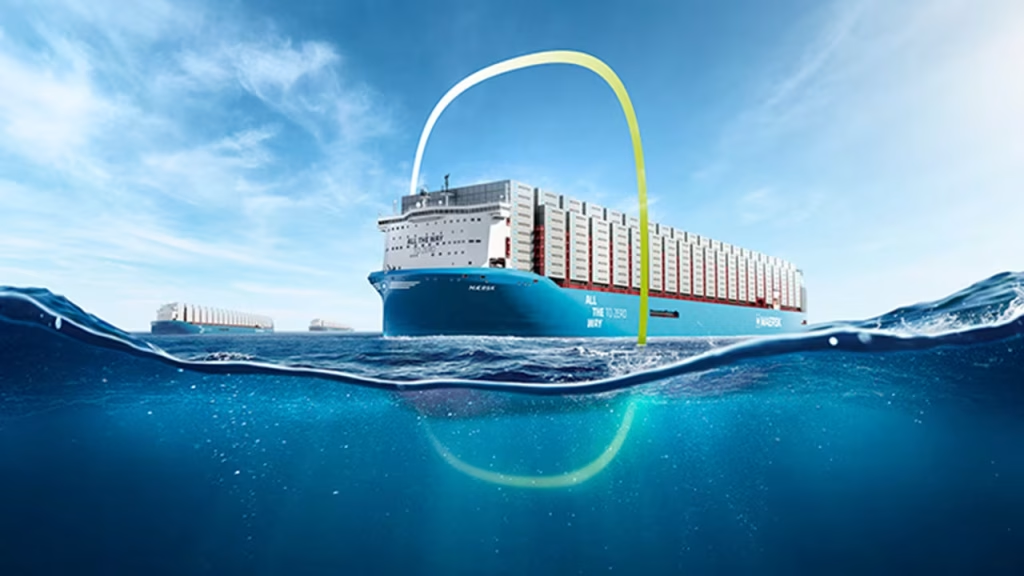
The global shipping industry is responsible for nearly 3% of global greenhouse gas emissions, placing enormous pressure on logistics companies to decarbonise. 

Recognising that climate action would reshape global trade, A.P. Moller–Maersk committed to achieving net-zero greenhouse gas emissions by 2040 and has invested heavily in vessels capable of operating on lower-emission fuels such as green methanol. 

These investments require significant capital and involve short-term uncertainty. Yet Maersk views sustainability as a long-term business strategy that positions the company for evolving customer expectations, regulatory requirements and investor demands. Rather than waiting for change to be imposed, the company is actively shaping the future of sustainable shipping. 

The lesson extends beyond the logistics sector: organisations that anticipate change are often better positioned to manage risk and seize emerging opportunities than those that simply react. 

As management thinker Peter Drucker famously observed: 

“The greatest danger in times of turbulence is not the turbulence—it is to act with yesterday’s logic.” 

Climate change is creating precisely this kind of strategic turbulence. The organisations that succeed will be those willing to rethink strategy, innovate and lead with a long-term perspective. 

The conversation has shifted from “How much does sustainability cost?” to “What is the cost of ignoring sustainability?” 

Leadership Is the Missing Piece 

Technology and regulation are essential enablers, but lasting climate adaptation ultimately depends on effective leadership and organisational decision-making. 

  • Balancing profitability with long-term resilience 
  • Managing stakeholder expectations 
  • Leading organisational change 
  • Making investment decisions under uncertainty 
  • Encouraging innovation while managing risk 

These are leadership challenges—not purely environmental ones. 

Former Unilever CEO Paul Polman, a leading advocate for sustainable business, captured this shift when he said: 

“Businesses cannot succeed in societies that fail.” 

His words reflect a growing recognition that long-term business success is inseparable from the health of the communities, economies and environments in which organisations operate. 

As Reuters recently noted, sustainability increasingly needs to become a filter through which strategic business decisions are made rather than a standalone compliance function. More jurisdictions are also expecting boards to demonstrate climate competence as part of effective corporate governance. 

Industry commentators increasingly argue that sustainability should become a lens through which strategic business decisions are made rather than being treated solely as a compliance function. More jurisdictions are also expecting boards to demonstrate climate competence as part of effective corporate governance. 

Five Questions Every Leader Should Ask 

  • Could our supply chain withstand a major climate event? 
  • Are climate risks reflected in our long-term strategy? 
  • What regulations are likely to affect our business in the next five years? 
  • Are our customers’ expectations changing? 
  • Does our leadership team have the skills to lead through the energy transition? 

Preparing for a Sustainable Future 

Climate change is reshaping how businesses operate, compete and grow. It is influencing investment decisions, customer expectations, regulatory environments and corporate governance. 

For professionals aspiring to leadership roles, understanding sustainability is no longer a specialist skill—it is becoming a core management competency. 

Programmes such as the MBA in Leadership and Sustainability offered through Robert Kennedy College are designed to equip professionals with the strategic mindset needed to lead organisations through this evolving landscape. By combining leadership theory, sustainable business practices and real-world strategic decision-making, the programme prepares graduates to address complex challenges where commercial success and environmental responsibility increasingly go hand in hand. 

The next generation of business leaders won’t be defined solely by the profits they generate, but by the resilience they build, the value they create for society, and the legacy they leave behind. In today’s world, sustainability is no longer a separate agenda. 

It has become central to long-term business strategy, organisational resilience and responsible leadership.