Unable to focus when studying? Here are 3 tips that may help you focus!

With age comes wisdom. By and large, the saying holds true, with a few exceptions – I am sure many of us know someone in our lives who hasn’t learnt from their mistakes. But this blog is not about introspection, or learning from one’s mistakes, or even about changing the past. It is about learning to focus when studying.

However, when I thought about writing this blog, it got me thinking about my childhood and the student I was; it got me introspecting. I remember sitting in my study and trying to focus on my textbook, and I remember all I needed was the slightest distraction to get completely distracted. Even when I read, I was just going through the motions and not really focusing or even trying to understand what I was trying to study.

It got so bad that even my parents realised I wasn’t focusing on what I was studying, and I remember the day before some exams, my mother would come to the study and offer to read the textbook for me. I don’t think I have ever thanked my parents for all the support they have given me, so thank you, mom and dad, for all you have done for me.

There goes my focus! Let’s get back on topic, shall we?

FOCUS! Photo by Stefan Cosma on Unsplash

What is focus?

In the simplest terms, focus is the ability to do a task without getting distracted.

Focus (or attention span), like most other human habits, can be trained and developed. The easiest things to develop are bad habits as it is usually fast and easy. But focus/concentration/attention span – whatever you want to call it, will take hard work and dedication.

“The successful warrior is the average man, with laser-like focus.”

Bruce Lee

Our mind is, after all, a muscle, and so is trainable. The following are 3 simple tips that should get you started on the path of training your focus.

1. Take responsibility

Don’t wait for a sign from heaven to take responsibility for your life! Photo by Austin Chan on Unsplash

Human beings like to deflect responsibility. If we take on the responsibility of a particular task, like, let’s say, studying a particular subject at a specific time, then the responsibility of completing the said task is in our hands. There may have been several reasons that distracted you and prevented you from completing the task… wrong! You allowed yourself to be distracted, and you failed to complete the task. So, stop making excuses and get back in the driver’s seat of your life!

A good way to understand what I am trying to say here is by imagining yourself on a long road trip, and you find yourself in the backseat of the car. For most of us, it is just a matter of time before we fall asleep. Now, keeping all conditions the same, only you find yourself in the driver’s seat, you will find yourself more focused, alert, and determined to drive the car to the best of your ability.

So, take responsibility, get on the driver’s seat, and you will find yourself able to focus a lot better.

2. Practice

Attention is a muscle, and like every other muscle, it needs to be trained and worked out to develop. Malcolm Gladwell, the author of Outliers, wrote that it takes 10,000 hours to become an expert in anything. He said 10,000 hours of “deliberate practice” are needed to become world-class in any field.

We have many distractions around us that prevent us from focusing on the task at hand, and more often than not, we give in to those distractions. We do it so often that in the end, we become experts in ‘getting distracted’.

So, how do you go about training attention?

Let’s start with a simple exercise. Let’s start with a 10-minute exercise. Go to your study, just with a notebook and a sheet of paper to note down all your distractions. Leave all distractions (mobile phones, storybooks, food, etc.) outside. To start with, choose your favourite subject and take study material only for that subject and only what you will be able to cover in 10-minutes.

Time yourself. 10-minutes, that all it takes. Photo by Aron Visuals on Unsplash

Start reading the study material actively, making notes and asking questions to better understand the subject. In the middle of this active study session, if anything distracting pops into your mind, make a note of it immediately in the distraction sheet, and return to your studies immediately. And once the 10-minutes is done, stop. Close your study material and leave the study.

Gradually try increasing the number of these 10-minute slots, rather than increasing the duration of study. If you find yourself unable to focus during these slots and cannot refocus, stop the session early and walk away. 

You will find you can cover as much in 10 minutes of focused effort as what you would usually have covered in an hour previously.

3. Health and rewards

We have covered most of this in detail in our earlier blogs, and I will link them here – eat healthily and exercise your body. To keep motivated, reward yourself, even in small ways. On completing tasks, realise that you have, and acknowledge this fact! Stand up and dance like nobody’s watching!


I hope these tips will help in getting you started on focusing on your tasks better. We would love to hear from you about what helped you with improving your focus.

If you are ready to start your online studies, chat LIVE on WhatsApp with one of our Education Advisors for more information on all the 100% online master’s degree programmes we offer and the application process.
All you wanted to know about Academic Integrity and Plagiarism

As promised in the blog about referencing and citation, this week, we bring you information and facts about academic integrity and how to avoid plagiarism.   

As a master’s student, expect yourself to be surrounded by deadlines to submit assignments, academic papers, and dissertations for most of your academic life (follow our #DILO – A Day in the life of an RKC student series to know more). Academic integrity is a crucial aspect of academic studies, and strict protocols must be followed to abide by the rules of academic writing.   

So, what is plagiarism? 

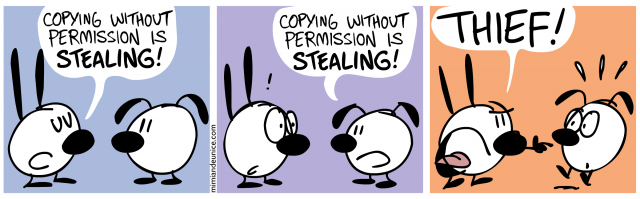
When one submits another person’s ideas, writings, words, images, or data as their own, it is termed plagiarism.   

Text

Description automatically generated with low confidence
Source: https://mimiandeunice.com/2010/07/30/thief/ Author: Nina Paley, 1968 

Plagiarism is among the four most common forms of academic dishonesty, the other three being cheating, academic misconduct, and fabrication. While looking for ideas and information is good research, not giving proper credit for the work cited becomes plagiarism. It is easy not to recognise potential plagiarism in one’s writing. Here are some examples:  

  1. Using information from the internet is commonly considered public information. However, it is still required to be cited.   
  1. When one paraphrases (i.e. puts someone else’s ideas in their own words) and does not provide credit to the original idea.   
  1. When one sources information from reading material provided by the professor, it still needs to be cited.  This is considered poor academic practice though, as you need to demonstrate independent research, and go directly to the sources mentioned by the professors in their lectures, rather than cite the lectures themselves. 
  1. When one copies their own ideas, used in previously marked work, and submits the same material for a new paper. This is commonly known as self-plagiarism.   

How to avoid plagiarism?  

As complex as it may seem, plagiarism can be avoided by simply citing and referencing your work wherever necessary and giving due credit to the original ideas, theories, words, quotations, images, or graphs.   

It is essential to make sure an appropriate style of citing and referencing must also be applied. Commonly used styles include Harvard, APA, MLA, and Chicago. You can check out detailed information on the blog: Attribution, to avoid retribution: referencing and citations for academic writing.  

Don’t panic. We’ve got help!  

Studying for a masters, working full-time, juggling work-life-study balance itself seems daunting. Do not get lost in trying to find the correct way to present assignments and avoid plagiarism. There are various sources that you can use to ensure effective writing every time.  

  1. Access the electronic library through your University account – there is always a guide to academic writing, referencing, and tutorial support directly from librarians  
  1. Ask for help from the tutors and student support services, who can help you get unstuck and direct you towards the resources that can help 

I hope this prepares you well for authoring your academic papers and assignments.  If you are stuck or have any questions, our highly qualified, world-class faculty will guide you through using the correct methods and techniques to follow academic integrity. 

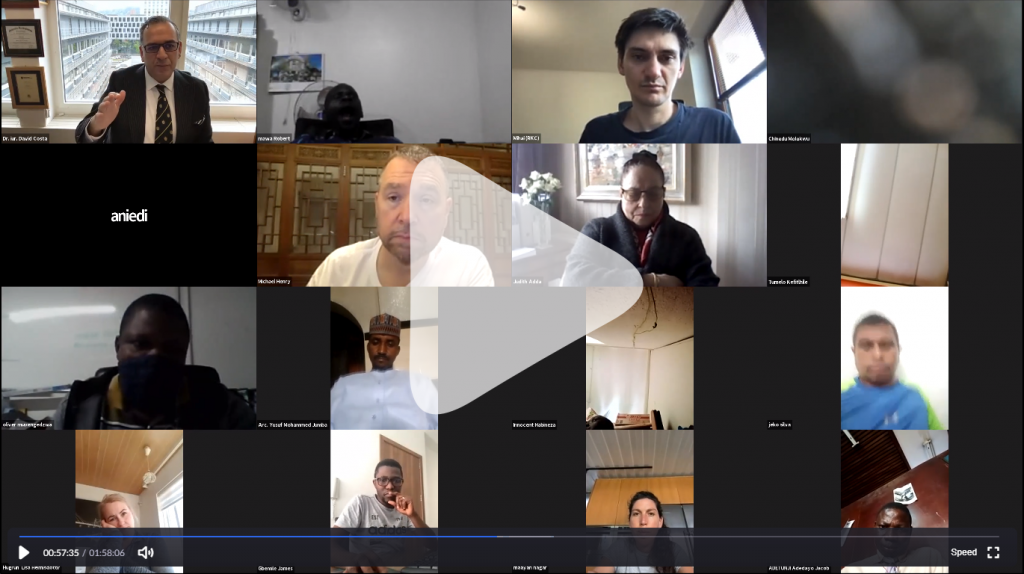
Meet the Dean, Dr. iur. David Costa – in an exclusive Live Session

The Dean of Robert Kennedy College, Dr. iur. David Costa recently held an online presentation and live discussion session about our 100% Online BA, MSc, MBA, and LLM programmes. The online Master’s programmes are offered in exclusive partnerships with the University of Cumbria, the University of Salford, and York St John University. The participants – the potential and current students accepted into our programmes –  had a chance to ask the Dean questions directly.   

Introducing the Dean  

Professor David Costa is one of the founders of Robert Kennedy College. In his current capacity as Dean of Faculty, he oversees the faculty review process and several of the college’s academic programmes.  

He holds a Dr. iur. (Doctor Iuris, Doctor of Laws) degree from the University of Basel, Switzerland, where he researched the law and regulations related to synthetic investment products. With other Law degrees from Scotland (Robert Gordon University, LL.B), England (the University of Northumbria at Newcastle, LL.M International Trade Law), and the United States (Washington University in St. Louis, Missouri, LL.M in U.S. Law), he has acquired extensive expertise in Comparative Law.   

In addition to his legal qualifications, Dr Costa holds a BA in Business Studies from the University of Derby, an MBA in eCommerce from Queen Margaret University in Edinburgh, a PhD in Strategy, Programme, and Project Management from the École Supérieure de Commerce de Lille for which his doctoral thesis was a study of index-based commodity investments. 

David is a frequent guest on business TV channels such as CNBC Europe and Bloomberg Television. His recent research on risk-adjusted portfolios with both stocks and commodities has been used for the creation of a Swiss publicly traded investment certificate issued by the second-largest German Bank, Commerzbank AG. In addition, he is the author of The Portable Private Banker.  

Professor David Costa lectures at Robert Kennedy College in Contracts Law, Transnational Business Law, Investment Law and Money Management  

The Presentation  

Professor David Costa began with a short presentation providing details about each of our exclusive partner universities. Then, he introduced the programmes offered – the MBAs, MSc, LL.Ms, and the BA (Hons) that was recently added to the list of the wide range of programmes RKC offers. He then gave the programme overview and explained what makes our Master’s programmes so unique. Here are some of the highlights that set RKC’s Online programmes apart:  

  1. Duration – Minimum 12 months and maximum 5 years  
  1. Contemporary, practical courses  
  1. No Exams. Evaluation based on assessments   
  1. Flexible Learning  
  1. 100% online courses  
  1. British Degrees that are recognized worldwide  

Further, he dived into the real reason they were all gathered together, and it was the pursuit of higher and quality education. David himself has been studying for over 20 years. With several academic degrees and two PhDs, he said that education had been his best investment, and each programme he studied gave him the best return on investment. He went on to tell why: 

  1. Knowledge  
  1. Self-confidence  
  1. Career progression  
  1. Discovering new horizons  
  1. Applicable learning – learn it today and apply it today!  

Finally, the Q&A round! The Dean himself answered several questions by the students from the questions about the programme, the payment plan, eligibility requirements, the study schedules, and many more.   

Watch the recordings of the live sessions held by Dr. iur. David Costa to find out for yourself if any questions that you might have have already been answered.  

Zoom conference recording 1
Zoom conference recording

It is indeed a very informative session. Would you like to attend a similar session in the future? Let us know in the comments section below, and we will notify you of the dates for future live session.

Age is just a number! It is never too late to learn.

I went all the way from kindergarten to MBA without a break. I am sure there are a lot of you out there who might have done the same. Looking back, I began to realise that I did not value the education I got. I don’t think it was even the education I wanted.  

Kindergarten to University

On the other hand, I know that a vast majority of people in this world are not as blessed as I was and don’t even have access to basic education. Whatever the reason people miss out on an education – social, cultural, economic, familial responsibility, geographical, political, etc., it is never too late to get an education, especially if you are driven for success.

Human beings have started to live longer lives now than at any time in our history – the miracle of modern technology. We try our best to shorten our lives – global warming, deforestation, polluting the planet, genetically modifying food (there are both pros and cons here), hunting animal species to extension, wars, etc. Still, we find ways to work around these self-created issues and extend our lives. This means gone are the days when you could retire at 60 and hope to live out the rest of your days in peace and happiness. Today, you will most likely run out of money.

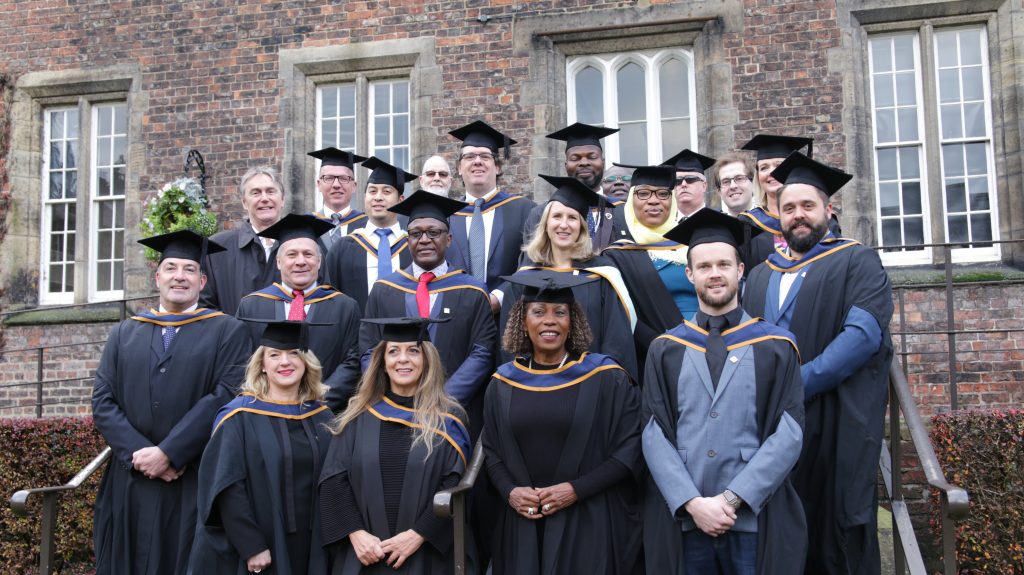
Celebrating RKC 2018 Graduates @ York St John University

I have started this blog by listing three points that I feel are relevant to why mature students go back to school:

  1. Got yourself a degree that is not in line with your dreams or career growth path
  2. Did not get the education that you think you deserved (due to reasons out of your control at that time)
  3. Need to stay relevant and competitive in today’s work environment by adding value to yourself

Once you have decided to go back to school, there are several points you have to consider. Ask yourself:

  1. Which programme works for you? Which will add the most value to you?
  2. What certificate do you want to get – bachelor/master’s degree, professional certification, etc.?
  3. Do you want to study full-time, part-time, or online?
  4. From which university do you want your degree and why?
  5. Work-Family-Education balance, can you do it and how?
  6. How much do you want to spend? Can you make space for the programme in your budget?

So, you have decided on your budget, the programme, the university, worked out a study plan and budgeted for the additional expense. But now, there are a few more challenges or fears that have cropped up, and you are not alone. The following are four challenges/fears that most mature students face and suggestions for overcoming them.

  1. Learning to learn again: While it might be a few years since you last studied, you haven’t been wasting your time. You have been learning your job and gaining confidence and proficiency in it. Use this confidence to get back in the groove of learning; it is like riding a bike, you never forget. And the fact that you are back to learning as a mature student speaks volumes for your motivation. Also, you won’t be the only mature student – work together as a group to overcome your fears. 
  2. Fear of assignments: Assignments can be daunting. Researching, referencing, planning, writing, and submitting a 5000-words assignment on time can scare anyone, especially if you have never done it before or if it has been many years since you last had to do it. The fact is, like any skill, assignment writing can be learnt. Maybe do a short course on how to research and write an assignment before joining the programme, or if that is not an option, you can find plenty of “how-to” videos online. Ask your professors for help and pro-tips – that is one reason they are there, to help. Ask your fellow students how they do it. But at the end of the day, the only way to gain proficiency in any skill is to do it.
  3. Work-Family-Education balance: In my opinion, this is the one point that will constantly be a bother. You start with a plan, but like Field Marshal Helmuth Karl Bernhard von Moltke said, “no plan survives first contact with the enemy”. So, keep an eye on the situation and evolve your plans accordingly. Life is change, adapt or get left behind.
  4. Don’t have the skills:  This may or may not be accurate, but if you think like this, then what you don’t have is confidence. Remember, all skills can be learnt, which is why you are here to learn. You have work and life experience, which typical on-campus, fresh-out-of-school students might not have. Use it, you will find you are more skilled than you think. And always remember, this was your choice, you are already more motivated than most to do well.  
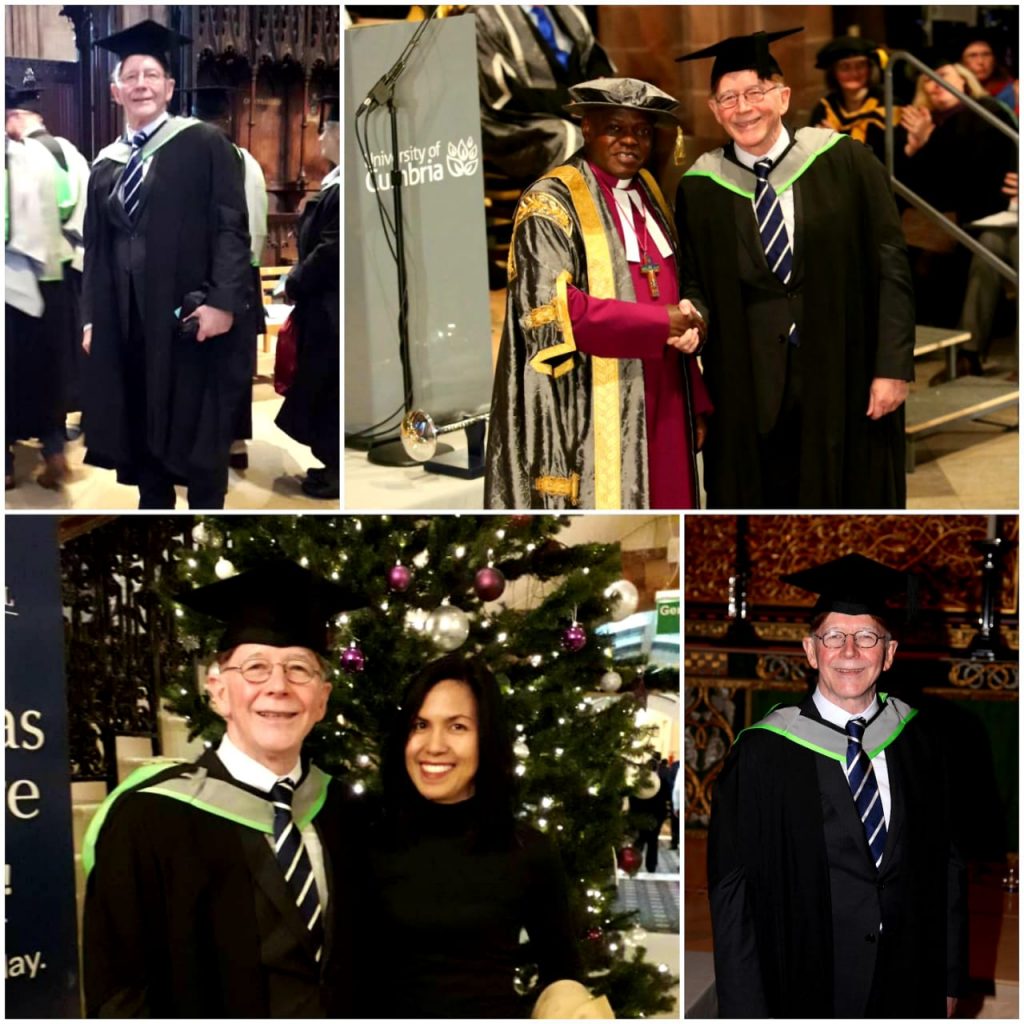
Gregory Foster, one of RKC’s mature students who graduated from the University of Cumbria with an MBA in Leadership and Sustainability, received the university’s Postgraduate Student of the Year prize in 2018

Don’t forget your motivation for choosing to learn again. Choosing to become a mature student. 

If you have chosen to learn, then Chat LIVE on WhatsApp with one of our Education Advisors for more information on all the management and business law programmes we offer (Bachelor and Master’s degrees) and the application process. I hope to one day be able to feature your story on our blog!