Can entrepreneurship and innovation be taught? 
Can you think ‘out of the box’?
When I was in school, let’s just say a decade ago.. okay two decades ago, I remember being taught the principles of economics – theory of demand and supply, demand and supply curve, market equilibrium, price ceilings and floors, so on and so forth. Later as a business student at university, I learned about economic models and even more complex financial terms about running a business, such as behavioural economics, macro and microeconomic policies, government policies, international trade and its impact. I have no recollection of ever being asked to or being taught to ‘think out of the box’ (the economics book in this case).  

The businesses, usually large traditional corporations, family-owned companies big and small, ran on the business theories and principles established many years ago.  

Fast forward to the 21st century; I see a new world around me. The businesses are no longer just large corporations run on an old-school of thought. There has been a paradigm shift in the way the companies are run and how they are conceptualized in the first place. I am sure everyone remembers the time of late 90s and early 00s – ‘the infamous dot com/bubble era’ that vowed to change the world and as a matter of fact, it did change the world! 

The bubble burst vowed to change the world

The bubble era engendered a trend of entrepreneurship of a scope like never before. The entrepreneurs – the new gurus of the business world – worked on very different business principles and business plans. Business plans were mainly driven by the strategy of growing big fast, being ubiquitous, insanely high stock market valuations, and focusing on branding and marketing to gain market share. And to establish a new trend, the essential ingredient was innovation.  

Hence, the birth and rise of entrepreneurship and innovation.  

In today’s evolving business environment, entrepreneurship and innovation have become increasingly popular. There has been a notable rise in the entrepreneurial activities around the globe in the last decade. Even the corporations are paying heed to the increasing value of innovation and the entrepreneurial mindset in the workplace. It is now believed to correlate to organisation’s profitability and growth directly.  

There are several forms of entrepreneurship, such as Innovative entrepreneurship, social, scalable start-up business entrepreneurship, big and small entrepreneurship. To give some real-life examples, Tesla aimed to innovate the automobile industry by introducing luxurious yet affordable and efficient electric cars. On the hand, Uber, a scalable start-up business entrepreneurship, started with an idea to disrupt the taxi industry and attracted various capitalists’ interest and bagged millions of dollars in investment, scaling the business to an otherwise inconceivable level, growing the company worldwide.  

All entrepreneurs have one thing in common – Innovation

And all the entrepreneurs (and their companies) like Bill Gates, Steve Jobs, Jack Ma, Elon Musk, Mark Zuckerberg, Walt Disney, J.K Rowling, Jeff Bezos (the list cannot be exhaustive), have one thing in common – Innovation. Microsoft, Apple, Alibaba, Tesla, Facebook, and Amazon witnessed tremendous business success through innovation by triggering a paradigm shift or evolving an old product with new technology.  

The benefits and increasing importance of innovation and entrepreneurship are manifold. As mentioned earlier, corporations are also realising their impact on their success. A study by Microsoft and McKinsey states that organisations show a direct correlation between employee retention and innovation, and innovative firms are more likely to retain employees. The study also reveals that companies that were assessed as having ‘innovative cultures’ were twice as likely to expect double-digit growth.  

So, the question remains if someone is a born Entrepreneur, is naturally innovative, or such attributes can be learnt, and whether individuals can be  adequately trained to be innovative entrepreneurs.  

The question remains if someone is a born Entrepreneur

“Profound growth requires innovation and, to foster innovation, you need people to feel trusted and supported to experiment and learn. There can be real returns for leaders who learn to let go and coach teams to constantly improve.”

Dr. Parke.  

To answer the question, yes, entrepreneurship and innovation can be taught, and with proper education, these skills can be mastered. By studying entrepreneurship and innovation, you can learn the underlying principles of starting a business, how to avoid common pitfalls, pitch ideas effectively, validate your product, develop a solid business model, and how to set yourself up for success in a field where failure is common. A good entrepreneurship and innovation programme will expose you to the challenges, contexts, and implications of entrepreneurship and provide you with a sense of the difficulties inherent in starting up and running a new enterprise. You will develop a critical understanding of contemporary discourses surrounding entrepreneurs and entrepreneurship as they are found in a range of national cultures and organisational contexts. The programme brings together relevant contemporary academic theory and research with a practical understanding of activities.  

We offer an online MBA Entrepreneurship and Innovation programme specifically designed to foster entrepreneurial and innovation skills to enable you to have a career managing innovation in existing firms and found new ventures. You will learn how organisations build value by applying entrepreneurial practices, the challenges and opportunities typically facing new and existing businesses, and the ability to design and implement creative strategies. Talk to one of our advisors to learn more about this and our other programmes. 

Top 5 differences between an MBA and an Executive MBA. Which one is better for you?

Pursuing the master’s degree is a big decision in many people’s lives. Choosing which programme will be most beneficial for one’s career development can be nerve wrecking too. Because there are choices – too many choices! For example, one might decide to go for an MBA programme, however, there is a choice to pursue an Executive MBA (EMBA) too! As an aspiring student, which one should you choose? Let us explore the differences, pros and cons of both so that you can make an informed decision. 

1. Admission criteria 

One of the foremost differences between an MBA and the EMBA programme is the admission criteria. For most of the MBA programmes minimum experience required varies between 1-3 years. Sometimes, even fresh under-graduates can also apply for MBA programmes given a good academic record.  

On the other hand, an EMBA typically requires candidates to have on average 3 to 6 years’ work experience with at least 2 to 5 years of managerial work experience. Our current MBA students and alumni for example, possess on average 5 to 10 years of work experience, holding leadership and management titles in companies such as risk and quality managers, heads of sales, senior corporate trainers, marketing directors, lawyers, consultants, politicians and diplomats, company presidents and CMOs. 

2. Pace of study 

The MBA programmes are typically pursued on full-time or on-campus basis, and have very demanding schedules. They have more traditional and rigid course structures. An EMBA on the other hand, offers a more flexible study schedule, and are typically delivered in blocks (weekends, once a month, etc.) or online. The majority of the EMBA students are working professionals with busy work schedules. Thus, to optimize their time, EMBAs offer lecture sessions at rarer, but more intense intervals than their MBA counterparts. When done online, these really put flexibility at the forefront. 
 

3. Intensity of the programme 

While both programmes focus on the same core modules, the degree of intensiveness in both varies. For the EMBAs, I will use an analogy of a multi-vitamin supplement – a power packed mix of various vitamins all together in one. Similary, EMBAs are intensive, and one should be ready to absorb a lot of knowledge in a short period of time.  

A regular MBA programme however, spreads the modules over a period of time. The course material is widely distributed and thus is comparatively less intensive than EMBAs. 

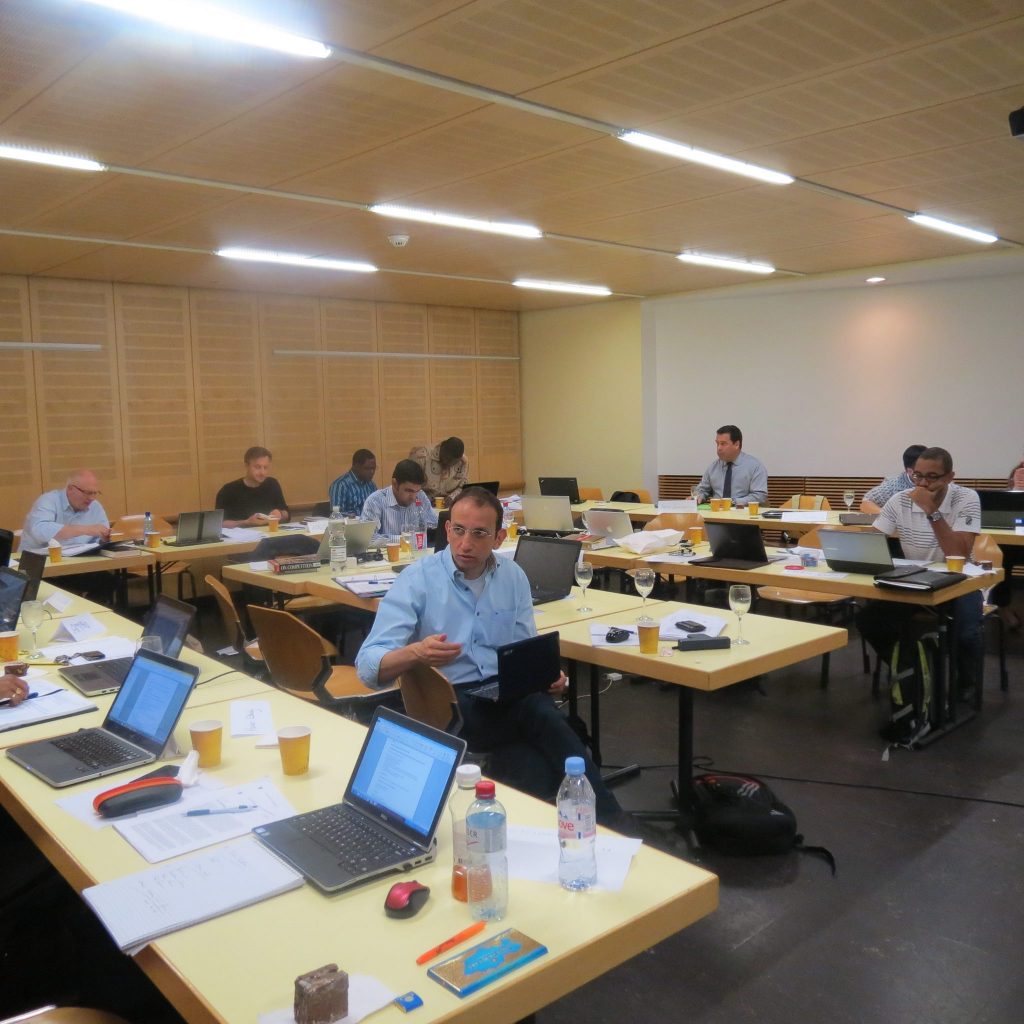
Group of students at the Residency in Zurich (At the moment we are conducting Online Residency in light of Covid-19 restrictions).

4. Curriculum and focus 

In an MBA programme, since it accepts candidates with fewer years of experience, the focus is on teaching and developing management knowledge from the basics. It has a broader choice available in terms of the electives that a student can choose from. An EMBA programme, however, has a higher bar set in terms of experience from its candidates. While some of the core modules are same as an MBA programme, an EMBA programme has a more focused approach.  
 

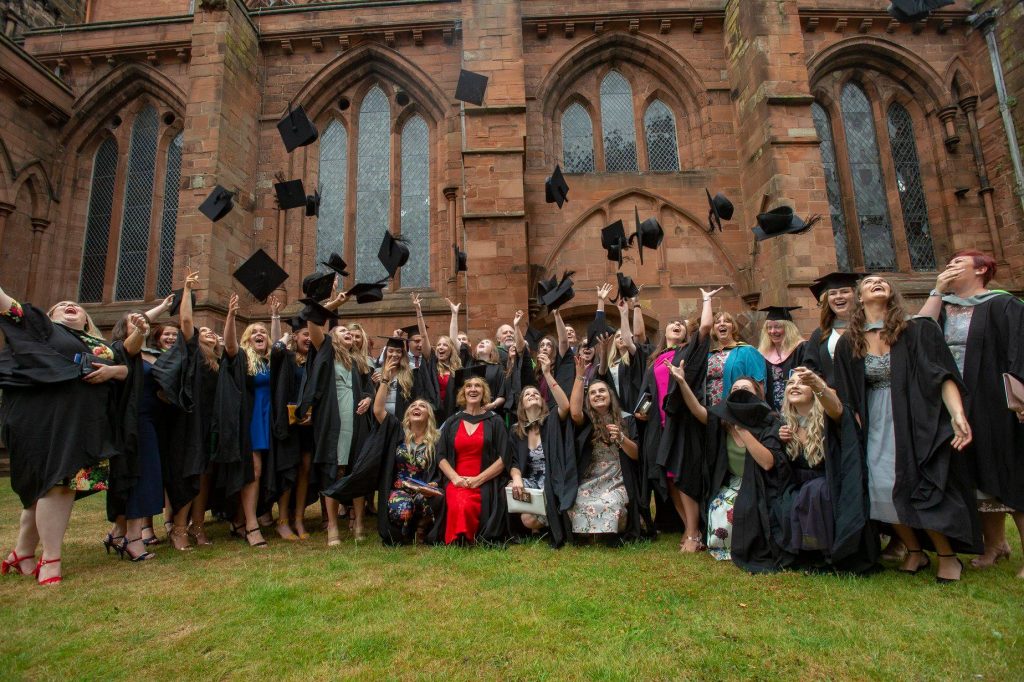
Celebrating our Graduates – University of Cumbria

5. Financial implications 

An EMBA wins over an MBA programme any day when we talk about financial implications of both. Firstly, an EMBA candidate can continue their day jobs and get paid to support their education. MBA programmes with full-time study schedules make it more difficult for students to continue with their jobs. Secondly, since a large portion (or in our case, all of the programme) is studied online, one saves a huge amount of money in travel and living expenses. Thus, the return on investment on an EMBA is typically much higher than a regular MBA programme.  

Money matters..

There is of course the issue of programme cost – these vary wildly though, and you can find really expensive programmes in both EMBA and MBA settings. 

I hope the above provides a few points to help you make the distinction between an MBA and an EMBA programme. 

Robert Kennedy College offers online MBA programmes – which are much closer to EMBAs than they are to MBAs because of their flexibility and incredible value for money. We do that in exclusive partnerships with the University of Cumbria and York St John University. Check out the list of various MBA progammes that we offer and choose the one that best suits your interests and career.  

Energy and Sustainability: Everything you need to know

In my last blog, I spoke about Leadership and Sustainability while explaining briefly what sustainability is and its three interlocking aspects. One of the three interlocking aspects was the Environmental sustainability. Environmental sustainability is about the environmental impacts associated with the business while ecological sustainability is about its impacts on biodiversity. And what affects both environmental and ecological sustainability is Energy. 

I guess you take the hint that in this blog I will talk about Energy and Sustainability.

Energy constitutes an important part of the environment. Energy production is a dominant contributor to climate change, accounting for 60% of total global greenhouse gas emissions.

Energy has always remained a critical pillar contributing to human well-being and poverty alleviation. It is important for economic development. Over the centuries, the ways and means by which we source energy has changed dramatically. One of the most critical challenges that the world faces today is sufficient access to clean energy for all. Hence the United Nations Sustainable Development Goal 7 (SDG 7), which calls for universal access to sustainable energy by 2030. 

Evolution of energy sources

Our historical and current energy systems are dominantly based on fossil fuels like coal, oil, and gas. Fossil energy was a fundamental driver of the Industrial Revolution. It also led to the technological, social, and economic development. Our energy production systems have important environmental impacts with carbon dioxide (CO2) and other greenhouse gases that the fossil fuels produce. 

It is because of these negative impacts of fossil energy that the world needs to find alternative sources of energy, sources that have a lower impact on the environment.

In order to better understand the energy requirements and eventual transition to cleaner sources, it is important to understand how the energy consumption has changed in a region and across the world; how the energy sources have evolved and what kind of access society has to which energy sources.

For example, according to a World Bank report 2016, only 7% of the world’s low-income households have access to clean fuels and technologies for cooking; the average share in Sub-Saharan Africa was 13%; and approximately one-third in South Asia. An in-depth analysis of these factors would truly reveal our energy requirements and energy source evolution. 

The renewable sources of energy broadly include: the traditional biomass (burning of wood, agricultural waste biomass, and the forestry materials), hydropower, solar, wind energy, and other renewables like geothermal energy. 

Let’s have a look at global energy consumption.

Global energy consumption

The chart below captures the energy consumption pattern from early 1800s to modern world 2019. While our dependency on traditional biomass has more or less remainedconstant over 219 years, energy production from renewable sources is still a significantly low percentage as compared to total energy generation through fossil fuels.

How much Energy does the World consume:

Global Fossil Fuel Consumption

As seen in the chart below, the main sources of fossil fuel production and consumption are coal, crude oil, and natural gas. Coal was the sole source of energy production until the 1870s after which oil and gas took over. Gas production was 14,119 TWh and oil production 37,024 TWh. Over two decades, it increased to 53,620 TWh and 39,292 TWhrespectively. 

Global renewable energy consumption 

The Paris climate agreement (December 2015) sets long-term targets for its member nations like reducing global greenhouse gas emissions. There is an ever increasing need of renewable sources to mitigate the greenhouse gas emissions. This can be achieved with two sources of energy – the renewable technologies and nuclear energy. The chart below shows the renewable energy generation from the 1960s to 2018. 

The process of transitioning from the fossil fuels to the renewable sources is termed as decarbonisation. The modern renewables including hydropower, solar, wind, geothermal,and modern biofuel production show a considerable increase since the 1960s with the world producing approximately 6.63TWh of modern renewable energy in 2018. Hydropower accounts for more than 70% of this total production. 

Affordable and clean energy – why does it matter?

First the question is “why do we need affordable and clean energy?” and second “what kind of sustainable energy sources?”. It is one of the United Nations Sustainable development goals to have affordable and clean energy. 

So why does it really matter?

1. Economic Development: Nations need energy and electricity to power their economies. Without a sustainable source governments cannot achieve sustainable economic development.

2. Reduce Disparity: The divide of the rich and the poor, the privileged and the under-privileged has widened amongst the developed, developing, and third world countries. About 789 million people around the world lack access to electricity (https://www.un.org/sustainabledevelopment/energy/)


3. Reduce air pollution: Clean energy is the only solution to the growing air-pollution concerns caused by coal, oil,and gas.4. Better healthcare: Energy is key in facilitating state-of-art healthcare facilities in a country. Fighting diseases, formulating vaccination, and fighting pandemics such as COVID-19 is attainable with a steady supply of energy – even better with renewable and clean one. 

I truly believe that every one of us has a role to play in energy consumption / energy saving, reducing greenhouse emissions. A small effort such as switching off the meeting room lights after a meeting, or taking a bike or public transport or walking can go a long way in reducing greenhouse emissions. And for those who live, breathe, and sleep energy, we offer a 100% Online MBA in Energy & Sustainability. Chat with our advisors for more information. 

Digital Marketing – The future of marketing? 6 reasons why you should consider this as a career option!

Marketing, like everything else in the world is constantly changing and evolving overtime.

From cave painting to word of mouth. From messages on scrolls to pictograms. From picture advertisements in magazines and newspapers to video ads in between your favourite TV programmes. 

And the evolution continues!

I mean, how many of us subscribe to a physical newspaper anymore? Netflix, Amazon Prime Video, and Disney+, just to name a few, have pretty much killed broadcast television and cable tv.  

We live in the world of binge watching, instant news (and in some cases fake news), and WhatsApp forwards! If you blink, you will be left behind!  

So, how are we to effectively market our products  and services, or  advertise to the masses in this fast paced, limited-attention times?

Digital Marketing is the answer, and  here are six reasons why I think you should choose a career in Digital Marketing!

  1. High demand
    While there are similarities between Digital Marketing and traditional marketing, the difference between them is substantial and cannot be overlooked. To do the job right, a specialist is required, and most companies accept this to be true. Digital Marketing is still a relatively new industry/vertical, and the number of specialists available is still very limited. It follows that a qualified and competent Digital Marketing professional  is highly sought after.
  2. Richness of choice within Digital Marketing
    Most people these days have limited choice in the career path they wish to take. When a company recruits for a job vacancy, for most roles, they will have an abundance of applicants, however, Digital Marketing being a new field, the opportunities available will be among the best in the market. Also, there will be a lot of opportunities within the various verticals of Digital Marketing. Here’s a few of them: 
    • Web properties –  websites, blogs 
    • SEO – Search Engine Optimization 
    • Paid marketing (PPC marketing) – Google search ads, Display ads, Affiliate marketing, social media paid ads 
    • Social media (Instagram, YouTube, Facebook channels, etc.)
    • Email marketing 
    • Mobile marketing 
  3. Show me the money
    It all comes down to the salaries and pay packages, and that’s the bottom line! People venturing into Digital Marketing will be the ground breakers, the trailblazers, the pioneers of the industry, and will have the potential to earn huge. For example, just before the lockdown started, a quick search for Digital Marketing job opportunities in the United States, listed jobs for freshers starting from USD 55’000. I think that is a pretty good place to start your career from. 
  4. Minimum entry requirements
    Digital Marketing is still a very new field, and people working in the field have very little experience in it and are still learning how to effectively develop and execute a digital marketing strategy. As everyone in digital marketing is still relatively new and mostly learning by experience, the entry requirements are comparatively lower than most other job profiles. So, now is the time to get into Digital Marketing and build a career. 
  5. Diversity in the workplace
    When the word “diversity” is used, most people think ethnic diversity. And that is true here as well, but it is also means so much more in Digital Marketing. In the morning, you could be working with extroverts who may be creators, creating ad campaigns and YouTube videos, who push their creative ideas across. And in the afternoon, you could be working with introverts who may be from Data Analytics or SEO or Website Development. This is just an example. The point is, working in Digital Marketing, there is a place for every kind of personality and the opportunity to work with every kind of personality!
  6. Creativity
    If you are passionate about the work you do (no matter how boring it may sound to someone else) then the potential for creativity exists. But the thing about Digital Marketing is, no other field of work encourages creativity and “out of the box thinking” quite as much as Digital Marketing does.

Now these are just some of the more obvious reasons to take up a career in Digital Marketing, and I am sure there are a number of other very obvious and/or more important reasons to make Digital Marketing your career. Perhaps you are building upon your previous Marketing career? Let us know in the comments below if you are already “in” and have some insights to share, I am sure it will help people make an informed decision. 


If you are ready for a career in Digital Marketing, then start with our 100% Online MBA programme in Digital Marketing or our 100% Online MSc programme in Digital Business.

You can also chat LIVE on WhatsApp with one of our Education Advisers for more information on the programmes offered, application process, and for more information on any discounts we might be running in this rather strange period of our lives.

RKC Launches 100% Online Master’s Degree Programmes

In today’s world of “social distancing”, online education has taken on an unprecedented importance. To remain professionally relevant, we must constantly find ways of self-improvement and adding more value to the organisation we work for. Online education is one of the easiest ways through which we can achieve these goals, all while maintaining social distancing!

Who are we? 

What we offer

Until now, one of the unique value propositions of RKC’s online programmes has been the one-week mandatory residency programme, which was conducted either in the university campus in the United Kingdom or the college campus in Zürich, Switzerland.  

However, due to the Coronavirus (COVID-19) global pandemic and to cater to the changing requirements of our students, RKC and its partners have moved to an online delivery for the residency as well, therefore all our Master’s degree programmes are now 100% online. 

OnlineResidency™ at work

There’s a caveat here – we really do like, and know students benefit greatly from, face to face residencies. It is likely that, as the pandemic ends, some of the programmes may go back to face-to-face residencies for new students. 

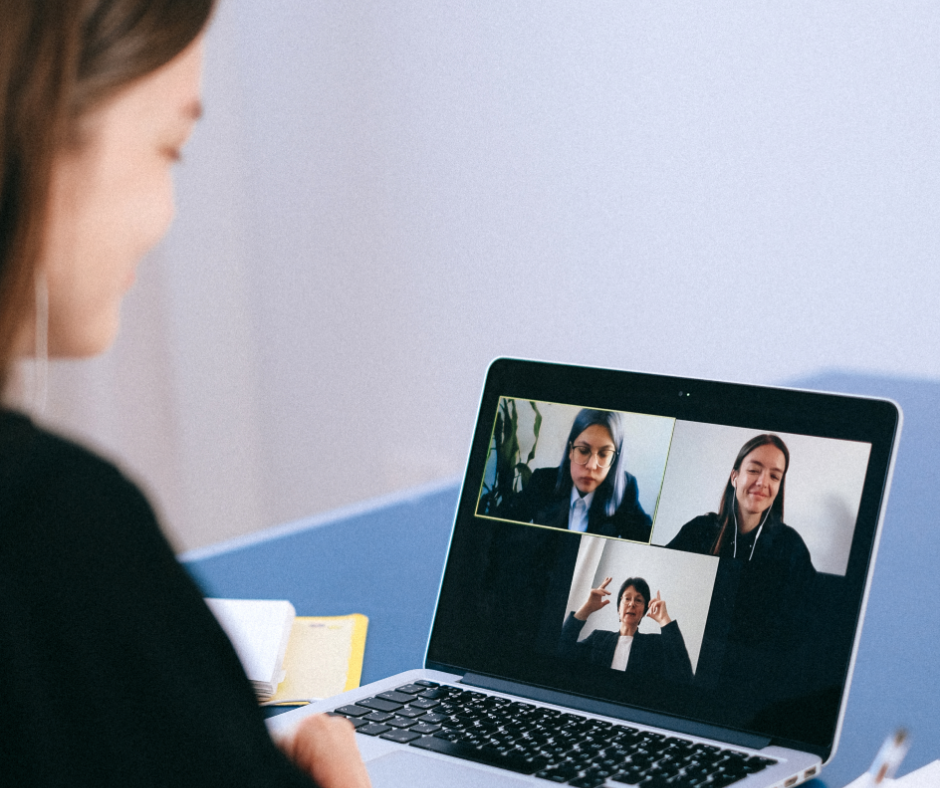
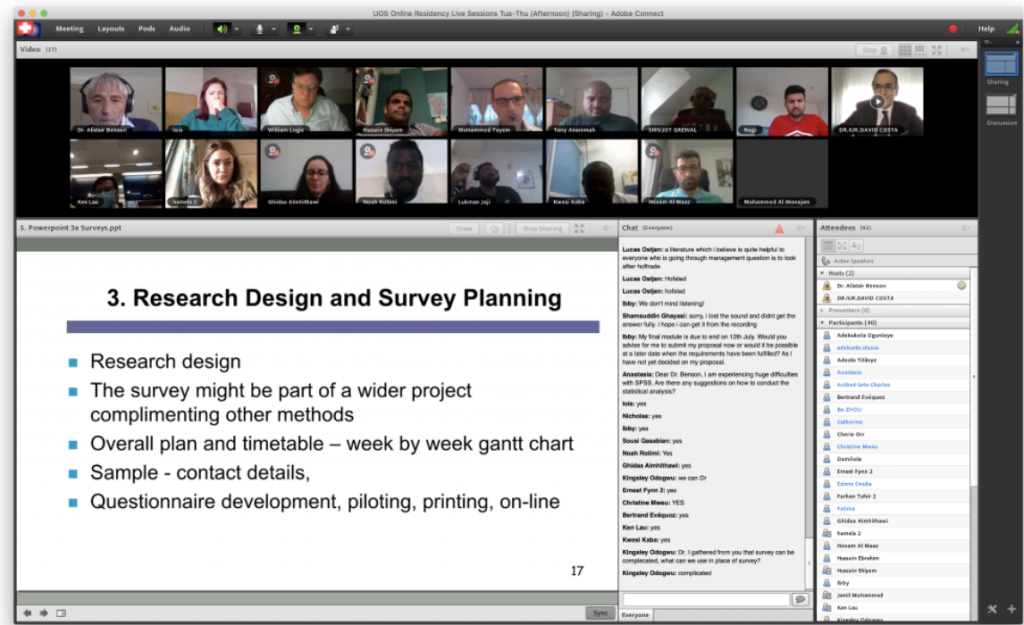
What does an “OnlineResidency™” look like? We’ve just finished our very first delivery this last week, and, some small technical challenges aside, given how everyone is online and video conferencing these days, we believe the experience has been successful and useful to our students, who learned about designing and conducting research for the Master level dissertations.

What can you study with us? 

100% Online Programmes offered through our exclusive partnership with the University of Cumbria

Online MSc Computer Science and International Business 

Online MSc Data Analytics 

Online MBA Artificial Intelligence 

Online MBA Digital Marketing 

Online MBA Information Technology 

Online Master of Business Administration 

Online MBA Energy and Sustainability 

Online MBA Finance and Sustainability 

Online MBA Media Leadership 

Online MBA Leadership and Sustainability 

Online MBA Public Health Management 

Online MBA International Healthcare Management 

Online MBA International Business 

Online MBA Risk Management 

Online MBA Tourism 

Online MBA Educational Leadership 

Online LL.M – Master of Laws in International Business Law 

100% Online Programmes offered through our exclusive partnership with the University of Salford

Online Master of Science in Global Management 

Online Master of Science in Project Management 

Online Master of Science in Financial Services Management 

Online Master of Science in Marketing 

Online Master of Science in Procurement, Logistics and Supply Chain Management 

Online Master of Science in Human Resource Management and Development 

Online Master of Science in Information Systems Management 

Online Master of Science in International Banking and Finance 

Online Master of Science in Accounting and Finance 

Online Master of Science in International Business with Law 

Online Master of Science in International Corporate Finance 

Online Master of Science in International Events Management 

Online Master of Science in Digital Business 

Online Master of Science in Fraud and Risk Management 

Online Master of Science in Finance and Investment Management 

Online Master of Science in International Business 

Online LL.M – Master of Laws in International Commercial Law

100% Online Programmes offered through our exclusive partnership with York St John University

Online MBA in Leading Innovation and Change 

Online MBA in Coaching Mentoring and Leadership 

Online MBA in Entrepreneurship and Innovation 

Online MBA in Innovation Leadership and Consulting 

Online MBA in Leadership and Management 

Online MBA in Management Consulting

Which programme is right for you? Not a question I am able to answer via a blog post, I’m afraid, but if you want to find out, you can get in touch with our team of admission advisers who can have a look at your profile and give you some advice.  Chat LIVE on WhatsApp with our Education Advisor today! Or, if you have already made up your mind, click here to apply.

Artificial Intelligence (AI) — The future of Business. Here are 6 reasons why!

Technology has always been the change catalyst for how we do business and with the rapid changes in communication technology, these changes are now taking place in real-time.

Technology enabling us to work virtually. Photo credit: unsplash.com/Uriel Soberanes

One of the key reasons for the long-term success of big multinational organisations is their ability to obtain business intelligence (BI) from their customers. Most organisations still collect feedback from their customers after a sale or service provided using a standard feedback form that asks typical questions. The information obtained through this method provides valuable information about the customers and their experience, but still the information is very limited, slow to get and process, and depends a lot on the customers’ willingness to give feedback. 

Organisations that invest in artificial intelligence (Al) and machine learning (ML) derive a lot of other benefits that can impact and provide business intelligence to multiple departments within the organisation. Furthermore, with the advancement in cloud storage and computing, data and business intelligence can be derived almost in real time. 

The following are some of the benefits of AI and ML especially in the era of cloud computing: 

  1. Enhanced Customer Experience: Real time intelligence on consumer buying behaviour provides companies with data on a number of key parameters from the spending capabilities of their customers, products that are trending, products that are reaching the end of their lifecycle, seasonal information, etc. Analysis of these data can provide the organisation with insights on the best ways to reach its customers through marketing activities, product pricing, product placement, etc. 
  2. Operational Automation: Operations are the backbone of an organisation. Without goods and services being produced or delivered, there is no purpose to the existence of an organisation. This is traditionally where the majority of the workforce is centred around, where the most wastage of resources takes place and is also the highest budgeted department of the organisation. Through the incorporation of AI and ML, the entire department can be streamlined to operate with best efficiency and in a cost and human resource effective manner.  
  3. Data Mining: Most organisations produce a mountain load of data every single day and it is not possible to manually go through all the data and extract some kind of BI from it. AI and ML will be able to quickly surface important and relevant patterns and insights during the processing of big data.  
  4. Supply Chain Management (SCM) Automation: Like operation automation, the BI derived through AI and ML can help streamline and increase the efficiency of the entire supply chain management process. It will also help in the automation of the entire SCM process. 
  5. Recruitment: Most big organisations receive thousands of job applications every month for a handful of job opportunities, making it almost impossible to go through all the applications to find the right person for the job. AI and ML can help (and indeed do already) in analysing the job requirements and the applicants’ data to find the right person for the job. 
  6. Trend Analysis: This key BI is applicable across all the departments of the organisation and is available through the analysis of all the data each department generates. By effectively predicting the trend, it will increase the efficiency and reduce the operational cost for an organisation as a whole, and at the same time increase its sales and overall profit. 

The above are just some of the more obvious benefits of an AI and ML system. Every day, new BI programmes are being developed. These programmes best utilise the AI and ML systems’ data to provide organisations with unique and valuable data to base future business decisions on.  

If you are looking to formalise your AI and ML knowledge, or looking for a jumpstart into a career in Artificial Intelligence, Robert Kennedy College offers a 100% Online MBA Artificial Intelligence through an exclusive partnership with the University of Cumbria, UK. Click here to apply for the programme. 

You can also chat LIVE on WhatsApp with one of our Education Advisors for more information on the programmes offered, application process, and for more information on any discounts we might be running in this rather strange period of our lives.

Student Testimonials – Johannes’s Truly Inspirational Story!

This week we bring you the truly inspirational story of Johannes from South Africa; a story which I personally found to be heart warming and one that motivates me to do something better in my life, everyday.

Johannes, a BA graduate and a Banker decided to pursue MA in Leading Innovation and Change (MALIC). One reason was that it is a well known Online Programme offered by the Robert Kennedy College in Switzerland. Another reason was that it was offered in partnership with York St John University in York, England, which he believes is one of the best countries for a special needs student.

Johannes graduated recently and it was a proud moment for him and his wife who commended his dedication throughout the course. He now intends to continue for a PhD.

As Johannes says, “At York, I was not just a number. The University was always eager to help”. Watch Johannes’s story and get motivated!

Success Story from South Africa

Download the catalogue to find out more about the programme, fees, start dates and eligibility criteria.

Future of Healthcare professionals

HEALTHCARE INDUSTRY – STA·TUS QUO

Demand for healthcare services has unobtrusively risen over a period of time now and this growth will continue into the future. The demand for services translates into ever-increasing demand for healthcare workers – including nurses, physicians, allied health professionals, technologists and coders, leaders, and support personnel. Like any other industry, it’s an upward trend in the long term, for the healthcare sector employment. However, the healthcare industry does not seem to be prepared enough to cater to this increasing workforce demand. Increasing demand has been accompanied by a growing number of unfilled jobs, a serious challenge that can be perceived in the federal labor data and on the digital job boards of hospitals and health systems, where hundreds and even thousands of open jobs are posted. Both growth trends and growth challenges will continue into 2018 and beyond.

WHERE IS THE FUTURE?

The amount of money that is projected to be spent on healthcare in the future, is cogent indicator of rising demand for healthcare services and healthcare workers. More than doubling from 2010 to 2025, when it reaches beyond $55 trillion, expenditures include payments for all healthcare costs, including pharmaceuticals, equipment and technology. However, labor constitutes the single greatest cost for most healthcare organisations.

This growing trend, has translated into a flurry of jobs openings in the healthcare sector. Even in 2017, despite the continued debate over the future of healthcare policy, the healthcare industry has added an average of 24,000 jobs each month. That’s vigorous growth in any industry. Employment growth is expected to continue for the foreseeable future. While healthcare job growth will ebb and flow in the future, the trajectory of growth has been consistently upward.

HOW CAN YOU FIT IN THE DEMAND SUPPLY GAP?

While job openings have ascended steadily over the years, the job hires remained relatively static. Traditionally openings have outpaced job hires in healthcare and the gap between openings and hires has been widening rapidly since 2014. This swelling gap – which represents a cumulative number of unfilled jobs – shows the challenges that healthcare providers face in finding enough practitioners and support personnel to fill today’s job openings. Other data reveals that the problem of high demand for healthcare workers, and low supply of those workers, may continue well into the future. The statistics on the projected future job openings  provides the healthcare providers the crucial insight on the demand for healthcare services and healthcare professionals. These are the jobs that healthcare providers will need to fill in the future.

At Robert Kennedy College, we offer Online MBA International Healthcare Management Programme, in exclusive partnership with University of Cumbria, UK. Recognise the workforce shortage in the healthcare sector and be there where there are abundant jobs. The MBA IHM could prove be the key to your success and better future. Click here to receive the course catalogue and get a chance for free trial offers.

Online education is the future of education system

It’s a changing world. We live in era of technological innovation, digitization and an internet boom, and the education sector has evolved to a stage which would hardly have been believable a few years ago. Change is often inumbrated by resistance, and bringing about any change to education, likewise has been no simple task. Only a systemic change could prompt the establishment of new teaching methodologies and the application of advanced technology in education. But despite challenges, online learning is making tremendous progress in permeating all pillars of education, from corporate learning, to higher education, to K-12 schooling. Leaders in these areas have discovered some significant ways in which online learning is better than in-person learning, and as a result we’re seeing the widespread implementation of connected technology to drive education initiatives.

With the advent of digital innovation and e-commerce, the world is your oyster where you can get almost anything and everything at the tap of your finger, without leaving the comfort of your home. There is nothing in this world you cannot get online, so why not education? Gone are the days when the only way to learn and advance was to sit through tiresome lectures. As the number of online users grows by the day, more and more people are taking to the internet for their learning needs.

Yet if you’re considering moving to online learning, it’s important to know why you should. Well, there are several reasons why online education continues to grow in popularity and is indisputably the next big thing. The factors range from the wide variety of course offerings, flexibility, and learning pace, to quality of pedagogy and networking opportunities.

Robert Kennedy College has been a pioneer in online education for the last 19 years. Its online masters’ programmes combines Swiss quality education at a distance with residencies at the college’s premises in Zürich, Switzerland or in England at the campuses of the College’s exclusive partners: the University of Cumbria, the University of Salford and York St John University.

The advantages and benefits of online learning offered by Robert Kennedy College make their education unique and stand out from the competition:

  • Wide range of courses offered – Online MBA, MSc and LL.M
  • Blended Learning – Learning opportunity both online and in-person with one-week residency
  • Network building opportunity with peers and colleagues from all over the world
  • Proprietary state of the art technology
  • Outstanding teaching faculty
  • Superior student care

At RKC we are changing lives. Come and be a part of this revolution. Click here to find out more about the online programmes.