DEAN’S LIST: Bernadette O’Neill, RKC Graduate with MBA in Leadership and Sustainability

“I came across an advertisement through the internet about the RKC program for the MBA in Leadership and Sustainability. It was these two words that attracted me so I applied and was accepted for the program – it was a great choice.” – Bernadette O’Neill

Bernadette O'Neill and husband in Cambodia

Bernadette O’Neill and husband in Cambodia

Bernadette O’Neill (Bernie) was born in a small farming community in Ireland. In the mid-1980s she volunteered to work in Africa for a development organization and knew that she had found her niche in life. Since then she has worked for development organizations in many countries in Africa and Asia, settling in Cambodia in the early 1990’s where she met her husband. In 2007, she became Country Director for ZOA, a Dutch NGO.

Bernie meeting with farmers in rural village in Cambodia

Bernie meeting with farmers in rural village in Cambodia

Kelly Boler: What do you do as a Country Director?

Bernadette O’Neill: As Country Director, I am responsible for all the work of ZOA in Cambodia. Our work concentrates on supporting the resettlement of families previously displaced by civil strife and poverty. As these families mainly settle in remote rural areas, our work focuses around agriculture. A great challenge is climate change which is causing hardship to farmers as the rainfall patterns continue to be erratic so water management and other vulnerability mitigation measures are an important part of our work. To support our projects with these newly settled families, I have to prepare project proposals to donors to access funds, recruit and train staff to implement the projects, monitor the works in progress and prepare reports to all stakeholders. The most interesting part of the work is the regular visits to the beneficiary groups where is it rewarding to see the positive changes in their livelihoods brought about by our work with them.

K.B. What drew you to do your degree at RKC?

B.O. It was sort of accidental!! I had been thinking for some time of pursuing a degree in a field more relevant to my work than my accounting background and some friends suggested an MBA. I did not feel that an MBA was what I wanted but then came across an advertisement through the internet about the RKC program for the MBA in Leadership and Sustainability. It was these two words that attracted me so I applied and was accepted for the program – it was a great choice. I am not particularly religious but sometimes I feel there is some divine guidance to our lives and what I call “accidental” can often be someone guiding us in the right direction.

K.B. Have you done your residency?

B.O. I attended the Residency in Cumbria at the end of 2011. What a wonderful experience! The anticipation beforehand of meeting our “virtual” colleagues in person was rewarded with some animated discussions and sharing of experiences. It was kind of strange walking into a college campus after an absence of over 25 years but the professors were brilliant and the program was stimulating.

K.B. Do you have suggestions for students thinking about their upcoming residencies?

B.O. For students planning their residency, I think it is important to “blank out” that week; don’t come cluttered with other things on your mind (either work, personal or other RKC courses). Normally you will take your residency in the middle of another course so make sure you are up to date with that course work and then forget about it for a week. This is possible because you will be given an extra week’s extension if any exams are planned around your residency. Coming with your mind free will give you more time for social interaction with your colleagues which is as rewarding as the discussions at the University.

K.B. What are your plans for your career post-graduation, and how do you think this degree or what you have learned effect it?

B.O. I will continue to work for development projects in Cambodia but now we have just phased out the ZOA program (as ZOA focuses on countries emerging from conflict and now Cambodia is past that stage), so I am taking a break for now but doing short term consultancies where they interest me.

I did not really do this degree to improve my career. I did it for the joy of just learning again – although I had always said that we learn more from practice than from study, it was most interesting to see how our practical knowledge is supported by various academic studies. Nevertheless it certainly enhances my reputation among my colleagues and future employers. Doing this MBA has also enhanced my capacity for research and showed me how much we can learn from previous research into subjects of interest to us.

K.B. What has been the best part of your experience doing this online degree?

B.O. It has been such fun over the past two years that it is difficult to say what was the best part. Certainly exploring new subjects was stimulating but probably the best part was the interaction with other students and tutors. I now have a great number of additional friends all over the world, many of whom I will continue to keep in touch with.
K.B. What do you enjoy doing? Hobbies, pastimes?

B.O. When I was younger I loved playing all kinds of sports – hurling (a unique Irish game), football, squash and running. Now I am a bit older I focus more on long walks and watching other (younger) people playing these sports. I love reading and get through a few books a day on my days off if I am alone – but I live in such a lovely place (Cambodia) where people are always dropping around for a chat that time alone is rare but these discussions with family, friends and neighbors are always stimulating. Apart from these things, I love travel – whether by bike, car, train, boat or airplane – and meeting new people.

Bernie's grandchildren

Bernie’s grandchildren

K.B. What is your favorite local food?

B.O. There is such a range of great food in Cambodia that it is difficult to say which is my favorite. Because I love to eat a big breakfast and then just top up a bit throughout the day, I could say that the best start for me is a big plate of rice topped with chicken liver, red chilies, garlic and lemons, washed down with a nice beef soup and a strong coffee. Maybe not everybody’s ideal start to the day but if I fill up with that I can go the whole day without anything else if necessary (until evening time of course, when the need for a beer sets in! – and my favorite snack with the evening beer is fried frogs in garlic sauce).

K.B. What is the perfect day?

B.O. A perfect day is of course a day when at the end of it I feel satisfied that I have achieved what I set out to do – sometimes this may relate to work (as in submitting a proposal within the deadline) or personal like sorting out family issues.

K.B. What is the perfect working day?

B.O. I love a day with a mixture of things to do, not just doing the same thing for the whole day – fortunately for me, most of my days are highly varied. The perfect working day includes some travel, meeting with project staff and target groups in their villages and feeling at the end of the day that I have achieved something.

K.B. Are you reading anything right now?

B.O. Since I finished the research for my dissertation at the end of January, I have taken a bit of a break from serious reading as I read so much leading up to that. So my current books are more light reading – some interesting stories of people’s lives around the world (e.g. a prostitute in Brazil, a coal-miner in Chile, etc.).

K.B. Do have any favorite books about business that have influenced you?
B.O. Regarding business books, a book that really inspired me was one of the books recommended to us during our marketing studies at RKC as it looks at business leadership that combines profit making with sustainability – that is Let My People Go Surfing by Yvon Chouinard. It is a book that should be read more than once to absorb the learnings from it.

K.B. What is your motto?
B.O. I can come up with no personal motto greater than the words given to us by God – “Love your neighbor as yourself.” It is very difficult to put into practice but keeping it in mind can help us to avoid selfishness and greed which are two things that drive injustice in our world and lead to unsustainable use of resources.

Work From Home Debate Heats Up

work at homeRecently, Yahoo and Best Buy, two companies that were pioneers in implementing flexible working practices announced that they were canceling the policies, forcing workers back to the cubicle. Best Buy called it Results Only Work Environment (ROWE), the idea being if a non-store employee get results, it doesn’t matter where or when they do the work. It had been in place for years until CEO Hubert Joly announced in February that he was ending the policy, saying it was “fundamentally flawed from a leadership standpoint.” At Yahoo, CEO Marissa Mayer said, “We need to be one Yahoo and that starts with physically being together.”

This dramatic about-face has triggered an intense debate, and while there are certainly arguments supporting these decisions, a casual look at opinions in established business publications on the web indicates that there are far more against it. Many criticize both companies for penalizing workers for an increasingly faulty business model. A flexible work scenario, they argue, is not the problem.

In a recent Forbes interview, management consultant David Heinemeier Hansson said, “Desperate times lead companies to desperate measures. It’s much easier to find a scapegoat, like ‘those slackers working from home!,’ than dealing with years of mismanagement…Yahoo and Best Buy’s problems are not caused by underperforming remote workers, they’re caused by a changing competitive landscape that they did not keep up with,”

Gary Peterson, also in Forbes, wrote of Best Buy: “Mr. Joly’s recent decision to end the practice appears to be a short-term treatment of a symptom rather than a long-term cure of the root problem.”

Telework pioneer Jack Nilles proclaimed, “Yahoo Marches Resolutely into the 19th Century.”

When Best Buy’s spokeperson asserted the policy was scrapped in favor of an “all-hands-on-deck approach [that] will lead to collaboration,” National Public Radio’s Steve Inskeep joked, “Anybody who works in a crowded office will understand this collaboration. You can do your online shopping, make restaurant reservations and deal with personal family problems over the phone, while getting advice from your co-workers in nearby cubicles.”

I find this debate especially interesting given my experience with Robert Kennedy College that offers the opportunity for what can be called a Results Only Learning Environment: you get out of it what you put into it. What do you think? Is a flexible, work-from-home scenario a liability or a benefit? Has your experience with remote study at RKC changed your thinking on the issue?

Students for students: Donald’s impressions on MALIC

A few minutes after recording the video of Jaap, I managed to grab hold of Donald. I believe I’m not mistaken in saying that the November residency attendants unanimously elected him the “joker” of the group. You will notice he cannot help it and lets his young heart show in this short clip as well, even if he speaks of serious things, like the commitment needed to be successful in the programme.

So I give you Donald!

Robert Kennedy College Online MBA Financial Times 2013 Listing

We are happy to announce that the University of Cumbria MBA at Robert Kennedy College has been listed again this year on the Financial Times 2013 Online MBA Listing.

The University of Cumbria long history that dates back to 1822 has been combined with the unique expertise of our College to offer one of the most content and cost competitive programmes in the World.

The Financial Times listing highlights that the The University of Cumbria MBA at Robert Kennedy College is now one of the largest MBA programmes in world. (you can download the full listing and report here ).

Our Students come from all over the World our programme incorporates a one week residency in Cumbria, England and allows our graduates to enjoy the same benefits of full time students including attendance to the annual graduation ceremony at the Carlisle Cathedral. 

We are currently accepting applications for the April 2013 and May 2013 intakes. If you are ready for this challenge you are welcome  to apply now!


In the video below you can see the impressions of our students during the residential week at the University of Cumbria World class campus in the idyllic Ambleside


Are you ready for the challenger and start your MBA ?  click  to apply now!

Students for students: Jaap’s advice for the York residency and more!

Hello everyone,

Although I am in the middle of reading midterms for the January cohort, I could not resist the temptation to surprise you all with a new video from the Students4Students series. Today our special guest is Jaap, whom some of you will know either from the residency or from our online world.

I caught up with Jaap last year in York, and for reasons outside my control the video was delayed again and again, but now it is here. Jaap has some practical advice for those of you attending the York residency, and also some advice about the programme in general.

Switzerland says Ja and limits “fat cat” salaries


Switzerland says Ja and limits “fat cat” salaries
==============================

see also the http://www.cnbc.com/id/100516799 CNBC article by Carolin Roth

With close to 68% of the votes and a winning result in each of the 26 Cantons, Switzerland has voted yes to the referendum to give executives pay binding decision rights to shareholders. The new rules will be part of the the Swiss constitution and will allow shareholders to vote, even electronically, annually on management compensation with veto powers.
It also bans the payment of sign-in and exit bonuses, m&a bonuses and consulting contracts.
The vote highlights the Swiss strong will to enhance transparency and give more power to shareholders. The recent issue with the former Novartis CEO exit package has further underlined the gap between shareholders and population understanding of a fair and competitive compensation to what was seen as an exaggerate exit bonus.
Swiss Competitiveness not in danger
==========================

The main concern for these that lobbied for the referendum proposal to be rejected was that the competitiveness of Switzerland as a place to do business will be impacted, as many multinational companies might opt for other locations where the executives compensation doesn’t have to be decided by shareholders.

I think that this will not be the case and Switzerland will continue to be highly competitive for several reasons. First the WEF competitiveness survey, topped by Switzerland in the last few years, does not consider executive pay as a criteria. Secondly for executives Switzerland remains a highly competitive place to work due to the low taxation (30% on average vs. 48% of Germany and 45% of England) and very high quality of life.

Additionally the fact that shareholders have now the right to vote on executives pay doesn’t necessary mean that they will not approve competitive salaries. It will however enhance transparency and avoid further situation where a top manager, regardless of the effective performance, will receive lavish sign-in and sign-out bonuses.
Transparency in a post-financial crisis economy
================================

The 2008 financial crisis has left a mark in Switzerland too. The overall perception of the population is that top managers come and go leaving too often the problems behind them. Regardless of several instances of poor performance their paycheck remained unaffected and this is not acceptable. It also tries to end a short term top management mentality by banning sign-in and exit bonuses.

The recent EU decision to cap banking bonuses to one year’s base salary is another signal that this reform might be adopted by other European countries too (Denmark and the Netherlands already have a binding shareholder vote on executives compensation).
In Short
========

– Swiss Vote on giving executive compensation voting powers to shareholders passed with a large margin potentially opening a new era in corporate transparency;
– Swiss Competitiveness should be largely unaffected by the change as the criteria that make Switzerland one of the most competitive remain.
– The 2008 crisis underlined the failure of a “hands-off” approach is among the reasons for the need of more transparency and shareholders power;
– Other European countries might implement similar rules, particularly in the banking sector, but will be much slower in doing so.

Students for students: Patricia and Mike’s advice on reading for academic writing

Hello everyone,

I’m sure you’ve missed me 😉 Life has a funny habit of getting in the way at times, so I have been very silently on the blog lately. Now however, I am back, with a new piece of advice from one of your fellow students, Patricia, whom I’ve met in Zurich last summer. Time flies – it will be almost one year ago soon!

Anyway, neither myself nor the MALICs present at the dinner managed to convince Patricia to stand in for a short video, but she promised she’d send us something once she’s home, and she did! Patricia works as a Senior Digital Inclusion Specialist, and here’s what she had to say about her experiencing in MALIC, with a particular emphasis on reading for the modules:

Patricia – MALIC lesson learnt

"This was taken the weekend of her wedding last year, so a very happy time for us as we had a quiet mother/daughter meal together." ~ Patricia

“This was taken the weekend of her wedding last year, so a very happy time for us as we had a quiet mother/daughter meal together.” ~ Patricia, Sep’2011 cohort, Qatar

I will add to this what I also told Patricia on listening to her recording for the first time: in reality, it is difficult to give a generic piece of advice in what concerns reading. We are all different, and different types of learners read differently – one may be very comfortable skim-reading, while another will find that unless they read everything cover to cover they can’t make sense of it.

Just as I was preparing this post this morning a further discussion on this topic was taking place in the Induction module, where Mike, another MALIC “veteran”, had the following to say:

My experience is that in the beginning you try to read the books from cover to cover but I found that I quickly became overwhelmed and depressed at my lack of progress, so you need to learn to read differently.

I learned to take a topic in a book and read that and then look for similar topics in other books to get a range of opinions on that topic. Some you can read properly if it sounds valuable and some you scan looking for things of interest. Try also to read all the Introductions in each book to give them context.

Doing this means you can get through up to 25 books or articles in a module without have to read all of them completely. Only read what is relevant and what fits into the section you are researching using the Power Point slides in each unit as a guide. You will find things of interest not covered in the slides which is also good.

I always tried to thoroughly read the essential books and not so thoroughly the recommended books, but do look out for the recommended books marked with a # as they are usually very good.

Mike, Sep’2011 cohort, Papua New Guinea


Dean on CNBC 11 January 2013: A New Year, A New Europe


A New Year, a New Europe
========================

The ECB decision to keep interest rate unchanged underlines the great improvement in the Eurozone both in terms of Government and banks financing.

With good results from the Spanish auction and the Italian financing costs at the lowest in 3 years we now see confidence getting back to Europe. This will make 2013 a year of slow but firm European recovery.

Given the overall financing improvement the announced OMT, that was certainly very important to reach this point, will probably not even need to be deployed. This is pretty much what investor wants: to know that the ECB will be ready to intervene if needed and ensure a lower fragmentation among the various European Economies.

Financing for banks (e.g. through the recent issues Intesa and Banco Bilbao) has also considerably improved.

Throughout 2012 I maintain a positive outlook for Europe and I can only reaffirm this for 2013.

European Challenges
====================

Despite the great financial improvements several challengers remains: while Draghi pointed out that full employment is not within the ECB mandates the high unemployment in some European economies (especially youth unemployment) remains a big challenge for some European economies. We have also not yet seen a full improvement in lending which limits the potential of new investments, job creation and consequentially growth.

What European Governments needs to do is implement a set of measures to reduce unemployment and boast growth: a real challenge if combined with austerity !

Opportunities
=============

With interest rates at record lows and an increase of money supply equities remain among the most interesting asset classes for 2013. In terms of regional focus European companies with exposure and growth in emerging or higher growth markets remain attractive.

I would still recommend some allocation to Gold as a hedge toward the increasing money supply.

In Short
========

– Europe will have a slow but firm improvement in 2013
– Lending conditions should improve and support the European recovery
– European-based companies with exposure to higher growth economies are still a good investment opportunity for 2013
– Gold remains interesting as an hedge but volatility is to be expected

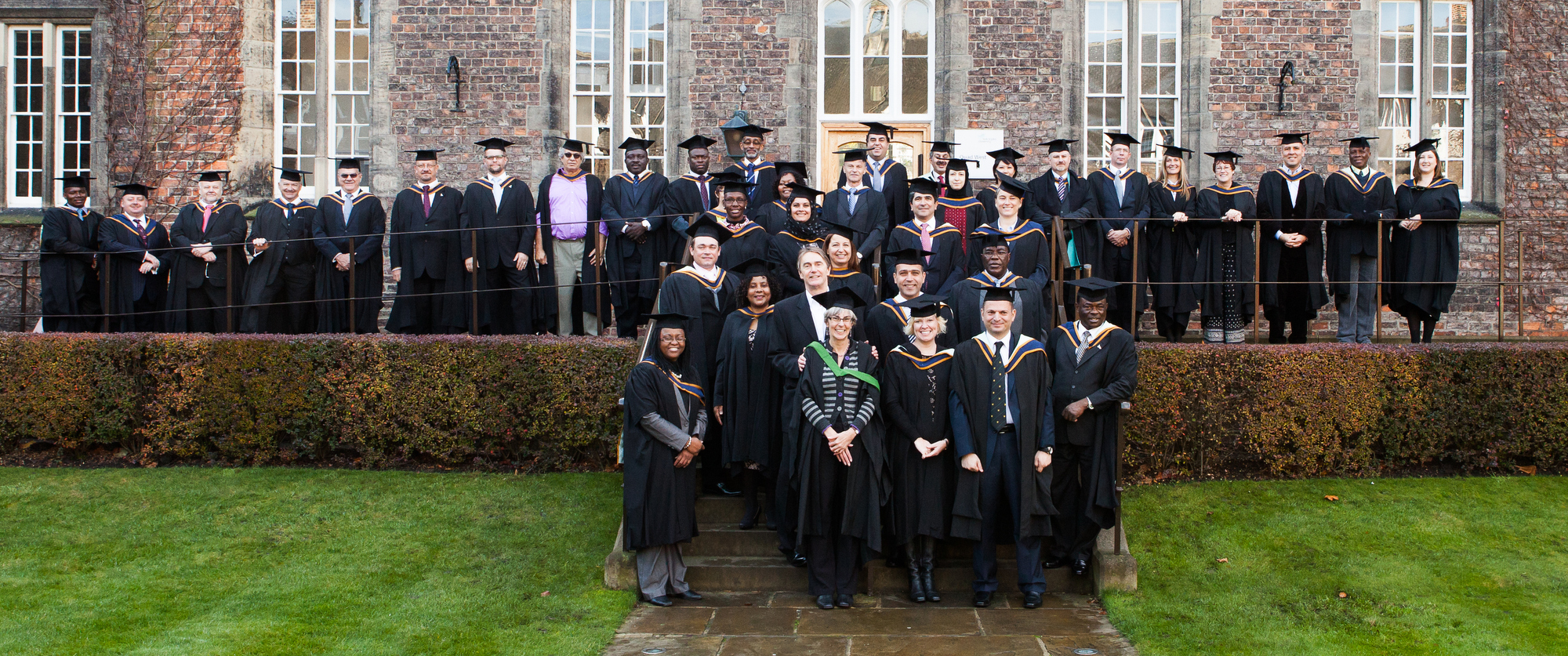
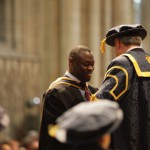
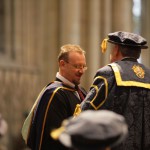
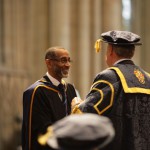
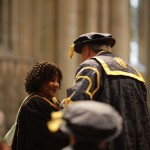
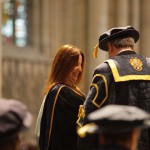
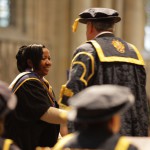
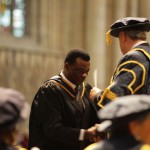
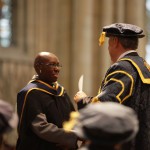
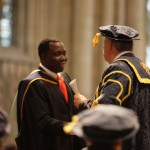
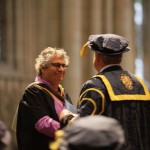
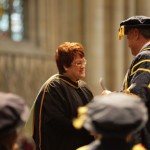
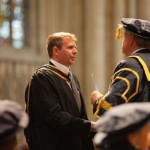
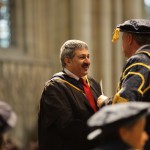
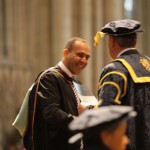
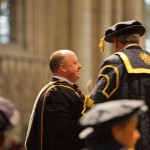
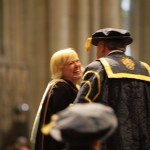
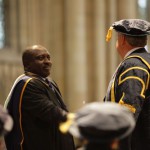
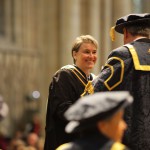
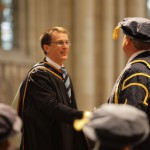
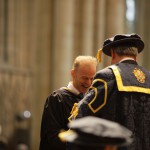
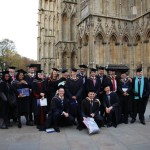
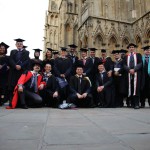
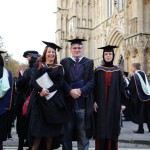
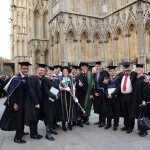
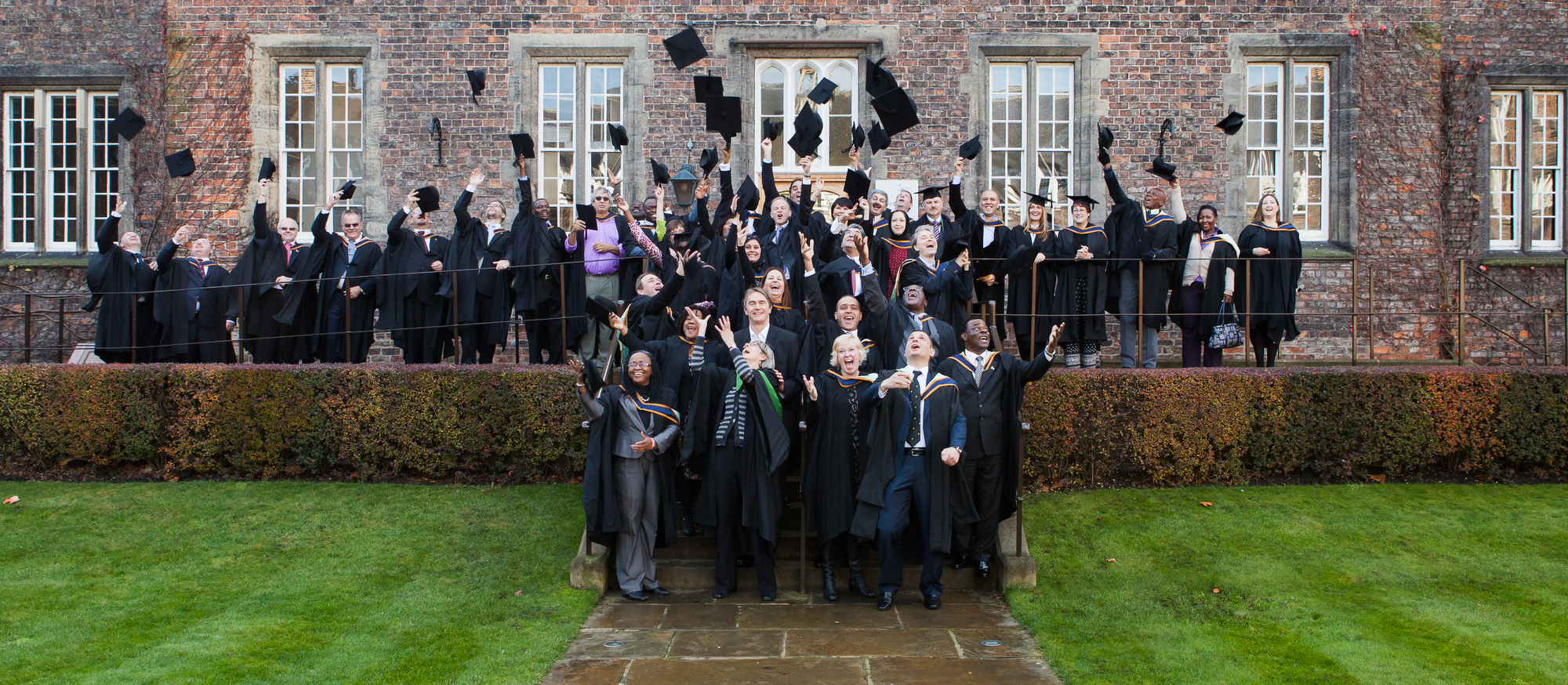
2012 Highlights: Graduations at Carlisle Cathedral

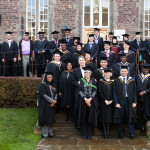
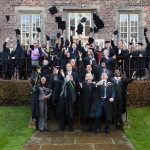
As 2012 comes to an end, we would like to share with you one of the highlights of the year: the University of Cumbria graduations held at Carlisle Cathedral on the 22 November.

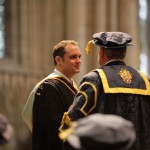
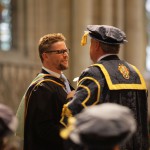
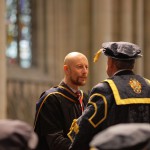
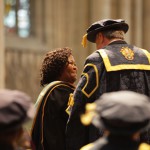
The graduations were attended by several MBA in Leadership & Sustainability graduates who received their degrees from the Chancellor of the University of Cumbria: the Most Reverend and Right Honourable Dr John Sentamu, Archbishop of York.

Graduations are certainly a major highlight of the year for Robert Kennedy College. Graduation time is when talented students from all over the world reach another height in their personal and professional careers, namely the University of Cumbria MBA.  We congratulate Carol Aebi from Colorado, Richard Lau from Bermuda, Laura Caiello from Brasil, Zeljka Plancherel from Switzerland, Johan Poelstra from Poland and all the MBA class of 2012 graduates.

To inspire you in the upcoming year 2013, I am happy to share further photos of our graduations at the Carlisle Cathedral.
The gallery below features our proud 2012 MBA graduates and some of our faculty members including myself, Dr. Alistair Benson, our Deputy Dean Prof. David Duffill and the MBA programme leader Dr. John Luffrum

When do you plan to start your Online MBA or, if you are already a student, when do you plan to graduate? Feel free to leave you comments below !