Writing Masters Level Assignments

A Master’s degree is critically different from a Bachelor’s degree. Though similar on some, Master’s degree will involve a lot of different aspects than a Bachelor’s.

At Master’s level you could be studying one of the many specialised courses offered by Robert Kennedy College, as MBA International Health Management, LLM – Master of Law International Business Law , MBA Leading Innovation and Change or Master of Science Project Management.

Taught Master’s are usually modular in form, featuring a range of optional modules the student can choose from, with a final dissertation at the end of the course, usually produced over the final semester.

Writing assignments at Master’s level

You must use language appropriate to the academic environment, and a coherent and strong structure to your work is essential. Assignments will be longer at Master’s level, even for unassessed pieces of work. Do not be overwhelmed by larger word counts. Remember, you made a large step up in intensity of work from school to university, so another step-up is well within your capabilities.

Clarity is important. Do not use over-elaborate vocabulary and grammar just because you think you have to. It is more important to be understood.

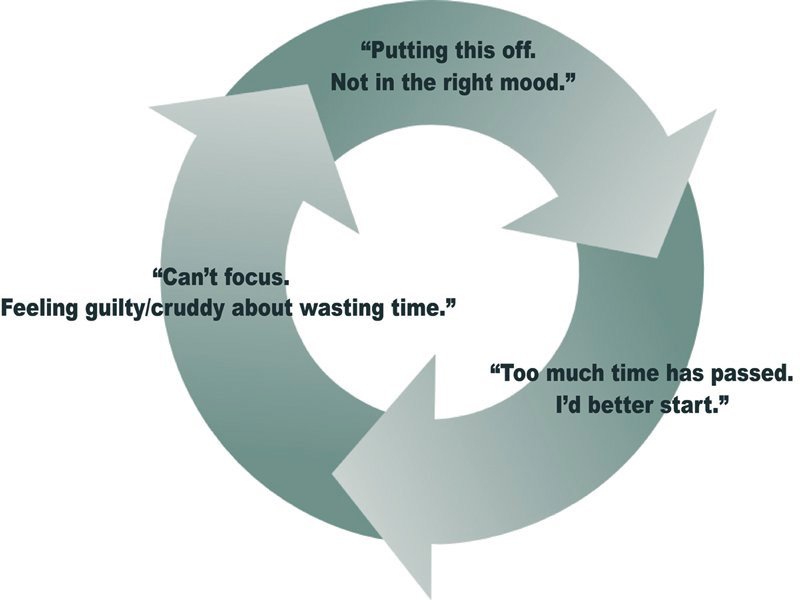
Time management is crucial for the Master’s student – with a heavier workload you will find that a good weekly plan, and a firm grasp of deadlines, is essential. This is especially true with the dissertation which will be the longest assignment you will have done yet at university, usually covering a period of several months. It is important to set yourself deadlines for drafts.

Here are the various aspects of writing skills that Master’s students should be concentrating on in order to succeed.

THE MASTERS LEVEL

One of the first things most Master’s students notice once they have started is how much more intense a Master’s degree is than an undergraduate degree. It is a less passive experience; you will not be guided as much by the lecturers, and will be expected to think for yourself more.

Master’s requires a new way of approaching academic work, all the groundwork has been done at undergraduate level. Let’s look at the features of a Master’s more closely.

ORIGINAL RESEARCH

A Master’s degree is geared towards the delivery of a piece of original research. For research Master’s students this will be your primary focus. For those doing taught Master’s this will form part of all aspects of your degree, not just the final dissertation.

In your original research you should also aim for originality where possible. You are being asked to look at your subject in a fresh and innovative way, and finding a new or underdeveloped area of your subject, or a new way of looking at an established area, will help you gain better marks.

THEORY

Master’s are not exercises in description. You will need to find a theoretical basis for your work. Many Master’s will run modules on the subject of theory, it is advisable to attend all available classes on the subject of theory as it will help you to form an idea of the theory which surrounds your subject. Theory forms a useful framework to hang your research on.

CRITICAL ANALYSIS

Another important part of Master’s writing is critical analysis. A critical analysis is one which assesses the quality and usefulness of the sources which you are using in your assignments. This process involves considering all aspects of the source and its contents.


Download our course catalogue.

Student Testimonials – Hear the success stories of our LLM Graduates

Online education is fast becoming one of the key gateways through which people are able to realise their educational and professional aspirations. It does not matter whether you are at the pinnacle of your professional career or just starting out; you are maybe looking for a change in career path or enhance subjective knowledge. Online education can just help you achieve this & more; all at your own pace.

Watch the motivating testimonials of Ms. Sofia Maria Gadain and Mr. Basil Abuhamdieh, two individuals from different walks of life and from different countries and different motivations in doing the Masters; but have one thing in common – They both graduated from the University of Cumbria Online Master of Laws (LL.M) programme! 

Click here for more information on the online programmes offered by Robert Kennedy College through exclusive partnerships with British Universities.

Dean’s Message for the New Year 2018

Prof. Dr. iur. David Costa, Dean Robert Kennedy College, wishing all of our graduates, students: current and prospective, a very happy and successful New Year 2018. Encouraging everyone to start something new and achieve new goals.

Get inspired with the dean’s message:


So let your career take-off and achieve new heights this new year. Our one year online masters’ degree programmes combine quality British education with Swiss ingenuity. Download the catalogue here: https://college.ch/catalogue?j=fbpagemt


MALIC: Renewed partnership between YSJU and RKC

Perhaps you have already heard of the York St John MA Leading Innovation and Change (MALIC). One of your business contacts may be a MALIC, or perhaps you are one yourself. There are many MALICs out there – a network of more than 600 professionals who all have one thing in common – they have obtained their degree from York St John University, online. To be more precise, in a blended-learning delivery, with a one week residency in York or Zürich, by virtue of our exclusive partnership with YSJU.

Partnership agreement between YSJ and RKC continues

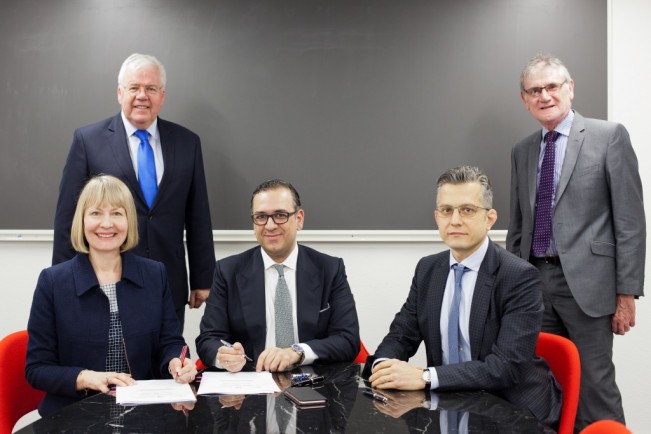
I am very excited to report that we expect an increase in the number of MALICs: true to their common mission, YSJ and RKC have recently met at the highest level in order to renew their commitment to deliver MALIC at a global level, reaching people all over the world and allowing them to study while continuing their (most often full-time) jobs. Professor Karen Stanton, Vice Chancellor of York St John University, and David Chesser, Chief Operating Officer, met with Prof David Costa, Dean of Robert Kennedy College, Stefano Costa, CFO, and Prof David Duffill, Deputy Dean, and officially signed the agreement.

YSJ - RKC - MALIC Signing

With graduates in over 100 countries, MALIC is one of the largest global Master programmes, and we are very excited about being able to increase these numbers and thus do our little bit in improving the overall quality of leadership in the work place.

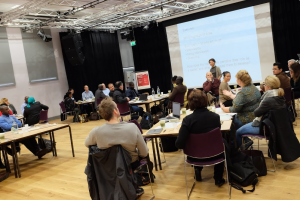
Reflection session

Reflection session during the September 2015 residency in York

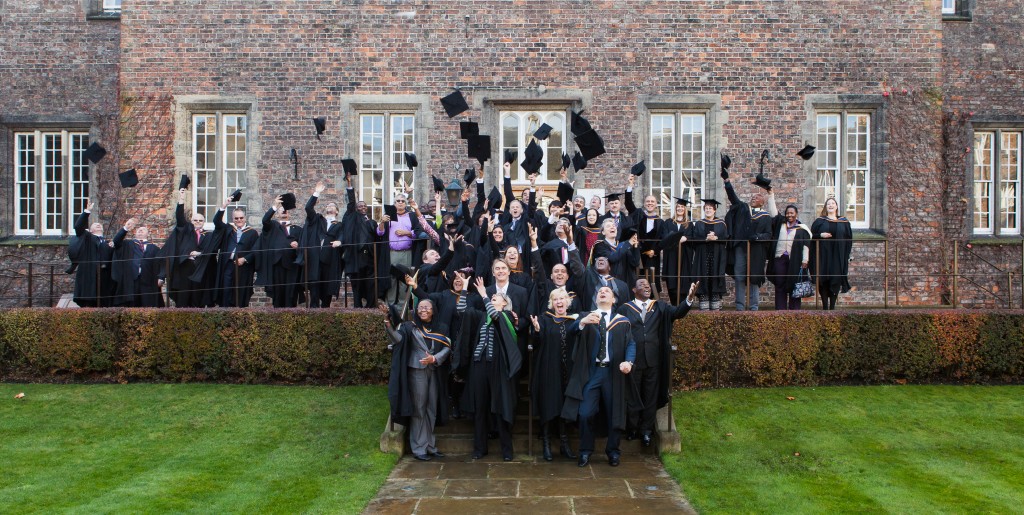
Whether it is at one of our York or Zürich residencies, or at graduation in the most impressive York Minster, it is always humbling to meet our students in the flesh – CEOs, senior managers, junior managers, serial entrepreneurs, vice-presidents – and yet they all went back to school, with a deep desire to improve and learn. For that, hat off!

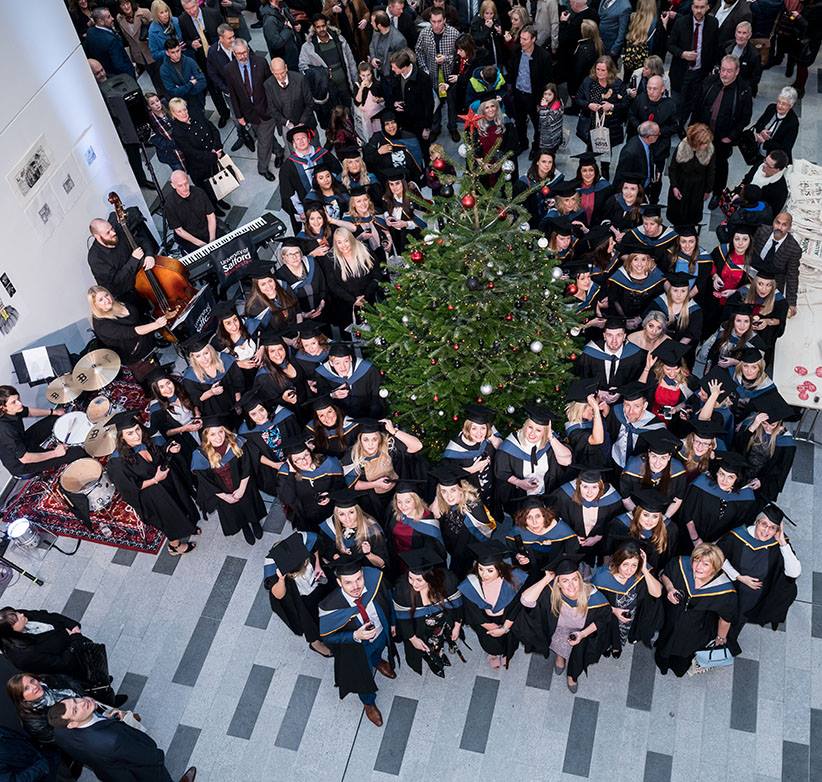
YSJ Graduation Day with RKC students

Why MALIC?

Sometimes I ask my students, when they start their first module, what made them join the programme. For many it was the desire to understand why projects fail, how to be a better leader, how to deal with a difficult boss, or simply because they never had the time to go to school before life took over! And one of the most rewarding experiences is to receive, every now and again, an email that talks about life after MALIC (although sometimes it is also about life during MALIC).
“One of my critical learning points was the MALIC program was instantly transferable and immediately relevant, the course has had a dramatic impact on how I operate within different cultures. My appreciation and awareness of how people respond, react and need empathetic leadership styles in varying cultures has been tremendous.” – Simon
“Besides being a farmer I teach in AICAT (Arava International Centre for Agricultural Training). We bring 700 agricultural students from the Asian countries over for a 10-month, hands-on experience. I teach Agro-economics and Agro-entrepreneurship and from day one of my studies [in MALIC] I began using my newly gained knowledge, such as Schein’s Cultural Understandings and Kotter’s Eight Stages of Leading Change. The best part of the online experience was the interaction with other students. Same books, same articles, same questions but such diverse answers and understandings from fellow students; culture galore on the RKC forums.” – Eyal
 “My study at RKC has deepened my insight into the different antecedents of innovation and successful change that need to be strengthened in my work and working environment. It has boosted my concern for people. It has enabled me to respect others’ perspectives, even seek contrary or novel views and value the contributions people can make no matter what their status in the organisation.” – Pius
Don’t think it is all milk and honey though – studying online is challenging, albeit rewarding. You need strong time management skills and discipline, but with proper support achieving an academic degree while working is doable. You get support from us, as academics, and from our amazing StudentCare team, but we found that, perhaps most importantly, the best support comes from your peers, your colleagues who are experiencing the same challenges and conversations. Eyal and Pius, above, have met at the residency in York after taking a few classes online together, and I’ve never seen a bigger hug than these two big guys shared.

So, one might say we have done well so far – we will strive to do even better, and perhaps, who knows, if you are not a MALIC yourself, the time has come to become one! With a new, modular approach, in which you can build your programme in a module by module approach, there has never been a better time to learn! If you want to learn more about MALIC, have a look at our MALIC website and request a catalogue – our admissions team will also be happy to answer any questions you may have.