Innovation or AI? What Truly Drives Business Success in the Changing World

The rapid rise of artificial intelligence (AI) has sparked a fundamental question for leaders and organizations: What matters more today—innovation or AI?

Insights from leading institutions, along with real-world corporate examples, suggest a clear answer: AI is a tool—but innovation is the mindset that makes it valuable.The most successful businesses today combine both.

The Shift: From Digital to Intelligent Enterprises

Over the past decade, businesses have evolved from basic digital transformation to AI-driven decision-making. AI is now embedded across industries—from finance to retail to healthcare.

Companies like Amazon use AI to power recommendation engines and optimize logistics, while Netflix leverages it to personalize user experiences and drive engagement. Yet, these successes are not purely about AI—they are about how strategically and creatively AI is applied.

Strategy Before Technology

Technology alone does not create competitive advantage—strategy does. AI enhances decision-making, but leaders define the vision and context in which it is used by providing clear strategic direction, Strong leadership and decision-making and adaptability in a fast-changing environment.

Real-World Insight: AI Alone Is Not Enough

Many organizations have invested heavily in AI but struggled to achieve meaningful outcomes. The reason is often a lack of alignment between technology and business strategy.

For example, IBM’s early AI initiatives demonstrated strong technical capability but faced challenges in widespread business adoption. In contrast, Tesla exemplifies how combining AI with bold innovation can reshape industries—from autonomous driving to continuous product updates. The takeaway is clear: AI enables—but innovation transforms.

Innovation in the Age of AI

Innovation today extends far beyond new products. It includes:

  • Reimagining business models
  • Enhancing customer experiences
  • Improving operational efficiency
  • Creating new value propositions
Photo by Immo Wegmann on Unsplash

AI accelerates these processes, but innovation determines where and how AI is applied.

In other words:

  • AI provides the capability
  • Innovation provides the direction

The New Leadership Imperative

Modern leaders must balance technical understanding with strategic thinking. Business education has evolved accordingly, integrating AI with leadership and management training.

Professionals today are expected to:

  • Make data-driven decisions
  • Lead digital transformation initiatives
  • Understand ethical implications of AI
  • Bridge the gap between technology and business strategy

Photo by Lukas on Unsplash

Connecting Innovation and AI to Real Learning: The RKC Approach

This balance between AI capability and innovative thinking is reflected in the programmes offered by Robert Kennedy College. Designed for working professionals, these programmes combine academic rigor, flexibility, and real-world application, delivered in partnership with accredited UK universities.

MSc in Artificial Intelligence: Turning Data into Strategic Advantage

The MSc in Artificial Intelligence equips students with the skills to understand and apply AI in real business contexts.

Students develop:

  • Knowledge of machine learning and intelligent systems
  • Analytical and problem-solving capabilities
  • Skills to apply AI in decision-making and strategy

The focus goes beyond theory—students learn how to use AI effectively within organizations, aligning with the core idea that AI must be applied strategically to create value.

MSc in Entrepreneurship & Innovation: Driving Change Beyond Technology

The MSc in Entrepreneurship & Innovation focuses on developing the mindset needed to drive transformation and create new opportunities.

Key areas include:

  • Innovation frameworks and business model development
  • Strategic thinking and opportunity recognition
  • Leadership in dynamic and uncertain environments

This programme reinforces that innovation is the driver of competitive advantage, even in a technology-driven world.

Ready to Take the Next Step?

If you are looking to future-proof your career and develop expertise at the intersection of technology and strategy, exploring these programmes could be your next step.

Programmes at Robert Kennedy College offer:

  • Flexible online learning designed for working professionals
  • Internationally recognised UK degrees
  • Practical, real-world application of knowledge

Whether your goal is to lead AI-driven transformation or drive innovation in your organization, the right learning journey can help you get there.

Explore the programmes and start shaping your future today.

Navigating the Future: Top 5 Trends to Expect in 2024

As we step into the promising realm of 2024, the world is poised for transformative changes across various domains. Technological advancements, societal shifts, and global challenges are shaping the landscape of the future. In this blog post, we’ll explore the top five trends that are likely to define and influence the year 2024.

The Rise of Sustainable Technology

One of the most significant trends to watch in 2024 is the accelerated adoption of sustainable technologies. With a growing awareness of climate change and environmental issues, industries are increasingly investing in eco-friendly solutions. From renewable energy sources like solar and wind power to electric vehicles and sustainable packaging, technology is playing a pivotal role in creating a greener and more sustainable future. Expect to see breakthroughs in clean energy, efficient waste management systems, and innovations that contribute to a circular economy.

The Evolution of Artificial Intelligence (AI) and Automation

AI and automation have been on an upward trajectory for several years, and 2024 will see these technologies reaching new heights. Intelligent automation, machine learning, and natural language processing will become more sophisticated, leading to increased efficiency across various industries.

From personalized customer experiences to streamlined business operations, AI will continue to transform the way we live and work. However, ethical considerations and responsible AI practices will also become crucial topics of discussion, ensuring that these technologies are deployed ethically and inclusively.

Digital Health Revolution

The global pandemic has accelerated the digitization of healthcare, and in 2024, we can expect a digital health revolution. Telemedicine, wearable health tech, and AI-driven diagnostics will become more prevalent, offering personalized and accessible healthcare solutions. Remote patient monitoring, virtual consultations, and health-focused apps will empower individuals to take control of their well-being. The integration of big data in healthcare will enable predictive analytics, leading to more effective disease prevention and early intervention strategies.

Decentralized Finance (DeFi) and Blockchain

Decentralized Finance (DeFi) and blockchain technologies are poised to disrupt traditional financial systems in 2024.

Blockchain’s transparent and secure nature will continue to gain traction in sectors beyond cryptocurrency, such as supply chain management, voting systems, and identity verification. DeFi, which leverages blockchain to recreate and improve upon traditional financial services, will provide more inclusive and accessible banking solutions. Expect innovations in decentralized exchanges, lending platforms, and new financial instruments that challenge the status quo.

Cultural Shifts in Remote Work and Flexible Work Arrangements

The way we work underwent a profound transformation during the pandemic, and in 2024, we will witness a continuation of this trend. Remote work and flexible work arrangements will become more ingrained in corporate cultures. Companies will focus on optimizing hybrid work models, leveraging advanced collaboration tools, and prioritizing employee well-being. The physical office space may undergo a reimagining, serving as collaborative hubs rather than mandatory daily destinations. This shift will impact not only how businesses operate but also the work-life balance and career expectations of individuals.

The year 2024 promises to be a dynamic and transformative period marked by advancements in technology, a heightened focus on sustainability, and a reshaping of societal norms. From the rise of sustainable technology to the evolution of AI, digital health, blockchain, and changes in work dynamics, these trends will shape the way we live and interact with the world around us. As we navigate through these transformative times, it’s essential to embrace innovation responsibly and ensure that progress benefits all of humanity. The future is exciting, and staying informed about these trends will help individuals and businesses adapt and thrive in the years to come.

Navigate your future towards stability, success in your career by joining our online Master’s and PhD. programme. Speak to one of our advisors to know more about the admission process, intake information and fee details.

Unveiling the Tapestry of 2023: Top 10 Highlights That Defined the Year

As we bid farewell to 2023, it’s time to reflect on the myriad events and milestones that shaped the course of the year. From technological breakthroughs to cultural shifts, 2023 was a rollercoaster of innovation and transformation. In this blog, we’ll unveil the top 10 highlights that stood out and left an indelible mark on the fabric of 2023.

1. Quantum Computing Breakthroughs

In 2023, quantum computing made unprecedented progress, reaching the milestone of quantum supremacy. This achievement has far-reaching implications, promising solutions to intricate problems at speeds unimaginable with traditional computers, particularly in fields like cryptography, drug discovery, and climate modeling.

2. AI’s Influence in Healthcare

Artificial Intelligence continued its penetration into the healthcare sector, reshaping diagnostics, treatment strategies, and patient care. AI-driven tools showcased remarkable accuracy in early disease detection, personalized treatment plans, and overall healthcare enhancement.

3. Global Climate Accords

As climate change concerns reached a critical juncture, nations around the world came together in 2023 to forge ambitious global climate accords. Commitments to reduce carbon emissions, transition to renewable energy sources, and protect biodiversity marked a collective effort to address the urgent challenges posed by climate change.

4. Space Tourism Takes Off

The space race evolved into a new era in 2023, with commercial space tourism becoming a reality. Several private companies successfully launched missions, enabling civilians to partake in the adventure of space travel. This marked a significant stride in making space exploration more accessible to the public.

5. Metaverse Surge

The concept of the metaverse gained unprecedented traction in 2023. Major technology companies invested heavily in virtual reality (VR) and augmented reality (AR), creating immersive digital realms for work, socializing, and entertainment. The metaverse emerged as a hub for innovation and collaboration.

6. Advancements in Biotechnology

Biotechnology made groundbreaking strides in 2023, with advancements ranging from CRISPR-based gene editing to revolutionary treatments for previously incurable diseases. These breakthroughs raised ethical questions but also offered new hope for addressing genetic disorders and improving overall human health.

7. Shifts in Remote Work Culture

The way we work underwent a transformative shift in 2023. Remote work, once a necessity, became a preferred mode for many companies. This change not only impacted work culture but also influenced urban planning, as cities reimagined themselves to accommodate a more decentralized workforce.

8. Renewable Energy Dominance

Renewable energy continued its ascent in 2023, surpassing expectations in terms of efficiency and affordability. Solar and wind power, in particular, became dominant sources of energy globally, contributing to a significant reduction in reliance on fossil fuels.

9. Tech Ethics and Regulation Focus

Amid rapid technological advancements, there was an increased emphasis on ethical considerations and regulatory frameworks in 2023. Governments and tech companies collaborated to establish guidelines for responsible AI use, data privacy, and digital security, ensuring a balanced approach to the benefits of technology.

10. Global Health Resilience

The lessons learned from the COVID-19 pandemic led to unprecedented collaboration in global health in 2023. This resulted in more robust health systems, improved vaccine distribution, and enhanced preparedness for future health crises.

Photo credit: Canva.com

As we conclude the narrative of 2023, these ten highlights underscore the innovation, adaptability, and collective endeavors of humanity. The year was characterized by a fusion of technological breakthroughs, societal transformations, and a shared commitment to addressing global challenges. These standout moments will undoubtedly shape the trajectory of the years to come.

Here’s wishing all our readers, from the management and staff of Robert Kennedy College, a very Happy New Year 2024! We hope to see you as one of our proud Master’s and PhD students at RKC. Find a programme suitable to you, talk live to one of our education advisors, and apply now!


All you need to know about Cryptocurrency and Blockchain Technology

Time is money, and both time and money are evolving rapidly. The discovery of the internet disrupted the way the world operated, bringing political, business, economic and social changes. It improved business processes and made online transactions, and banking, among other things, quicker and less complicated. And this is just the beginning; we humans are, after all, constant inventors and innovators.

Traditionally, political, economic, and legal systems structures are defined by contracts, transactions, and records. Nations and organisations set boundaries of operation to identify and chronicle managerial and social events.

But now it’s time for economic transformation. However, the slow and administrative regulations are stifling the digital transformation. 

Blockchain technology is here to help!

What is Blockchain?

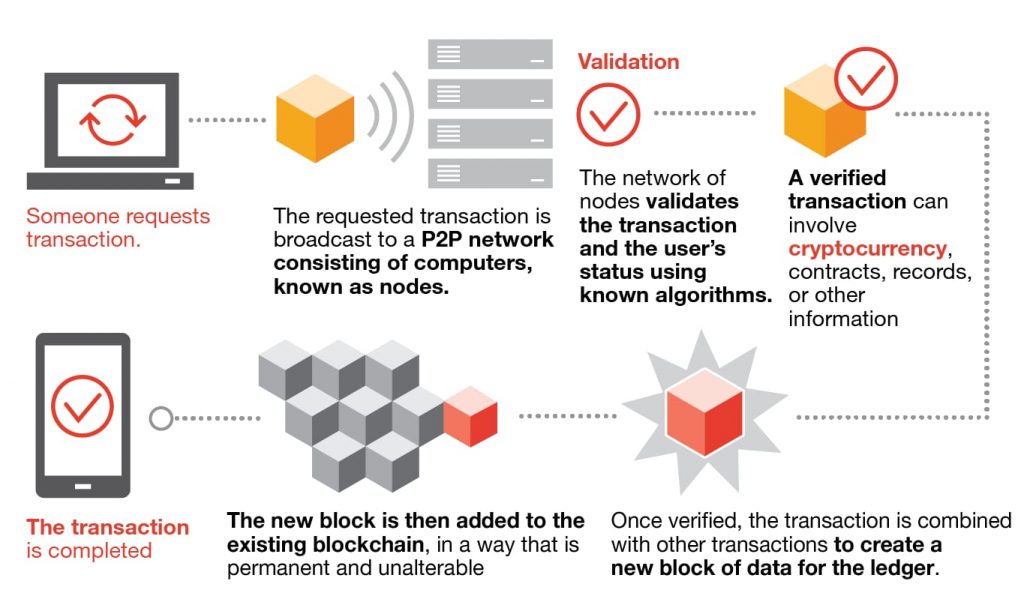
Blockchain is an open, distributed technology that enables the process of recording unalterable transactions and tracking assets. Blockchain works on five basic principles:

  1. Distributed database
  2. Immutable records
  3. Transparent access
  4. Algorithm-based computational logic
  5. Two-way participant transmission
Photo credit: Pwc.com

Blockchain gets its name because of the way the transactions are grouped together into blocks of data, then chained together by way of a mathematical function that creates a hash code

Blockchain has disrupted the business industry with its application in financial services, healthcare, artificial intelligence (AI) and the internet of things (IoT) for supply chain, retail sector, oil and gas, telecommunications, insurance, smart contracts, voting and crypto of course.

So, how do blockchain technology and cryptocurrency work together?

Since its first implementation in 2009, blockchain has not been well known. Blockchain technology is the foundational technology for cryptocurrency, which was first implemented just a decade ago but was revolutionised with the widespread use of the application by Bitcoin. Bitcoin was the first cryptocurrency and operated through blockchain.

Blockchain is the foundational technology for cryptocurrency

Blockchain made it possible to record bitcoin transactions without a central authority establishing trust in a trustless environment. Being a digitalised, decentralised, public ledger, blockchain allows the formation of digital information into blocks, which are stored across a network of computers, creating a database. When verifiable transactions take place, the data is stored in blocks, which, when complete, are added to the chain.

Cryptocurrencies like Bitcoin, Ethereum, Litecoin and, USD Coin are used to buy goods and services. And cryptocurrency uses blockchain, an enhanced cryptographic security system, as a public ledger with immutable records that cannot be deleted or altered. 

Cryptocurrency is used as a digital form of cash to buy goods and services through various trading platforms or digital wallets. The blockchain technology here records the transaction when ownership is transferred to the new owner. Every transaction, therefore, is a public ledger, unalterable, secure and time-stamped.

The pace of technology will not slow down. Cryptocurrency and blockchain hand in hand continue to disrupt much more than the financial services industry. 

What are your thoughts? Share in the comments below.