Getting your Career out of the Rut and Back on Track

So, you have been feeling like you are trapped in a dead-end job with no hope of growth and have forgotten what it was like to have fun at work. You feel like you are stuck with a hard nosed and unappreciative boss and can’t see a future to your career. This feeling of “being stuck” usually ends up draining you of energy and hope, it can even significantly affect your personal life and have an impact on your feeling of self-worth.

You need to break out of this rut that has been dragging you down and get your career back on track, to achieve this you have to make changes to your thinking and thereby change the perception your colleagues have of you. The following five steps are a few suggestions of how you can go about trying to achieve this change.

  1. Be Optimistic: It will be a challenge to get out of your negative mindset and get thinking and feeling positive again. Begin small, set aside an hour or two every day where you try to push aside everything that you perceive is holding you back and picture yourself and who you want to be five years from now. Set yourself self-improvement goals – public speaking, improve your knowledge, read motivational speakers, attend short term courses. Until you get yourself into a positive frame of mind, you will remain blinded to the opportunities around you.
  2. Bucket List of Jobs: Make a list of the jobs you have always you have had/ dreamt of having. Don’t be constrained by what you think you presently deserve but what you have always dreamt of having, be unrealistic (The President of the United States is not out of the running from your list). As your list grows, look at the pattern developing, and you will see that you are drawn to a certain type of job (Marketing, Media, Supply Chain, etc.), in certain industry segments (Automotive, Aerospace, Shipping, IT, etc.). Look for clues about what excites you and makes you feel energised again, then work towards achieving these goals and getting a job in line with your dreams.
  3. Perception Matters: As someone once said, “Dress for the job you want, not for the one you have”. Look in the mirror and ask yourself if the person looking back is the person who will be able to occupy the highest position listed in your bucket list. Identify what do you have to change in order for others to see you in that position. When re-evaluating your image, look at all aspects that make up your image – from the clothes that you wear to your social media profile, to the way you socialise. Start making the changes, but take your time and do it right.
  4. Networking: One of the key factors that will help you achieve your goals will be the contacts you develop. Work towards developing new contacts, people who are unfamiliar with the old you and have only seen the new and improved you. Use platforms like LinkedIn, Alumni Associations, Professional Associations, Clubs, etc., to develop your new network. Talk about your passions and goals with these people, ask for their advice, get a mentor who has your best interests at hand. And when your big break comes, the odds are it won’t come from someone you’d name if you had to list the 50 people you know best. Most opportunities come from people at the very edges of your network or someone you haven’t interacted with in a really long time. Remember, all that’s holding you back is you. Don’t bury your dreams. Day after day, tell people what you really, truly want to do. Share your dream with them, and one of them will make that dream come true.
  5. Qualification: Education Qualification matters and will be one of the driving factors in helping you achieving your dream job. Knowledge, networking, creative thinking, self-discipline, time management are just some of what you can gain from a quality education. Anyone who tells you otherwise has either been in that small fraction of the job population that has been very lucky or has had it handed to him. So, ensure you have the qualifications to go with that dream job or your dream job might just go to someone who does.
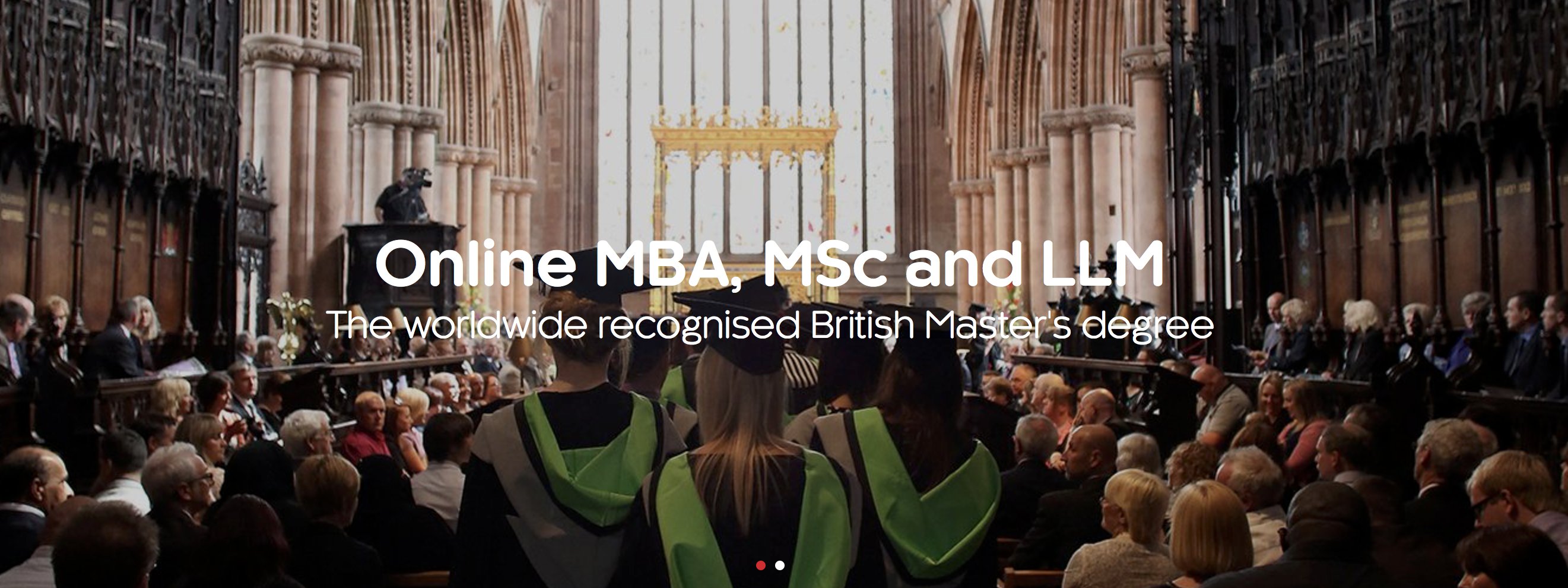
 

Robert Kennedy College with almost 14,000 students from almost every county in the world offers one of the most diverse, accredited and globally recognised online master’s degree programmes in both Business Law, Leadership and Management through exclusive partnerships with British universities. For more information download programme catalogue.


A step-by-step guide to the enrolment/admission process at Robert Kennedy College

So, after speaking with our education advisors, going through our programme catalogue and experiencing our OnlineCampus through the 14 day trial access we offer, you have decided to make a positive change in your life and join our online Master degree programme.

For your better understanding, what follows is the step-by-step breakdown of our admissions process. Please note, we welcome applications from students who may not meet the formal entry criteria but who have relevant experience or the ability to pursue the course successfully.

  1. Putting the required documents together.
    • Copy of your Bachelor’s degree certificate. Please note, if your certificate is unavailable or if you have not completed your bachelor’s degree, please check with your Education Advisor for further guidance.
    • Your updated CV/ Resume with correct dates of employment and education (month and year).
    • Signed application form (Please download the application form, fill it, print it, sign it, scan and email it to your education advisor).
    • A reference letter from your present employer on the company letterhead. The letter should be current dated and addressed to The Dean, Robert Kennedy College, Zurich, Switzerland.
  2. Application Fee payment of 100 CHF (Swiss francs). A credit card payment link will be emailed to you once your online application has been created. You can also make the payment by a Bank Transfer, details will be provided once the application has been created.
  3. Statement of Purpose (SOP) of a minimum 300 words, in English, this statement allows the admission office to determine your suitability for the programme.
    • Points to cover in your SOP –
      • Why did you choose Robert Kennedy College and the University of Cumbria?
      • What is your ambition and motivation to study and graduate from this master programme?
      • Where do you see yourself, professionally, in 5 years’ time from now?
      • Please ensure that your SOP has no spelling, punctuation or grammar mistakes and no short forms is to be used and is to be written in your own words and is not to be copied.
      • You can write and email the SOP to your education advisor as a Word/ PDF document.

Alternatively you can directly create an online application digitally sign the application form, upload the reference letter, degree certificate and your CV, write the SOP and pay your application fees.

At Robert Kennedy College we have truly simplified, modernised and streamlined our admissions process but at every stage we recommend that you keep in touch with and take the advice of your Education Advisor who is there to be a guiding hand.

Not Keeping up in Class? You’re Not Alone!

Joining a Master’s degree programme can be exciting and challenging and successfully completing it can open a world of new professional opportunities.

You might have started the programme with the determination to succeed. But a few weeks into it you might suddenly find yourself not being able to understand what has been taught in class, struggling to complete your assignments on time and seeming to fall behind everyone else. You might even begin to think that a better option would be to drop out of the programme as it seems there’s no way you can successfully complete it.

Well, if that is so, don’t give up! You’re not alone in feeling this way. Just remember that nothing worth having comes easy. But there are some simple ways to improve outcomes and catch up. The following advice can help you maximize your effort while minimizing wasted time.

  1. Don’t give up and keep your chin up: If you’ve fallen behind in your classes or are struggling to keep up, bear in mind that you’re one of millions of college students who have been in the same position. It takes time to get used to a training programme, and especially to work your classes into your personal and professional lives. Take some time to get the lie of the land, as doing so is certainly well within your reach. After all, the vast majority of students eventually graduate. Maintaining a positive attitude and managing your expectations can help you overcome obstacles along the way to your academic goals.
  2. Ask for help: As soon as you find yourself not able to understand a particular topic or concept, don’t be afraid to ask for help immediately. The success of your university or college is directly linked to the success of the students and they have resources at the ready to help students succeed. Consider forming a study group, it offers an opportunity to benefit from the experience and knowledge of others while getting a boost in self-esteem through your own contributions. It’s also a chance to get to know your peers and build a valuable support network.
  3. Don’t compare yourself with other: Each student is unique and has different learning needs. You might be able to understand and complete a particular module, subject or assignment quicker than your peers and vice versa. The attitude that you will automatically do better than your peers because you’re smart or have studied a lot can be a trap. Instead, focus on putting your personal best effort into every learning task.
  4. Time management: Time management is one of the biggest challenges that a student faces. Being able to manage one’s personal and professional life while at the same time getting the space and time to complete all the requirements of the programme – assignments, readings, etc. – is a problem faced by most students. If you don’t manage time well – putting off assignments till the last minute, not completing the required readings, being unable to participate in classroom sessions – you will inevitably fall behind and struggle to complete the course. Balancing work-life-study is the key to successfully completing any programme.

Robert Kennedy College offers a number of online master’s degree programmes in Law and Business through exclusive partnerships with British universities. For more information download programme catalogue.