Can you travel and study at the same time? Here are 6 ways to help you do it!

The popularity of online studies has been on the rise in recent years, and we have seen so much right here at Robert Kennedy College. With practically our whole student population being in full-time employment, we know the flexibility afforded by online delivery is amongst one of the highest-ranking reasons why people study online. 

I understand how critical it is to have the possibility of being able to access, learn and review course content anytime, from anywhere in the world. Working professionals like yourself have a demanding job and may be required to travel frequently for work.  

Now while it might look pretty simple and easy to study online on the surface, it is actually not quite so. I like to compare this to a duck’s swimming – when you see a duck advancing through water, you probably think calm and grace. Our eyes behold a view of effortless and smooth progression on water. However, under the surface, the duck is paddling frantically to propel itself forward.  

A duck seemingly advancing with no effort through the water 

I do not intend to scare you with this analogy. I want to focus on the duck’s efforts and skills that keep it advancing (keeping afloat is apparently the easy part, for biological reasons, ducks weighing less than the water they displace due to their uropygial gland and air-trapping feathers). Similarly, you can advance smoothly through your studies with the help of planning, foresight, prioritization skills and grit – especially when you are travelling.  

So, here are some tips that will help you stay afloat while planning your studies on the go: 

Plan ahead  

I personally can’t get enough of planning. I sometimes re-plan my plans (ha-ha) just to be sure of how my schedule and week/month looks like. Yes, planning is the key to be able to travel stress-free and balance the commitment of a university course module with the disruption caused by travelling. While you may not always be able to choose your travel times when travelling for work, do take your study calendar into account and redesign your plans accordingly. 

Plan travel around assignments 

Give yourself enough time at each step of your travel plan. To begin with, make sure you do not plan your 15-hour flight across continents a day before your assignment submission. Be wary and give yourself ample time to recover from jetlag. Reversely, if you have little control over your travel plans, advance your deadlines and submit earlier, or look into the administrative processes that may help you get an extension if done in time. 

Arrange your meetings in a way that you have some relaxing peaceful time segments during that day. This will allow you enough time to catch up with your course material and focus on the assignments due. There might be some occasions when you will have to prioritize studies and must skip that social evening with work associates and miss a drink. Reward yourself later when your work is done.  

You can download course material on RKC’s iOS and Android apps

Organize Internet access 

Most of your study materials normally require the internet to access them. You want to avoid situations where you have time to spare but no internet access nor offline materials. Know when you would be in limited connectivity zones and download the necessary course materials ahead of travel. RKC’s iOS and Android apps can help with that. 

As a student, you can also get internet access through the Eduroam network, something most Universities in the world are a part of. You use your home institution’s credentials to login to any “eduroam” WiFi you find (typically in and around University campuses, University and sometimes public libraries). Have a look at the eduroam map before travelling to know if you have this option.

Have reliable technology and back-ups 

While you are travelling you are completely reliant on your laptop, tablet, or phone. Always have your chargers, spare power banks and hard drives to backup data so that you do not lose your work. With the pervasiveness and ease of use of cloud back-ups today, “I lost my laptop/my disk died/etc.” is the equivalent of the “dog ate my homework” of yesteryear. 

Mind the zone 

While our online course materials can be accessed at all times, you may have to be careful of the different time-zones you are travelling to and how it will affect your deadlines (they don’t – your deadlines are always Zürich time!). What a different time zone will affect is when you must submit – so work that out in advance and anticipate the deadline rather than miss it. Another impact of travelling to a different time zone is that last minute questions may receive delayed responses with respect to when you were back home. 

Keep track of your progress 

It is easy to lose track of time when you are travelling and have so many things to manage. In order to make sure you do not fall back on coursework, keep close checks on your schedules and deadlines. While travelling breaks away from the 9 to 5 schedule (or 7 to 7 for the unlucky few) and could offer more flexibility in terms of the time of day you can study, it is helpful to chalk it out. 

Do not fret if you face any technical issues while travelling. Simply reach out to our student care team and they will be happy to help.  

It may feel overwhelming at times to balance work, study and travel. But with adequate preparation ahead of time you can enjoy smooth sailing; gracefully swimming like a duck towards your goals (with more or less frantic paddling). With these simple yet vital study tips, you can certainly ace study and travel together. Please share with us any tips or tricks that you might have up your sleeve from your personal experience.  

P.S: An easy way to connect with us on the go is to download our OnlineCampus Mobile App, which helps you prepare your “offline study packs”.


6 Reasons to Do a Master’s Degree Programme

I am going to tell you a story about a friend of mine and yes, I know “a friend” sounds made up, but this friend is real and what happened to him could happen to anyone of us in the corporate world.  

To make matters simple, let’s call this friend of mine Jojo (yes, this time a made-up name). A while back Jojo found himself out of a job due to no fault of his. The reasons given: downsizing, centralising, the usual corporate jibber jabber, and this from a company in which he had spent the last two years of his life setting up and developing an entire function for the organisation. 

He was reporting directly to the Managing Director and Country-Head, a position he achieved by hard work and determination and with professional experience going back two decades – working for some of the biggest multi-national companies in the world. He was not worried: with his experience, getting a job would be EASY. 

Safely crossing the gap from one job to the next is not always straightforward…

But as the days turned into weeks and then into months and he was still unable to find a job, the gloom around him was palpable.  

Jojo’s story 

Jojo started his career immediately after graduating with a bachelor’s degree from a top local university and as his career progressed at a faster-than-average pace, he never found the need and time to go back to school and enhance his academic profile too.  

Over time as life evolved, so grew his professional and personal commitments, demanding a greater share of his time and effort. He concluded that putting in time, effort and money into his education did not merit the return on investment.  

Fast forward to Jojo’s job search – he found that the lack of a master’s degree was having a profound impact on his ability to get hired. 

To be clear, I am not saying that you need a master’s degree to succeed in life. In fact, most people don’t have a master’s degree and are very successful in their profession. What I am saying is that a master’s degree can have a positive impact in your professional career (because, learning is good :D).

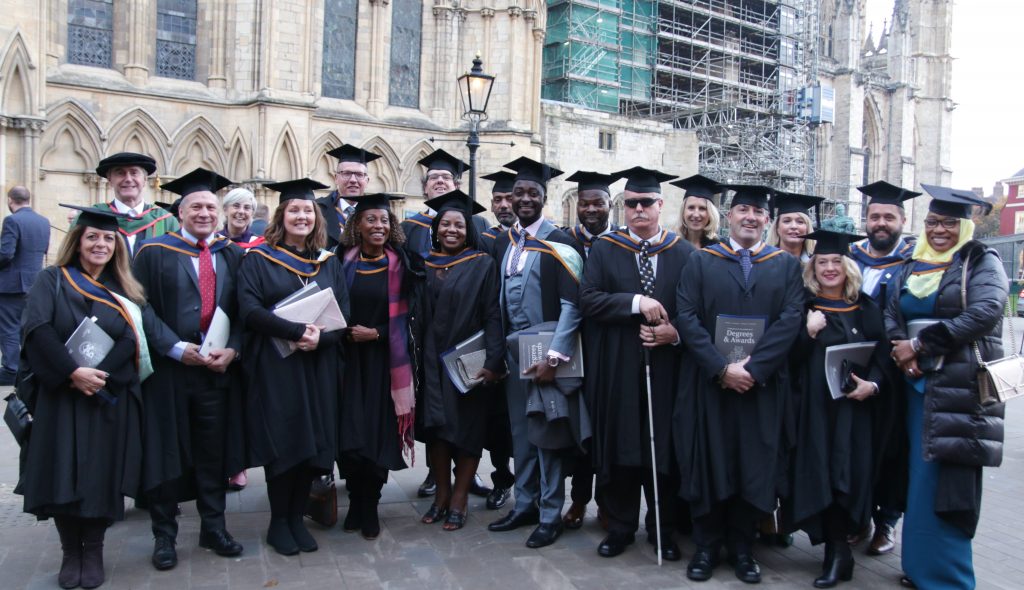
Added benefit of a Master’s – graduation is fun! Notice how these RKC graduates from 2018 have big smiles on their faces, despite the freezing cold of November in York.

Here are 6 reasons you should consider doing a master’s degree. 

  1. It shows you are hard working and committed: A Master’s degree implies that you have taken the extra step of getting a higher qualification, gaining extra skills and specialisations. Having worked on projects and submitted assignments and dissertations in a timely manner, it shows you to be more disciplined, structured and task oriented. 
  2. It levels the playing field: In today’s competitive job market, most of the candidates applying for any above entry level position will already have at least one master’s degree, if not more specialised qualifications and just a bachelor’s degree or lower educational qualification would just not cut it. Depending on the nature of the job and the position you are aspiring to, a master’s degree might be the minimum requirement to even apply. 
  3. It can help with switching careers: There may come a time in your career when you pull your hair and cry out – “I CAN’T TAKE THIS ANYMORE!”. I understand, I have been there a couple of times. For whatever reason, if you feel it is time for a change in career to a field that requires specific knowledge that you do not have or to a career in a regulated industry that requires you to have certain education qualifications, a master’s degree might give you a leg up in your new career. 
  4. It can help you standout: Unfortunately, this is the world that we live in. There may be several of your co-workers eyeing the same promotion that you have been after. Whether it is a management position or that specialised role within your company, a master’s degree could make the difference in your getting that position. In some cases, a company might also be willing to sponsor the master’s degree if they feel you are a potential leader and it could be mutually beneficial, so it is always worth asking the question to either your manager or the HR department.  
  5. It may help with relocation: We are no longer limited by geography. A master’s degree might help you in getting a work visa to a particular country; after all, you might be required to show why you are more deserving of a particular job than a citizen of the country and a master’s degree might go some ways in your company hiring you over a local.  
  6. It can fill the gap: Going back to the example of my friend, the longer you go without employment the harder it will get to explain the gap in your resume and to get employed. Doing a master’s degree is a good way to fill this gap, improve your knowledge, gain new skills and to generally show you are not one to wait around for things to happen.  

There’s more?

I am sure that there are many other reasons why people choose to do a master’s degree with benefits we wouldn’t have even thought off. If you have experienced or can think of any, let us know in the comments below! 

Finally, getting back to Jojo. It took him a while, but he is finally back to work. It is not what he wanted to do, and he had to take a hefty pay cut, but he is working again. He has still not joined a master’s programme (despite my constant reminders) but he is on the lookout for one that meets his requirements. Let’s hope he doesn’t leave it for too late.  Can it really ever be too late?

Explore the number of specialised master’s degree programmes offered by Robert Kennedy College through exclusive partnerships with top British universities. Or, if you have already made up your mind, click here to apply.

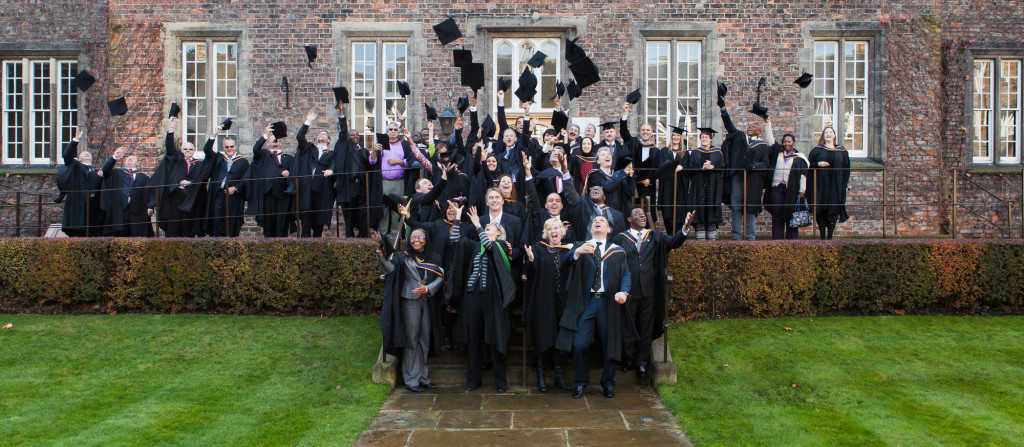
Robert Kennedy College and York St John graduates being silly with their hats in the Quad before graduation.