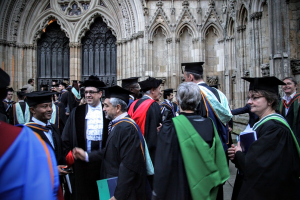
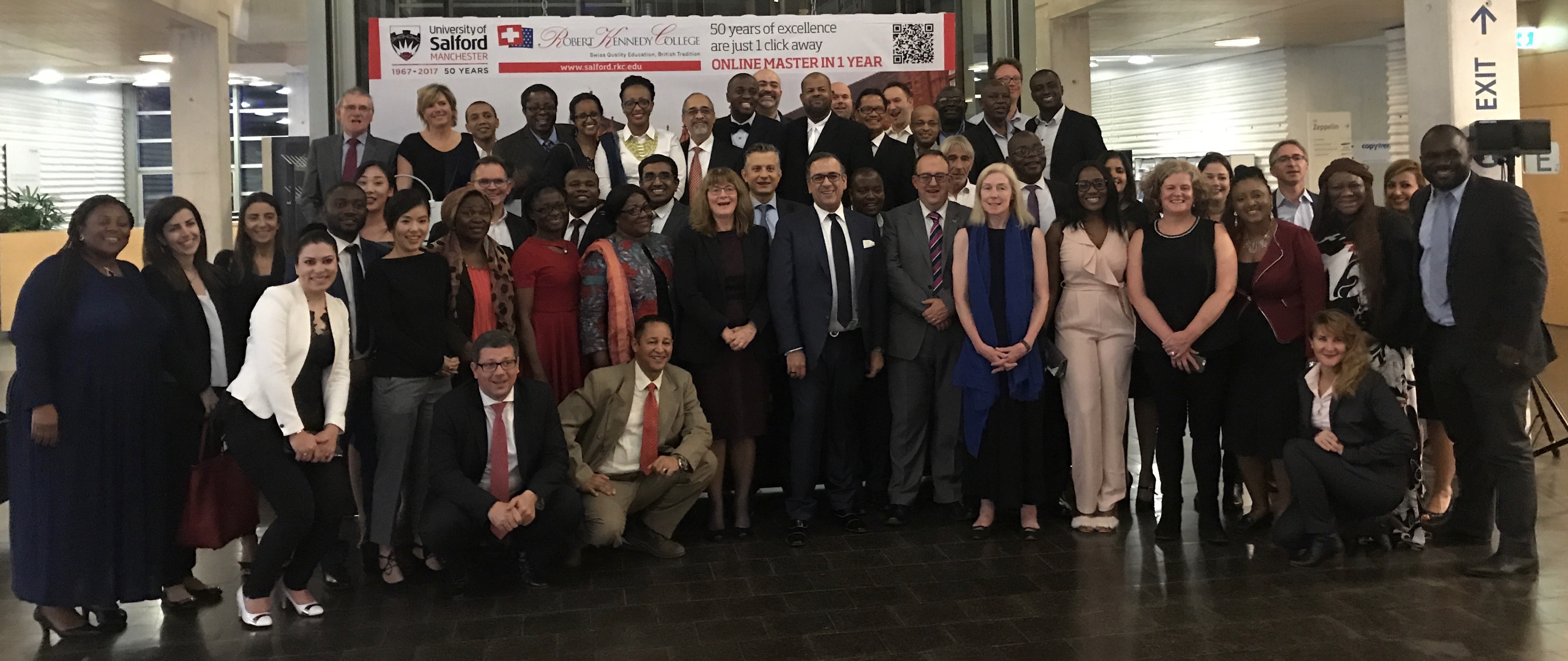
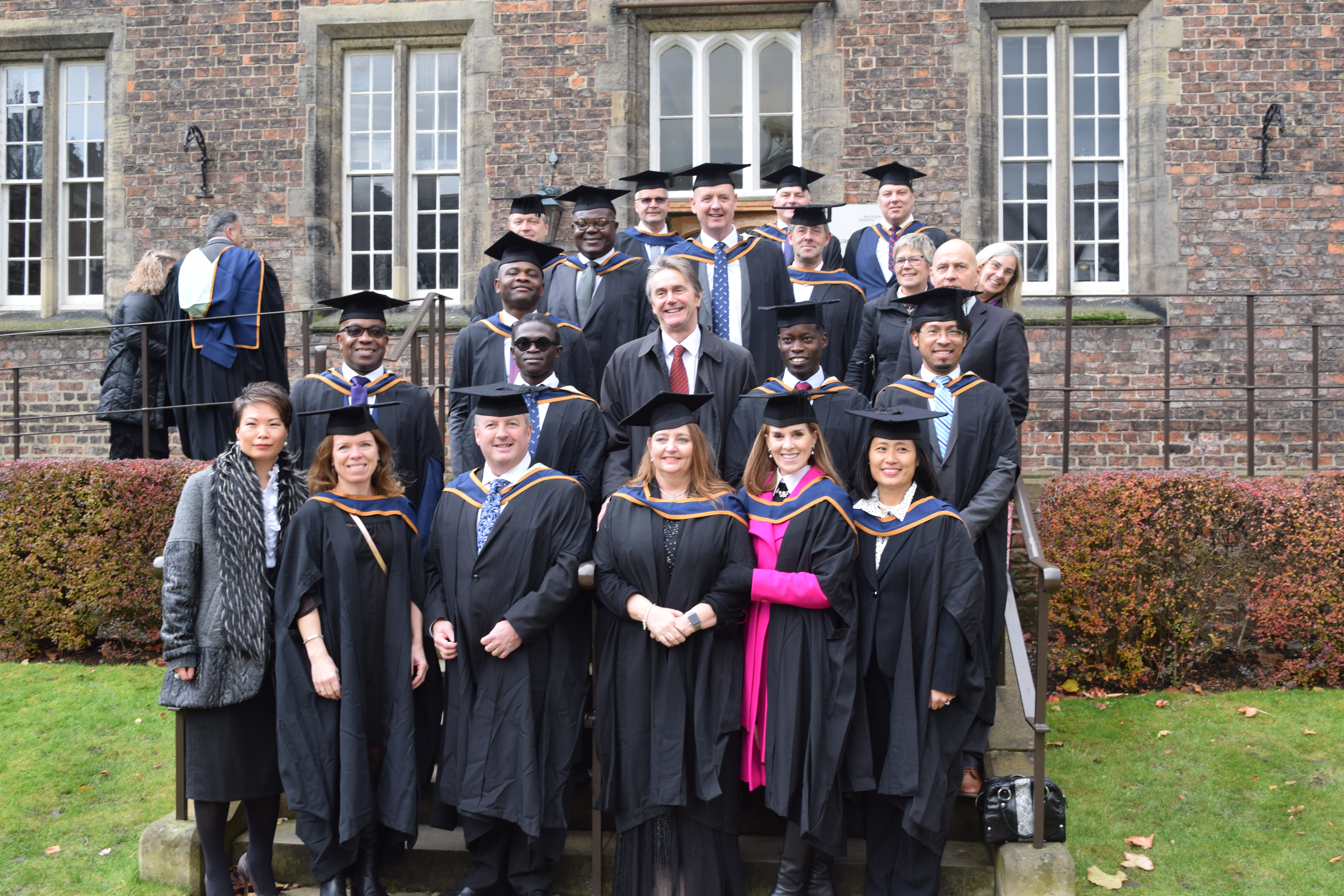
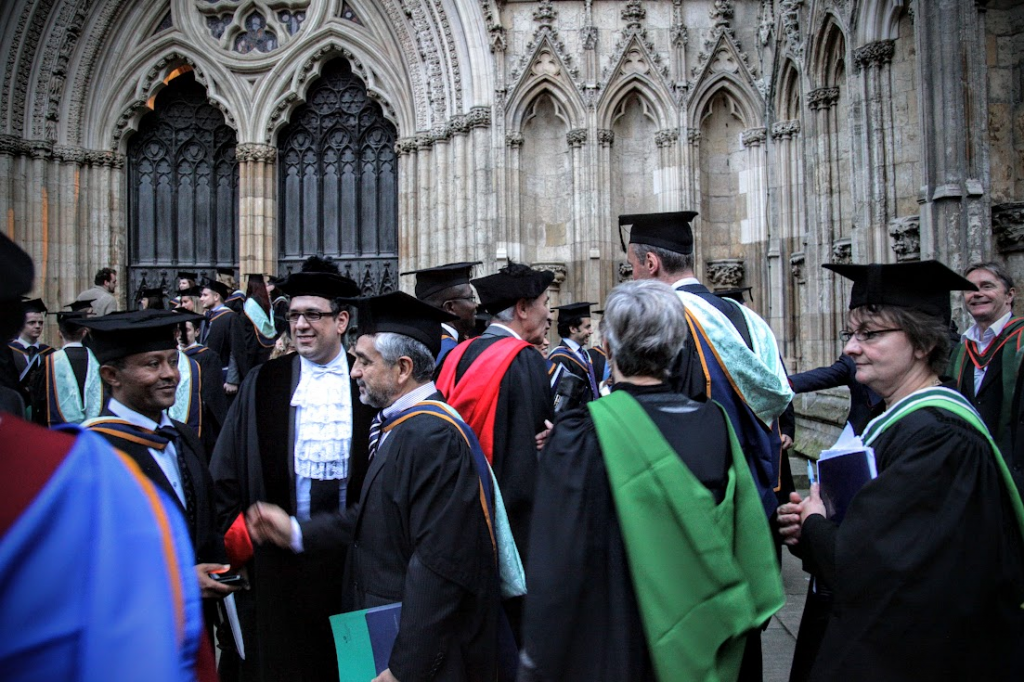
We are excited and proud to share the success of our MBA Class of 2013 graduates that attended the graduations ceremony in the wonderful setting of the Carlisle Cathedral. The Robert Kennedy College University of Cumbria MBA class of 2013 received their award by the University Chancellor: The Most Reverend and Right Honourable Dr John Sentamu, Archbishop of York. In behalf of the College I extend my most sincere congratulations for their outstanding achievement.
I am certain that this video will inspire both existing and prospective students in achieving their dreams and be part of our next graduations.
Are you ready to achieve your goals and graduate next year? Click Here to apply now!
Dean on CNBC: Europe to return to growth in 2014 – Whatever it takes
=======================================================
The ECB renewed commitment to maintain an accommodative monetary policy will be among the factors that will help Europe to continue the path to recovery that should result in positive GDP growth this year. While Mario Draghi was cautious in calling the end of the crisis his firmer language echoes the famous 2012 speech that drove the return of investors confidence in Europe. Valuations in Europe remain attractive and there are several investment opportunities both in the broad indices and specific sectors like financials and consumer discretionary.
This does not mean that the challenges are over:
– Unemployment remains at very high levels of 12.1% (particularly in the periphery)
What is particularly concerning is the level of youth unemployment that reached very high levels (36.8% in Portugal, 41.6% in Italy, 57.7% in Spain).
– The monetary transmission system of passing the high liquidity provided to banks is not functioning properly.
Small and mid size companies are still seeing limited financing opportunities and the same is true for consumers.
With the industrial production improvement in Germany (Nov data) and the economic sentiment at a 29 month high the environment is still positive for investors. In the specific I will continue to favour companies with global exposure including consumer discretionary.
European banks
==============
With the renewed support of the ECB there are still opportunities in the European banking sector particularly in the periphery (with the exclusion of few banks that still have not adapted to the new environment and raised sufficient capital). Overall the creation the banking union later this year will further strengthen the whole sector and reduce the sense of insecurity that has prevented some investors to enter the market.
The banking union will increase uniformity across Europe and ensure an even higher degree of regulatory oversight and transparency.
In Short
========
– ECB renewed commitment to maintain an accommodative monetary policy will be positive for European Markets in 2014.
– The European steady path to recovery should translate in positive GDP growth in 2014.
– Europe still faces several challenges like high unemployment that will take time to normalise.
MALIC Graduation 2013 in York – a student’s experience
An amazing post on the whole experience from our own Brenda, including a very thoughtful self-reflection as well as an amazing video of her trip to York. Worth a read, a watch, and a listen!
Master of Leading Innovation and Change Graduations in York Minster, 2013
Fervent readers of this blog will have noticed the relatively long silence from yours truly – no good excuses really, but here I am, back with news from York, where this year’s graduation saw the second batch of the Master of Leading Innovation and Change graduating in the absolutely impressive setting of the York Minster. More than 40 graduates from Robert Kennedy College have attended this year’s graduation, from all over the world, and have been cheered on by hundreds in attendance as their dreams to have a Master’s degree have come true.
Seeing all of you walk on that platform and shaking hands with the Vice Chancellor of York St John University, Professor David Fleming, I was getting goose bumps: such an accomplishment for you, but equally for us, and boy are we proud of you. Let me say that again. We are immensely proud of all of you, and to be honest I am already rubbing my hands in anticipation for next year’s graduation!
Here are some more photos from the graduation ceremony, and I am hoping to be able to post a short clip soon too.
Congratulations to you all, and we hope to hear of even greater things from you in the future. Hats-off to our new Master of Leading Innovation and Change graduates !
Dean on CNBC: Banks face legal charges from the past
Banks face legal charges from the past
======================================
Rabobank is just the last bank to have reached a record settlement of $1.07 billion for
alleged misconduct in the libor and other interest rates manipulation scandal.
Barclays is also facing a $700m charge after losing the appeal with hedge fund diamond capital.
Legal charges have also impacted Q3 results of UBS, which now faces
higher provision requirements from the FINMA, and Deutsche Bank that had to increase
litigation reserves of 1.2 billion to 4.1 billion Euro. The situation of
Deutsche Bank is different as it did not yet reach a settlement with the regulators.
This uncertainty over possible further legal charges makes it difficult for
investors to assess the real litigation risk faced by some of these banks.
Banks are therefore going to face higher legal charges and might be required by
regulators, like in the case of UBS, to hold more capital.
Investors can benefit from this volatility in the sector by paying attention to
some unique situations in the industry like:
– Swiss banks maintain a competitive advantage as the regulator moved very quickly
after the crisis to increase capital requirements and do not face the same issue
of other European banks where bad loans have reached $1.7 Trillion ;
– Some Europe banks have no pending legal charges and limited exposure to bad loans
and are a good opportunity for investors;
Given that non performing loans in Europe have double in the last 4 years the environment
will remain challenging. Swiss banks will improve and maintain their strong position in
some banking areas e.g. wealth management.
European banks & bad loans
==========================
The increase of European banks bad loans to $1.7 billion raises the question on how
banks will prepare for the next year stress test but, and perhaps more importantly,
how this might impact access to credit in many european economies that need financing to
fuel growth.
In Short
========
– Litigation risks represent a big challenge for banks and investors that need to
assess how this will impact their future results;
– Swiss banks maintain their competitive advantage due to the strong capital base and the already
reformed Swiss regulatory environment;
– European banks operate in a more challenging environment with higher bad loans and the need to reinforce their capital positions well ahead of the 2014 stress tests.
Dr. David Costa – Dean’s Interview on CNBC: Overlook of banking and Italy
September 2013 MALIC Residency in York
Almost two weeks have passed, but memories are still fresh!
September 9th, 2013 – a day like any other really, except I got to meet for the first time “in the flesh” 49 extraordinary people, all on the same day, and all in a single room! Granted, the room was not too big, but the energy and excitement as we got to know each other, shaking hands or finally pulling those virtual hugs into the real universe, was unbelievable.
These forty-nine “students”, seasoned managers, board-room veterans, serial or aspiring entrepreneurs, from all walks of life, were representing all five continents (sorry Antarctica, we’re still waiting for your representative!), and a staggering thirty (30!) countries. It is difficult to describe in words, and even more difficult to imagine, the richness of the interaction and the dynamics of such a special group. A biased population, for sure, driven by the desire to grow better.
MALIC Sep 2013 York from Dr.David Costa on Vimeo.
As the week progressed and we delved deeper into matters pertaining to research ethics, and quality of research, we also took great care to nourish and develop social relations, in places traditionally suitable for debate, such as pubs, restaurants and cafés, and to be honest, for me this is almost without exception the most interesting part of such a residency – discovering the people. As big a supporter of online education as I am (being actively involved in it!), the added value of face-to-face interaction, for even the briefest of times, to me is invaluable. And Tim agrees!
Students for students: Tim's advice for the residency from Dr.David Costa on Vimeo.
For more advice from current and past students, visit:
https://blog.college.ch/tag/students4students/
It would not be fair to leave out the exceptional team from our partner York St John University, who have done an amazing job of catering to all our needs, academic or logistic, and have done so with style. George and Irene, Sarah, Leanne and Natalie, thank you!
The Dean on CNBC: German Elections: the impact for Europe and European Investors
The End of Swiss Banking Secrecy ?
=======================
The Swiss government proposed bill to allow banks to share clients data with the U.S. received a setback with the parliamentary committee rejection of the draft.
Today’s vote by the upper house will probably decide the future of Swiss banking secrecy. Both bankers and Cantonal financial directors are supporting the agreement as a rejection could lead to criminal indictments for some Swiss banks with obviously a very bad impact to business.
With very limited information available it is however clear that one of the historical competitive advantages of Swiss banks is going to be impacted. The main issue is if the acceptance of some unilateral conditions will set an important precedence that might lead to the end of Swiss banking secrecy.
In my view several Swiss major banks have already adapted their business model by leveraging their competitiveness on security and stability and by refocusing on high growth area like Asia but with a very fierce competition the loss of secrecy might have a negative impact to business.
A recent drop on several Swiss banks might still be a buying opportunity, especially for these banks that have already successfully changed their business model.
Dean’s List: Pius Ughakpoteni
Pius Ughakpoteni is both an RKC graduate and a student. He was so happy with his studies in the MALIC programme that he enrolled in the Leadership and Sustainability MBA where he is now. Looking forward, he has been accepted to Middlesex University in London where he will obtain his doctorate. All of his studies come together in his work for the Niger Delta Development Commission where he has worked for several years.
Kelly Boler: Tell us about yourself. Background: work, life, family.
Pius Ughakpoteni: I obtained a B.Sc. (Management) from the University of Calabar, Nigeria, in 1991. Thereafter, I went into journalism and had an extremely satisfying career. A providential detour took me to the public service and culminated in a blossoming public relations career.
In 2011 I took a momentous decision to go back to school for a Master’s degree in Leading Innovation and Change, MALIC, without leaving work. I started the MALIC studies at Robert Kennedy College on September 1, 2011.
It was a highly challenging adventure, as I studied alongside carrying out my duties as a member of the management cadre in the Niger Delta Development Commission and running a nuclear family of almost 10, but coming to RKC ignited my longstanding desire to reach the pinnacle of education. Hence, since October 2012, I have been doing an MBA in Leadership and Sustainability, also at RKC, which coursework I should complete by the end of 2013. Moreover, with the MALIC, I have been admitted for a Doctorate degree at Middlesex University, London.
KB: You are an Assistant Director in the Niger Delta Development Commission. What do you do there?
PU: The Niger Delta Development Commission is an agency of the Federal Government of Nigeria created to bring about change in the well-endowed but highly beleaguered Niger Delta region, and facilitate its speedy, even and sustainable development. As Assistant Director in the Corporate Affairs Department, I work with the Head, Corporate Affairs, and other colleagues to position NDDC in the minds of its different publics as an organisation that delivers projects and programmes which meet their needs in a cost-effective, timely and transparent manner.
KB: Has your study at RKC helped in your work?
PU: Absolutely! My study at RKC has deepened my insight into the different antecedents of innovation and successful change that need to be strengthened in my work and working environment. It has boosted my concern for people. It has enabled me to respect others’ perspectives, even seek contrary or novel views and value the contributions people can make no matter what their status in the organisation.
KB: What was the best part of your experience doing the online degree?
PU: Beyond the extremely fruitful online and extra-curricular discussions with fellow students, I cherished the very helpful feedback I received from RKC faculty on my various mid-term and final assignments. In addition, memories of the face-to-face meetings with some fellow students as well as RKC and York St John University faculty at the Residency will linger for long.
KB: Describe your favorite local food.
PU: It is starch and banga soup. Starch is a solid, favorite food of mine that is prepared by mixing a solution of cassava starch with a little palm oil and stirring it while over heat until it changes from fluid to solid state. Thereafter it is eaten by skillfully cutting it in lumps which are dipped, one after another, into banga soup. For me, the soup has to be densely populated with pieces of dry fish and cow head.
KB: Are you reading anything right now?
PU: O yes, of course. For a few weeks now I have been reading Dr. David Costa’s The Portable Banker. Today, I also started re-reading Research Methods for Business Students by Saunders, Lewis and Thornhill.
KB: Do have any favorite books about innovation that have influenced you?
PU: Well, I have found Managing Innovation and Change: A critical Guide for Organizations by King and Anderson very useful. It is succinct but deep and loaded.
KB: Who are your heroes in the working world?
PU: I admire people who, by sheer determination, dint of hard work, and faith in God, surmount obstacles without being discouraged and work their ways to the top.
KB: What is your motto?
PU: With God in you and you in Him all things are possible, provided you work hard and smart.