The Unconventional Strategy Toolkit: Data Science, Design, and Behavioral Nudges

Strategic management in the RKC MBA programme emphasizes not only analytical rigour but also the ability to interpret complex, interconnected business environments through multiple lenses. This blog by an RKC student – Gohar, explores how modern strategy has expanded far beyond traditional models, integrating insights from behavioral science, data analytics, design thinking, and sustainability. By examining these unconventional yet increasingly essential disciplines, she aims to bridge the theory from the Strategic Management module with the emerging realities facing today’s leaders—where strategy is dynamic, human-centred, data-informed, and purpose-driven.
Strategic management, once viewed as a purely executive function, is undergoing a revolutionary transformation. For today’s MBA students and business leaders, understanding strategy means recognizing its innovative blend with disciplines far beyond traditional business studies. This evolution is crucial for navigating the complexity, rapid change, and interconnectedness of the modern global market.

The New Strategic Ecosystem

Traditional strategic models focused heavily on competitive analysis, internal resources, and static long-term planning. While these fundamentals remain important, contemporary strategic management is increasingly a dynamic, cross-disciplinary endeavor.

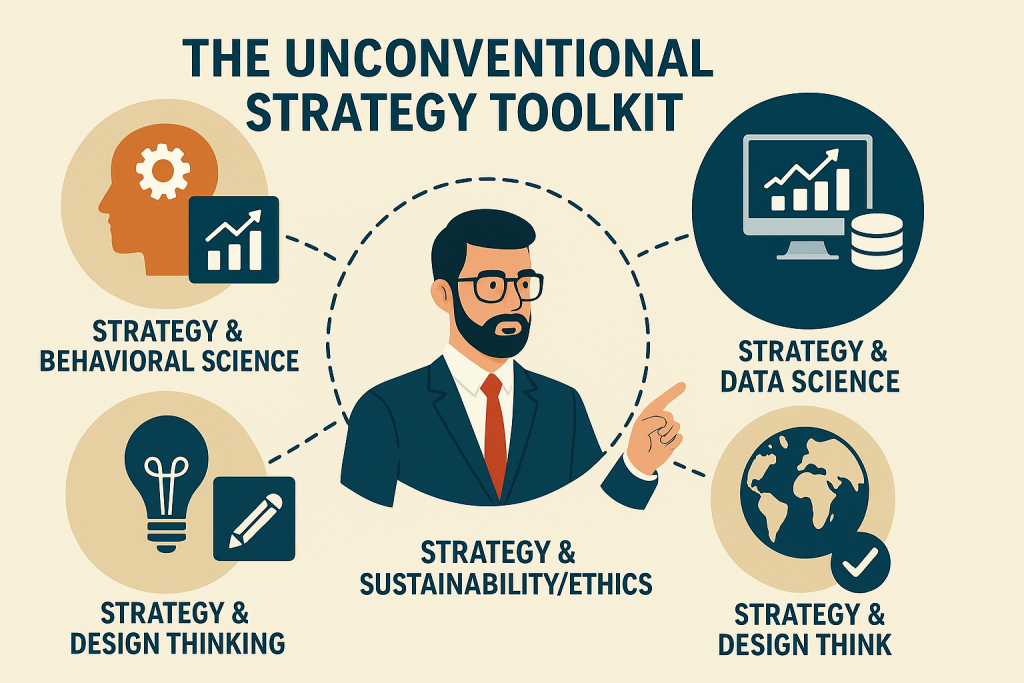
1. Strategy & Behavioral Science: The Human Element

The best-laid plans often fail due to human factors. This is where behavioral science—including psychology, cognitive science, and sociology—proves invaluable.

  • Nudge Theory: Strategists are using principles like Nudge Theory (Thaler & Sunstein) to subtly guide organizational behavior toward strategic goals, improving everything from compliance to innovation adoption.
  • Cognitive Biases: By understanding biases like confirmation bias or sunk cost fallacy, leaders can de-risk decision-making processes and foster more objective strategic reviews.
  • Organizational Culture: Strategy execution is inseparable from culture. Behavioral science provides the tools to intentionally design the organizational environment to support strategic priorities, for example, by restructuring incentives to prioritize long-term value over short-term gains.

2. Strategy & Data Science: Precision and Foresight

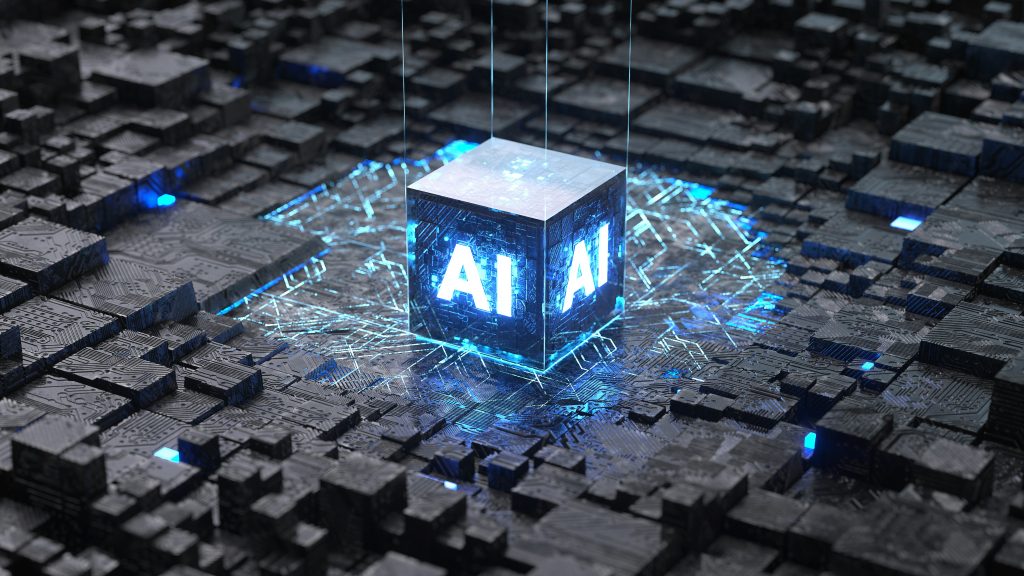
The explosion of data has fundamentally changed strategic intelligence. Strategy is now deeply interwoven with data science, machine learning (ML), and artificial intelligence (AI).

  • Predictive Analytics: ML models can forecast market shifts, customer churn, and competitor moves with unprecedented accuracy, allowing for truly proactive strategic adjustments rather than reactive ones.
  • Real-time Strategy: Cloud computing and IoT (Internet of Things) enable strategies to be evaluated and adjusted in near-real-time based on live performance data, moving away from annual review cycles.
  • Competitive Intelligence: AI-driven text analysis and sentiment mapping provide a deep, ongoing understanding of the competitive landscape, customer needs, and emerging technological threats.
3. Strategy & Design Thinking: The Customer at the Core

In a world defined by experience, Design Thinking has become a vital strategic tool, shifting the focus from “what we can build” to “what problems we can solve for the customer.”

  • Empathy: Strategic exploration begins with deep customer empathy, using ethnographic research and observation to uncover unmet, often unarticulated, needs.
  • Prototyping & Iteration: Strategy development is no longer a linear process. Design Thinking encourages fast, low-fidelity prototyping of business models and strategic initiatives, allowing for rapid failure and learning before massive investment. This minimizes the risk associated with bold strategic moves.
  • Innovation Strategy: By framing problems as design challenges, organizations can generate genuinely novel solutions, leading to breakthrough innovations and the creation of entirely new markets (Blue Ocean Strategy).

4. Strategy & Sustainability/Ethics: Purpose-Driven Value 

Modern strategy cannot ignore its impact on society and the environment. Environmental, Social, and Governance (ESG) considerations are no longer a regulatory footnote but a core strategic driver.

  • Stakeholder Strategy: Moving beyond the shareholder primacy model, strategists are adopting a stakeholder view, recognizing that long-term value creation depends on balancing the needs of employees, communities, suppliers, and the planet.
  • Circular Economy Models: Strategic innovation increasingly focuses on resource efficiency, waste reduction, and closed-loop systems, creating new efficiencies and resilient supply chains.
  • Risk Management: Strategic oversight of ethical AI use, data privacy, and climate-related risks is now mandatory for corporate longevity and reputation management.

Key Takeaway for the MBA Strategist

The future strategist isn’t just an analyst; they are a synthesizer—a polymath who can speak the language of the psychologist, the data scientist, and the designer.

To excel in strategic management today, you must:

  1. Embrace Data Literacy: Understand how to frame strategic questions that data science can answer.
  2. Cultivate Empathy: Ground all strategic choices in a deep understanding of human needs (customers and employees).
  3. Practice Agility: Adopt an iterative, test-and-learn approach, treating strategy as a living hypothesis rather than a rigid blueprint.

The most powerful strategy is one that leverages the intelligence of multiple disciplines to create value that is not only profitable but also purposeful and resilient. Strategic management is no longer a department; it’s a mindset.

As this exploration shows, the strategist of the future must draw from a multidisciplinary toolkit—mirroring the holistic, systems-based approach championed in the RKC MBA Strategic Management module. Whether leveraging data for foresight, using behavioral insights to enhance execution, or applying design thinking to uncover new market opportunities, modern strategic management demands curiosity, adaptability, and critical reflection. Ultimately, strategy becomes most powerful when it blends analytical frameworks with human insight and ethical responsibility, enabling leaders to shape organisations that are competitive, innovative, and resilient in an ever-evolving world.


7 ways how an Online Programme at RKC Shape Personality Development of its students

Doing an online master’s programme from Robert Kennedy College transcends the traditional boundaries of education, offering not only academic growth but also a transformative experience that enriches one’s personality and life skills. 

Beyond gaining expertise in a specialized field, students in our online programmes often experience profound personality development. 

Here’s how the journey contributes to building resilience and adaptability to enhancing communication skills. The challenges and opportunities offered by our online learning environment contribute significantly to shaping well-rounded, capable individuals.

1. Fostering Self-Discipline and Time Management

RKC Online learning requires managing coursework alongside personal and professional responsibilities. This flexibility is a major advantage, but it requires a high level of self-discipline and effective time management.

The ability to prioritize tasks and meet deadlines helps develop a proactive and organized personality.

As we have no set class times, students must proactively schedule their study hours to meet deadlines. This environment fosters a disciplined approach to daily routines and long-term planning, which are crucial life skills.

 2. Enhancing Communication Skills

Despite its remote nature, online programmes offered by Robert Kennedy College involve collaborative projects, virtual discussions which improve written and verbal communication.

In an increasingly digital world, the ability to communicate effectively across online platforms is crucial. Engaging with peers from different cultures enhances cross-cultural communication and adaptability that in turn nurtures strong communication and teamwork skills and enables our students to express their ideas clearly and collaborate efficiently in diverse teams. 

3. Building Critical Thinking and Problem-Solving Skills

Robert Kennedy College offers advanced coursework. And that challenges students to think critically, analyze problems, and propose evidence-based solutions.

The research-intensive nature of our programmes nurtures analytical and independent thinking.

This emphasis on critical thinking goes beyond academic work; it shapes how students approach problems in their personal and professional lives, fostering a mindset that values analysis, creativity, and evidence-based decision-making.

The experience also fosters independence, as students learn to rely on themselves for motivation and problem-solving. This newfound confidence and self-reliance prepare them to face future challenges with assurance.

4. Encouraging Emotional Intelligence and Resilience

Pursuing our online master’s degree uniquely fosters emotional intelligence (EI) and resilience fosters empathy, cultural sensitivity, and emotional intelligence.

EI, the ability to understand, manage, and express emotions while fostering healthy relationships, is enhanced through online learning through Self-Awareness, Empathy through Diversity, Improved Communication and Relationship Management

5. Relationship-Building through Global Networking and Exposure

Contrary to the misconception that online learning is isolating, RKC programmes offer ample opportunities for networking. Through virtual meetups, group projects, students can form meaningful connections with peers, instructors, and industry professionals worldwide.

These relationships can lead to lifelong friendships, mentorships, and professional opportunities, enriching both personal and career development.

6. Boosting Confidence and Self-Efficacy

Completing an online master’s programme is no small feat. It requires dedication, perseverance, and hard work. Successfully navigating this journey instills a sense of accomplishment and boosts self-confidence. Having a clear plan for studying, assignments and breaks gives you a sense of  control and boosts confidence. Acknowledging milestones such as completing a module or submitting an assignment reinforce positive momentum. Specialized knowledge enhances professional competence, empowering individuals to take on leadership roles by Engage Actively in Class

7. Encouraging Lifelong Learning and Curiosity

Our online master’s programme fosters a mindset of continuous growth and intellectual curiosity by encouraging the exploration of advanced topics, which stimulates a passion for deeper understanding. 


Our online programmes are much more than an academic pursuit; it’s a journey of personal transformation. Through interdisciplinary learning, students at Robert Kennedy College are exposed to diverse ideas and perspectives, promoting innovative thinking and cross-domain exploration. The programme’s research-driven approach hones inquiry skills, inspiring a habit of seeking knowledge and staying informed. Additionally, engaging with evolving technologies and trends nurtures adaptability and a proactive, learning-oriented attitude. The self-directed nature of online education further instills a lifelong commitment to personal and professional development, making it a powerful tool for cultivating lifelong learning and curiosity.

If you want to do an online degree programme, explore several specialised master’s/bachelor’s/PhD degree programmesthat Robert Kennedy College offers through exclusive partnerships with top British universities. You could also chat live with our team of Education Advisers on WhatsApp, who can have a look at your profile and give you some advice.


5 easy steps to break free and get unstuck in your career!

Last week I talked about five reasons you feel stuck in your career. In my opinion, one spends considerable time developing their career and then working the job. And it is far from ideal if one keeps feeling stuck and unhappy in their jobs. Now, every problem has a solution. So here I present to you five easy steps to break free and get unstuck in your career:

1. Introspect, revaluate, and develop new skillsets

There is new competition and talent added to the job market every day. Fresh graduates and experienced professionals with unique skills dominate the workspace. It is but natural to feel that your skillsets have become outdated. Now is the time to do some introspection and reassess your skillsets. Start by writing down your skills, even those you use in your personal life. You may be surprised to discover that those skills you never thought could be helpful in the professional diaspora are actually useful. Also, keep learning and adding the latest qualifications to keep abreast of the competition. You can also upgrade your education to a Master’s degree by studying online with RKC.

Photo credit: Unsplash.com by Tim Mossholder

2. Move past the fear

You must come out of the shadow of fear. If talking to your supervisor about your career growth, new opportunities, or searching for new jobs instils fear of the unknown, then you are not pushing yourself and limiting your potential.

Learn to be outgoing and gather feedback from trustworthy colleagues about yourself. Make lists of pros and cons and identify the top things you fear most.

3. Evaluate your priorities

Photo credit: Unsplash.com

Money could have been your priority before. But when you have reached a point where the job does not offer any challenges and has become monotonous. Yes, we work to pay our bills. However, it might make better sense to be in a job that might pay slightly less but the one that you enjoy doing every day.

4. Better late than never

Often you might be given some promises by the management of an upcoming raise or promotion. You end up waiting for that performance review, bonus, or annual increment. Because you are comfortable and used to working in that position, you might want to wait for the decision and what’s in store for you. But instead of waiting (sometimes in vain), you should keep planning for the change and look for better opportunities.

5. Create a roadmap and manifest

Photo credit: Unsplash.com by Matt Duncan

You might be feeling stuck in your job because you don’t know what you want to do in the future. Without a goal, you might just be wasting your efforts. Try to channel your focus on what you want to do and grow your career. Invest sometime in yourself and research what areas might interest you. It might be time-consuming, but once you have a clear understanding, you will have a clear path and purpose.

I hope these five simple steps will help change your thought process and help actualise your dream career! Let me know your thoughts in the comments below.

7 ways to improve your Critical Thinking

One of the things that I dislike about corporate culture is the many different terms that get thrown around to describe a logical and an otherwise common-sense action. Many managers and companies like to create new terms and abbreviations for actions and rules they have incorporated. However, the thing is, the more popular terms like ‘critical thinking’ are still around for a reason – they work.

The word ‘critical’ might have a negative connotation, and you might wonder – “What is the point of thinking negatively?” But where ‘critical thinking’ actually helps is in understanding all the flaws in an argument or a decision, counter or correct the process, and finally arrive at the stated objective. 

Critical Thinking is: Independent Thinking + Information Analysis = Arriving at a Judgement

What do critical thinkers do?

They think, they question, they do not accept everything at face value, using their ability to reason and to solve problems through logical reasoning. This is why most employers would be keen to employ critical thinkers because they are the catalyst that will propel the company forward. 

So, what can you do to become a more critical thinker? 

Ask questions
  1. Asking questions – Don’t be afraid to question everything, don’t take anything at face value. Ask:
    1. What are you trying to achieve?
    2. How have you arrived at this conclusion or decision?
    3. How would I know what you have told me is accurate? Show me the proof and explain it to me.
    4. What might you have missed out or overlooked?
  2. Assumption is the mother of all screw-ups – One of my majors during graduation was physics, and one of the things I disliked was the proof of every theory started with “Assume…..”, which is why we used the headline of this point as our motto during physics class. But leaving our childish assumptions aside (because who are we to question some of the greatest scientific minds ever), in our mundane lives assuming things will just make an ass out of you and me (ass-u-me). So, question all assumptions. 
  3. Self-reflecting – Critical thinkers must be able to reflect on themselves. Ask yourself if your beliefs are based on logic or emotions. Don’t be afraid to take a step back and analyse your decisions or belief, recognising if you have any bias and if it played a role in your decision-making process.
  4. Listening – When you discuss something with someone, don’t get ahead of yourself and start thinking, but listen to their point of view. Only once you hear and understand their point of view can you have enough data to analyse and evaluate, and offer alternatives if required. 
  5. Understanding the motive – Understanding the motives behind the source of the data you are basing your decisions on is essential because the data will always be skewed towards the source’s beliefs. For example, in the US media, the same story on President Donald Trump or President Joseph Biden will be covered in a completely different way by Fox News and CNN. That is why you have to question what you are being told. 
  6. Researching – Today, we are blessed with endless sources of information, and all of them easily accessible. Do your research taking advantage of all these sources of information and use your critical thinking to arrive at the best decision possible. 
  7. Keep an opened mind – So, you looked at data from multiple sources, applied critical thinking, and arrived at a conclusion. But still, going into a discussion with the assumption that you are right is wrong. As mentioned in point number four, if you assume you are right and are not listening, you will fall into point number two.

Learning to develop your critical thinking skills will go a long way in helping you analyse data and arrive at the best decision possible more often than not. Comment below if you know any other way in which we can develop critical thinking skills, we would love to hear from you!

Analyse data to arrive at decisions

Our online master’s degree management programmes help you become a better leader, and master’s degrees, in general, will help you in developing your critical thinking skill. Chat LIVE on WhatsApp with one of our education advisors for more information on all the programmes we offer, the application process, and information on discounts we might offer.