
Think about how much technology has changed the way we live and work over the past few years. Artificial intelligence can now perform tasks that once required hours of human effort. Businesses use data to make decisions that previously relied largely on experience and instinct. And behind almost every digital service we use is a team of software engineers making sure everything works as it should.

These changes are creating new opportunities for people with the right technical knowledge. They are also changing what employers expect from professionals already working in the technology sector.
For anyone considering a career in technology, or looking to take their existing career in a new direction, gaining a deeper understanding of these developments can make a real difference.
With this in mind, Robert Kennedy College (RKC), through its partnership with the University of Salford in the UK, is introducing three new postgraduate programmes:
Each programme focuses on a different area of technology, giving students the opportunity to develop specialist knowledge while earning a British master’s degree through an online learning experience.
Robert Kennedy College and the University of Salford: A Partnership Built Around Education
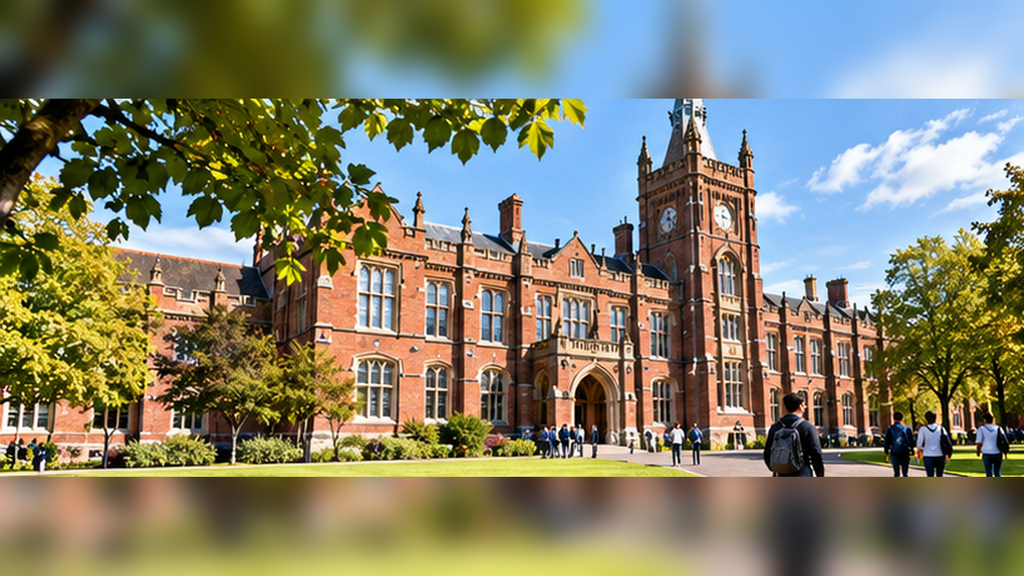
Before looking at the programmes themselves, it is worth understanding the institutions behind them.
Robert Kennedy College has been providing higher education since 1998. Based in Switzerland, the College has developed a particular focus on making internationally recognised university qualifications accessible to students regardless of where they live or work.
Its approach is built around online education, allowing students to pursue further qualifications without having to leave their jobs, relocate or put their family commitments on hold.
Over the years, RKC has partnered with established British universities, giving students the opportunity to earn university qualifications through its online learning platform.
One of these partners is the University of Salford, a university with a long history and a strong presence in science, engineering, and technology.
Located in Greater Manchester, the University has developed a reputation for connecting academic learning with practical applications. Its work in research, innovation and industry collaboration makes it a particularly relevant partner for programmes in areas such as artificial intelligence, data science and software engineering.
The University has also received recognition for its contribution to education and research, including the prestigious Queen Elizabeth Prize for Education.

The relationship between the two institutions brings together the University of Salford’s academic expertise and Robert Kennedy College’s experience in delivering online higher education.
For students, the arrangement is straightforward: they study through Robert Kennedy College, using its online learning environment, and receive their master’s degree from the University of Salford.
This arrangement makes a British university qualification accessible to professionals worldwide without requiring them to move to the UK.
Three New Programmes Addressing Different Areas of Technology
Although artificial intelligence, data science and software engineering are closely connected, they are not interchangeable disciplines. Each requires a different combination of knowledge and skills.
The three new programmes reflect these differences, allowing students to concentrate on the area that best matches their interests and career plans.
MSc Artificial Intelligence: Understanding the Technology Behind Intelligent Systems

Artificial intelligence has moved well beyond research laboratories and technology companies. It is now being used in healthcare, finance, manufacturing, education and countless other industries.
From systems that recognise images and understand spoken language to applications that can identify patterns in enormous amounts of information, AI is changing what computers can do.
But using AI applications and understanding how to develop them are two very different things.
The MSc Artificial Intelligence is intended for graduates and professionals who want to explore the technology behind intelligent systems and develop the skills needed to work in this field.
The programme covers important areas of artificial intelligence, including machine learning, deep learning, natural language processing and big data analytics.
Students also gain experience with technologies and tools such as Python, TensorFlow, Keras and Apache Spark.
These are not simply theoretical topics. The programme focuses on how these technologies can be used to develop and deploy AI applications, giving students an opportunity to understand how artificial intelligence is applied to real-world problems.
Another important consideration is the responsible use of AI. As intelligent systems become more widely adopted, questions surrounding their ethical, legal and social implications are becoming increasingly important. These considerations form part of the programme.
For those already working in computing or technology, this master’s degree offers an opportunity to develop specialist expertise in a rapidly developing field.
Potential career paths include AI engineer, machine learning engineer, natural language processing specialist and AI solutions architect.
MSc Data Science with Artificial Intelligence: Making Sense of the Information Businesses Collect

Businesses collect enormous amounts of information every day. Customer transactions, website activity, financial records and operational data all provide insights into how an organisation is performing.
The challenge is knowing what to do with all that information.
This is where data science comes in. It involves collecting, analysing and interpreting data to identify patterns and provide information that can support better decisions.
The MSc Data Science with Artificial Intelligence is designed for graduates and professionals interested in developing the skills needed to work with data and apply analytical techniques to practical problems.
The programme brings together several areas of study, including applied statistics, data visualisation, machine learning, data mining and big data technologies.
Students work with tools such as Python, R, SQL, Power BI, Apache Spark and MongoDB.
The combination is particularly useful because data science involves much more than running calculations or producing charts. Professionals need to understand how data is collected and managed, how appropriate analytical methods are selected and how the results can be communicated clearly.
The programme also addresses the ethical and professional responsibilities involved in working with data.
An interesting feature is that the programme is suitable for graduates from other disciplines who have the appropriate mathematical aptitude. A previous formal qualification in data science is not necessarily required.
This makes it an option worth considering for professionals who want to move into a more analytical role or develop their existing capabilities.
Possible career opportunities include data scientist, data analyst, business intelligence analyst, machine learning engineer and analytics consultant.
MSc Software Engineering: Moving Beyond Writing Code

Software engineering is one of those disciplines that most people encounter every day without necessarily thinking about it.
Every banking application, online shopping platform, business management system and mobile application depends on software that has been designed, developed, tested and maintained.
However, developing software is about much more than writing code. Successful software projects require careful planning, sound architecture, security considerations and an understanding of how different components work together.
The MSc Software Engineering is aimed at graduates with computing or related STEM backgrounds who want to develop their knowledge of modern software engineering.
The programme explores advanced software development, software architecture and security, lean and agile engineering practices, and the business aspects of software development.
Students examine how software systems are designed and developed, how security vulnerabilities can be identified and addressed, and how development teams manage increasingly complex projects.
The inclusion of lean and agile approaches is particularly relevant in today’s software industry. Development teams often work across different locations, manage changing requirements and deliver updates continuously. Understanding how these teams operate is an important part of modern software engineering.
The programme also looks beyond the technical side of software development. Understanding business models, product development and commercial considerations helps professionals see how software solutions fit into the wider objectives of an organisation.
Graduates may go on to pursue roles such as senior software engineer, software architect, application security engineer, engineering manager, DevOps engineer or technical product owner.
For experienced developers who want to take on greater technical or managerial responsibility, this programme offers an opportunity to build on their existing knowledge.
What Students Can Expect Across All Three Programmes
The three programmes have different subject areas, but they share several features. These are particularly relevant to people who want to pursue postgraduate education while continuing with their existing careers.
A degree awarded by the University of Salford
All three qualifications are awarded by the University of Salford. Students enrol through Robert Kennedy College and complete their studies using its online learning environment.
This provides an opportunity to earn a British university master’s degree without having to relocate to the UK.
The flexibility of online learning

One of the biggest challenges of postgraduate education for working professionals is finding the time to study.
Leaving a job or taking a career break is not always practical. Equally, attending regular classes at a university campus may not be possible for someone with professional and family commitments.
RKC’s online learning model addresses this challenge by allowing students to access their studies through the College’s OnlineCampus.
Students can organise their learning around their existing schedules, making it possible to continue working while progressing towards a master’s qualification.
A module-by-module approach
Each programme consists of 180 credits, including four taught modules worth 30 credits each and a final master’s project worth 60 credits.
The taught modules are organised into six-week blocks, allowing students to concentrate on one module at a time.
Depending on their circumstances and study pace, students can complete the programme in as little as nine months. The maximum permitted study period is four years.
An international student community

Studying online does not mean studying in isolation.
RKC brings together students from different countries, industries and professional backgrounds. This creates opportunities to exchange ideas and learn from people who may approach the same challenges from very different perspectives.
For professionals working in international organisations, this exposure can be particularly valuable.
The option of a residential experience
Although the programmes can be completed entirely online, students also have the option of attending a one-week residential experience in Zürich, Switzerland, or at the University of Salford in Manchester.
The residential experience provides an opportunity to meet fellow students, interact with faculty members, participate in workshops and prepare for the final project.
Students who cannot attend in person can complete the corresponding workshops remotely.
A final project that brings everything together
All three programmes conclude with a 60-credit independent master’s project.
This gives students an opportunity to explore a subject within their chosen area of specialisation and apply the knowledge they have developed during the programme.
It is an important part of the learning experience, allowing students to demonstrate their ability to investigate a problem, evaluate information and present their findings.
Studying with RKC: Making Further Education Fit Around Your Life
There is often a gap between wanting to pursue a master’s degree and actually finding the time and opportunity to do it.
For someone already established in a career, moving to another country for a year or two may simply not be an option. Giving up a job to return to university is equally difficult for many people.
This is where Robert Kennedy College’s approach to education makes a difference.
Students can study from wherever they are based, without the need to relocate to Switzerland or the UK. They can continue working, maintain their existing commitments and progress through their studies at a pace that suits their circumstances.
The OnlineCampus provides access to learning resources and opportunities to interact with fellow students and faculty members. The module-based structure also makes it easier to plan study time around work and other responsibilities.
There is another advantage worth considering: the opportunity to study alongside people from different professional and cultural backgrounds.
A student working in finance may approach a problem differently from someone working in healthcare or software development. These different experiences can make discussions more interesting and provide perspectives that go beyond the academic material.
Combined with the academic standing of the University of Salford, this creates an opportunity to gain a postgraduate qualification without having to put the rest of life on hold.
Which Programme Is Right for You?
Choosing between the three programmes largely depends on what interests you and where you see your career heading.
If you are interested in developing intelligent applications and understanding how machines can learn, recognise patterns and process language, the MSc Artificial Intelligence may be the right choice.
If you enjoy working with information, analysing trends and finding answers in complex datasets, the MSc Data Science with Artificial Intelligence offers a different route.
And if your interests lie in designing, developing and managing software systems, the MSc Software Engineering provides an opportunity to develop more advanced technical and professional capabilities.
All three programmes address areas that are becoming increasingly important to businesses and organisations.
The best choice is not necessarily the programme with the most attention in the media. It is the one that connects most closely with your existing experience, interests and long-term ambitions.
Your Next Step
Technology will continue to change. New applications will emerge, businesses will find different ways of using data, and software systems will become increasingly sophisticated.
For professionals who want to remain relevant and take advantage of these developments, continuing education can be a valuable investment.
The three new master’s programmes from Robert Kennedy College, in partnership with the University of Salford, offer an opportunity to develop expertise in these important areas while continuing with your professional life.
If one of these fields interests you, take a closer look at the programme details, entry requirements and study structure.
Explore the new programmes:
To find out more about Robert Kennedy College and its other online degree programmes, visit https://www.rkc.edu/programmes?j=fbpagemt.